
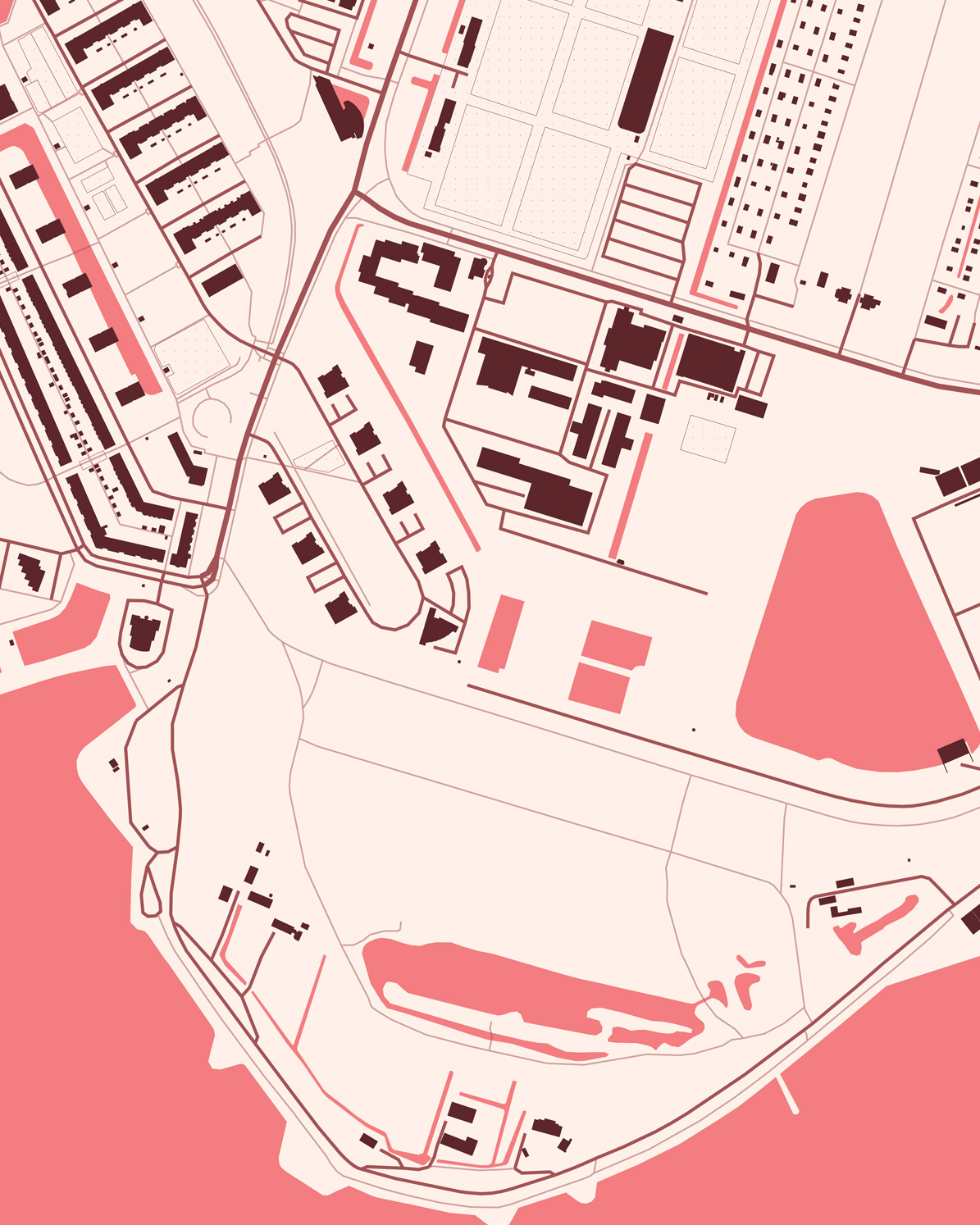
This walk leads you through the past, the present, and an imagined future of De Esch. It intertwines historical memory with speculative fiction, centering non-human values as guides for rethinking urban planning. As you follow the story you are invited to expand your perspectives and sink into a deeper listening to this place.
The city had to change
For a long time, they had witnessed humans withdrawing from the landscape. In cities, going outside became less and less necessary for many people. By the early 21st century, dogs had become one of the last urban bridges between people and the land. And when human–non-human AI language models became widely accessible around 2030, dogs began to truly reshape the city.
When the south-side connection to De Esch was built, a surge of creative energy rose in Rotterdam. It was the dogs who guided this process. They wanted their humans to once again live in the weather-world, to feel their connection with the Earth every day and everywhere.
Collage: Anna Fink
As canine mediators they saw the landscape as a living archive and reminded people of all the transformations and stories written into its soils. They attended to the shaping forces of the Maas, and to the fishermen who had moved with the river long before the first dike. They remembered the construction of the protective dike itself, and the long straight water lines that appeared in the land behind it. They shared anecdotes of their ancestors who first went on leisurely strolls through the stylish landscape of the Oude Plantage in the late 1700s. They grieved the deadly period of cholera that threatened Rotterdam’s people around 1850, and remembered the construction of the water cleaning facility with its water basins, filter reservoirs, and the monumental water tower. They retraced the design principle of working with what is there, visible in much of the neighbourhood’s urban planning. And finally, they turned people’s attention to the ancient wisdom of the humble, tiny nature reserve of De Esch, which had slowly developed in the margins of the planned urban fabric.
Before the construction work to reconnect the neighbourhood began in the 2030s, many people feared losing the De Esch nature reserve. So the dogs devised a radical plan to bring nature everywhere—directly into the neighbourhoods and closer to people’s homes. Then they convinced the people to give De Esch back to itself. The reserve became an island for the non-human: no people, not even dogs, were allowed to enter. At least for now.
1
2
3
4
5
6
7
To begin the neighbourhood’s transformation, the dogs proposed turning the nature reserve into an island with a new, wilder river shore. The dug-out soil was then used to build a mountain. Small but powerful, this little mountain became a place of worship and pilgrimage. Around 1500 there was once a pilgrimage site somewhere close to where we stand now at the Nesserdijk. In the past people came here to honour the story of Saint Wilgefortis/Ontcommer (“the escaped one”), a portugese princess who miraculously grew a beard to avoid marriage and devote herself fully to God. Today, visitors come to the little mountain not to admire a saint but to remember the human connection to the land—its soils and its waters.
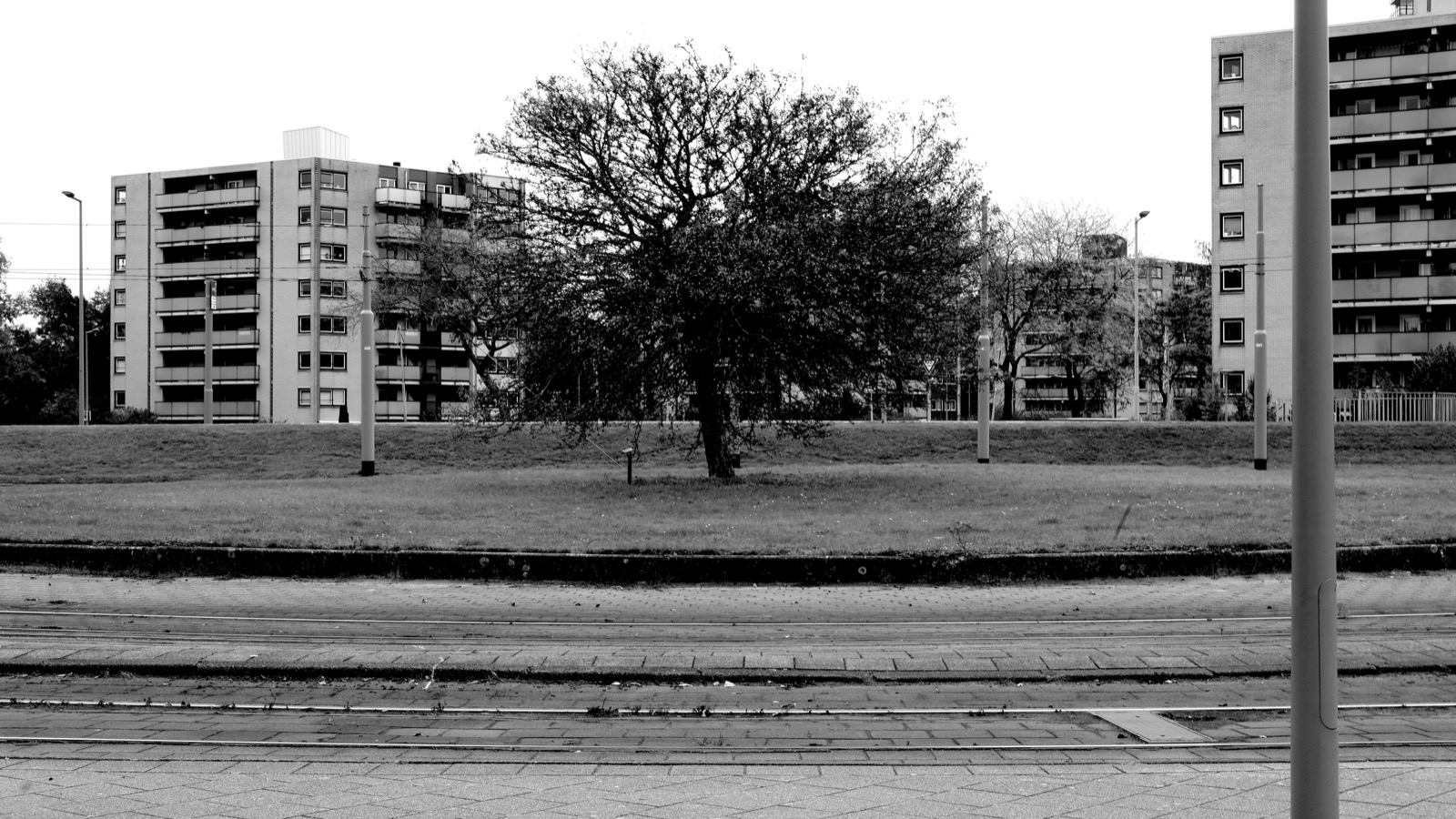
Appel tree
This apple tree, planted in 2000, was later replanted on the mountain’s summit. As many birds visited the highest point, its seeds spread throughout the city. Both the little mountain and the island of De Esch became important seed banks for Rotterdam. They nurtured species of plants that, in the early years of the century, were found only outside the city. Every year, the people of De Esch gathered at the foot of the mountain and sang songs for the mountain, for this apple tree, for the seeds, and for the birds and winds that carried them onward.
Back to map
We’ve just crossed the Nesserdijk, built in 1270 to protect the land from the lively waters of the low-lying Maas River. The area behind the dike was originally called De Nesch, meaning “a tip of land surrounded by water.” The name recalls the old riverine landscape, where water meandered freely and continually reshaped the land, leaving it surrounded by and immersed in living water.
When a river flows through soft soils—like the clay and sand beneath our feet—small bends begin to form. On the outer side of a bend, where the water flows faster, the bank erodes; on the inner side, where the water slows, sand and silt are deposited. De Esch is one of these characteristic old deposits. If you zoom out on a map, you can see how the old Maas meandered in the area between the Van Brienenoord Bridge and the Erasmus Bridge, carving deep curves—some of the last physical traces of its former dynamics.
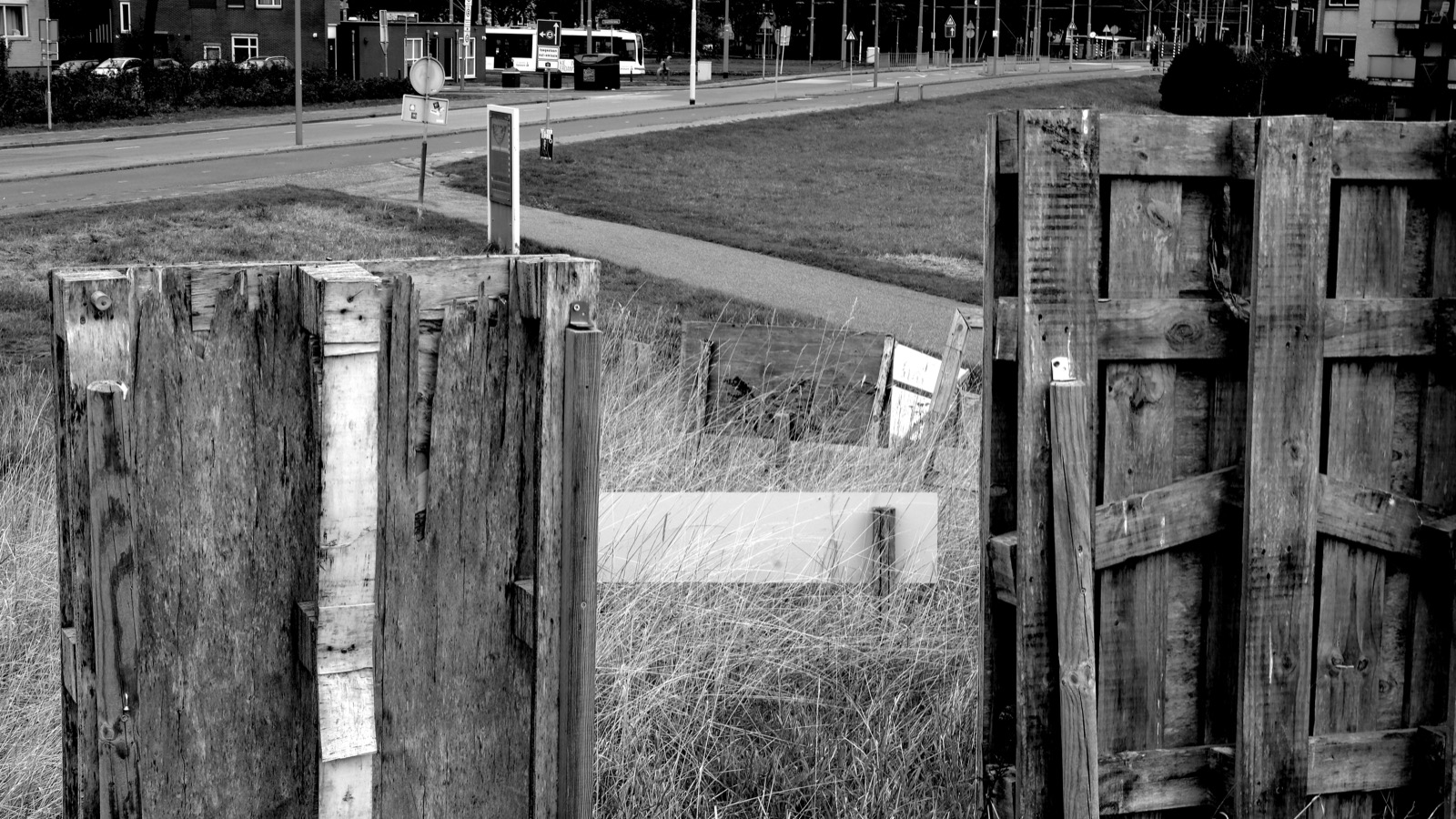
Protest
Despite this landscape heritage, in 1917 there were plans to dig away the tip of De Esch for shipping. The plans resurfaced in 1975, but in the end, “doing nothing” proved more financially feasible. Fifty years later, the dogs proposed something different: not more technical or infrastructural decisions, but returning De Esch to non-human forces. The idea stirred intense discussion and protest, continuing a debate more than a century old.
The dogs reminded people that rivers form and reform themselves continuously. With their guidance, the protestors—who had once placed their signs on this small hill at the beginning of the century—became the elder guardians of the new island. Through a year-long ritual, the guardians used these signs to create an invisible protective circle around the land. People from all over the country came for a final stroll through De Esch, bringing their protective charms and inscribing poems and spells onto wooden pieces.
Climb to the top of the hill and look at the backs of the signs. What spells do you think the guardians used to protect the island? What word would you like to leave behind today as a blessing for De Esch?
Back to map
To the left of this long lane of poplars there is now water. The shore on the right is no longer a straight line but a living, shifting edge shaped and reshaped by tidal waters, winds, kingfishers, and beavers. The water quality is now much better than it once was, as the dogs also spoke to the waters and together they found ways to end pollution: industrial inflow into the major rivers was banned, and shipping became much cleaner. Even though the dikes here remained as historic lines and as pathways for high water, the waters were welcomed back into the urban land behind them. As more hard surfaces and hydro-technology disappeared, all the waters slowly began to merge again into an interconnected body.
People listened to the dogs about how to move and orient themselves differently in their changing surroundings. They learned to resist linearity and question inherited, normative spatial expectations. The dogs showed the inhabitants how to centre embodied curiosity in their everyday movements, deepening their ability to sense their environments.
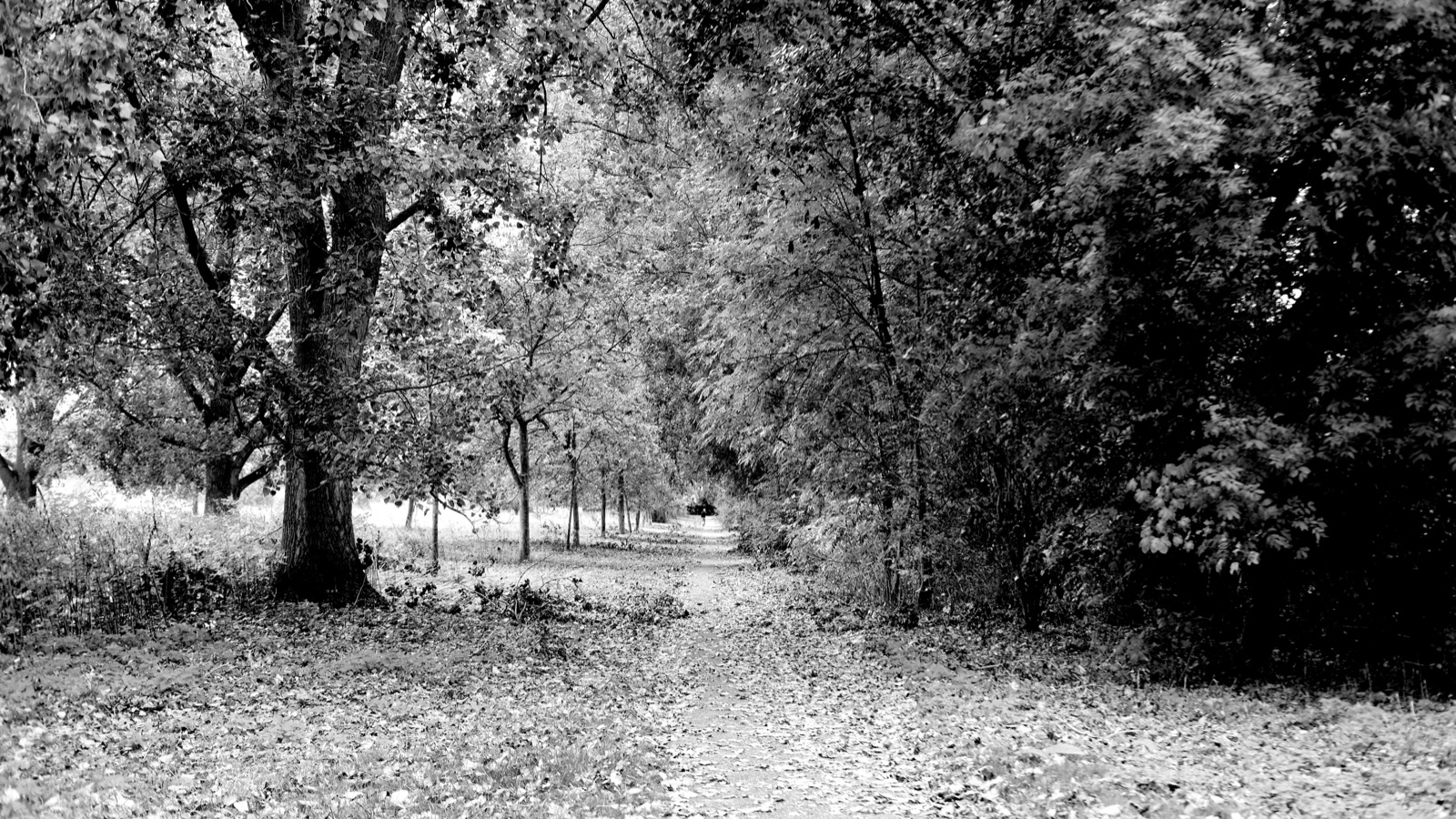
They also learned from the waters how to move in response and relation—to the weather, to plant cycles, and to the conditions of the soil. The waters reminded people to embrace their shared vulnerability and their entanglement with the world around them. These shared values of community and collaboration guided the inhabitants in their quest to create a more connected urban environment.
Coherent landscape
Through collective efforts in the early 2030s, the water quality finally became good enough for swimming everywhere in the neighbourhoods. Now, drinkable water is held and cleaned locally with plant filters, and collective garden islands float on its surface. All water edges are inhabited by plants and animals, and people swim throughout the area. The vast, formerly separated zones—once mono-functional areas for water treatment, sports fields, and private gardens—have merged into one coherent landscape. The dogs had spoken: why separate these “functions” when they are all part of the same movement—the movement of the landscape, the body of the Earth itself?
Back to map
Looking out over De Esch island today, one can see time at work, slowly shaping the land. Parts of the island are now submerged in slightly acidic waters, forming a young marsh that, in the future, may one day become a true swamp.
In the 1970s, it was probably not the protestors who saved this land from disappearing, but the toxic harbour sludge deposited here in the 1960s, which made the soil impossible to cultivate. While people debated and planned, many plants quietly pioneered the contaminated soils of De Esch, creating a uniquely diverse urban flora. What would later be called “a nature reserve” began simply by doing nothing. This is the approach the dogs built upon: they proposed creating a space free from human planning, leaving a piece of land to the forces of the Earth—not to serve anyone in particular, but for its own sake.
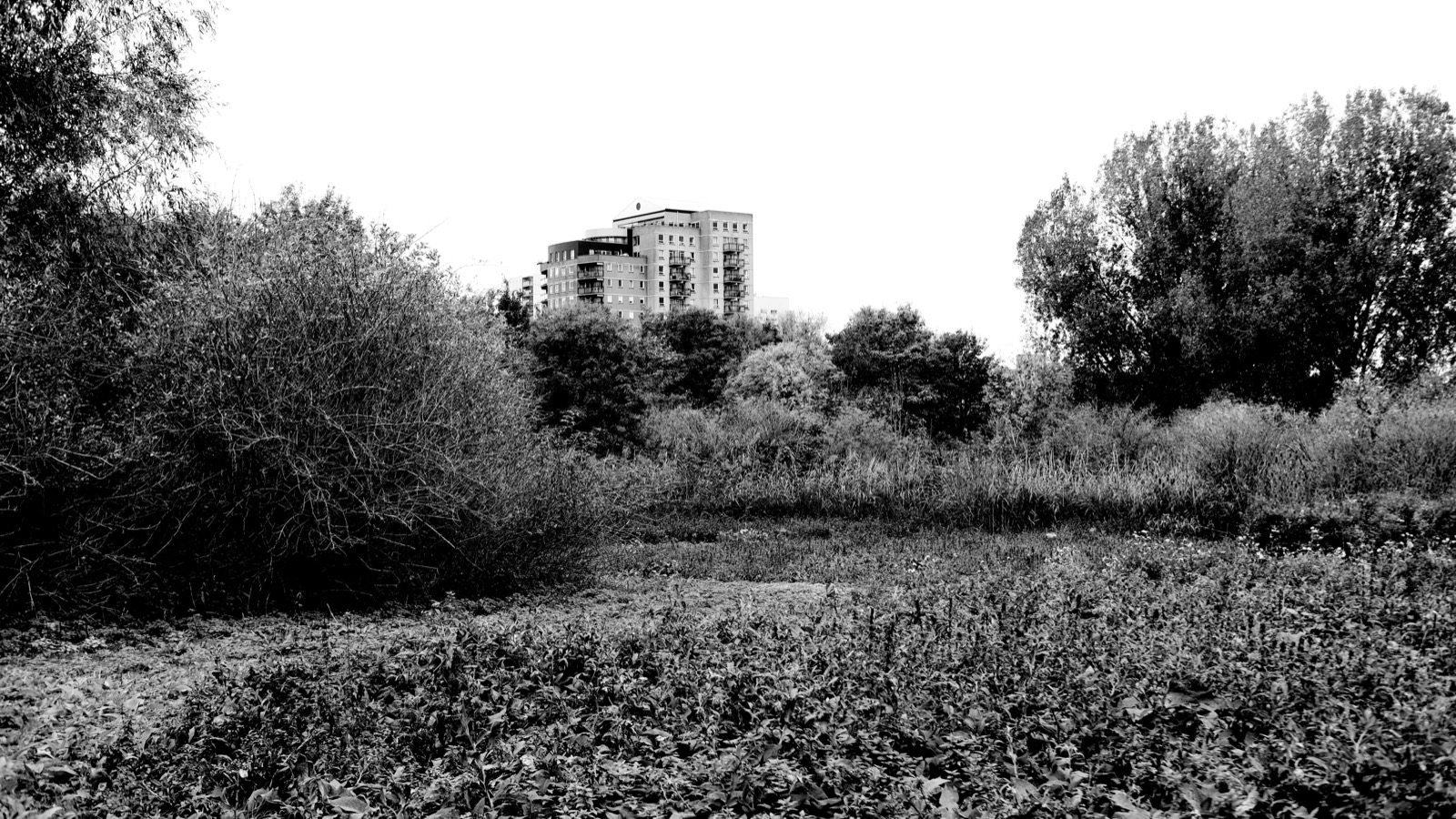
Diversity of plants and habitats
By the late 20th century, more than 200 plant species were found here. In the early 2020s, the nature reserve acted as a city-wide seed bank, providing seeds of over eight rare wild plant species—more than any other urban area in Rotterdam. In the past, these seeds were spread manually: heksenkruid (enchanter’s nightshade), grote kardebol (wild teasel), geel nagelkruid (yellow avens), zeepkruid (soapwort), dagkoekoeksbloem (red campion), and avondkoekoeksbloem (white campion). Today, the dogs’ seed-collecting harnesses and the seed-attracting textiles worn by people carry these plants even further across the city.
In the early years, this diversity revealed itself only to the knowing eye. At first glance, elderflower, nettles, and brambles dominated the undergrowth—nitrogen-loving plants that reshaped the contaminated soils for future generations, nourished by the droppings of bunnies, dogs, and the flock of sheep kept here as living lawnmowers. Today, not only this area but the entire neighbourhood flourishes with an extraordinary diversity of plants and habitats. Categories like “weeds,” “wild,” or “cultivated” are no longer particularly useful—all vegetation is harvested and maintained as habitat for countless species. Here at De Esch, the days of separating humans and nature are finally coming to an end.
Back to map
Here, we used to see the old landscape: the poldered lands, flat, with straight waterlines reflecting the cloudy sky. Patches of reeds, small groups of alders, rows of coppiced willows, and a few old farmhouses and estates lay behind the more than 800-year-old dike, towering five meters above the grassland. In 1783, hot-air balloons rose into the skies above the four-hectare estate garden of the ‘Rozenhof’. For many hundreds of years, this fertile, profitable, and romanticized land dominated the cultural narrative of the Dutch landscape—until the dogs helped more people recognize the tremendous loss this man-made landscape had caused and what they had once called nature.
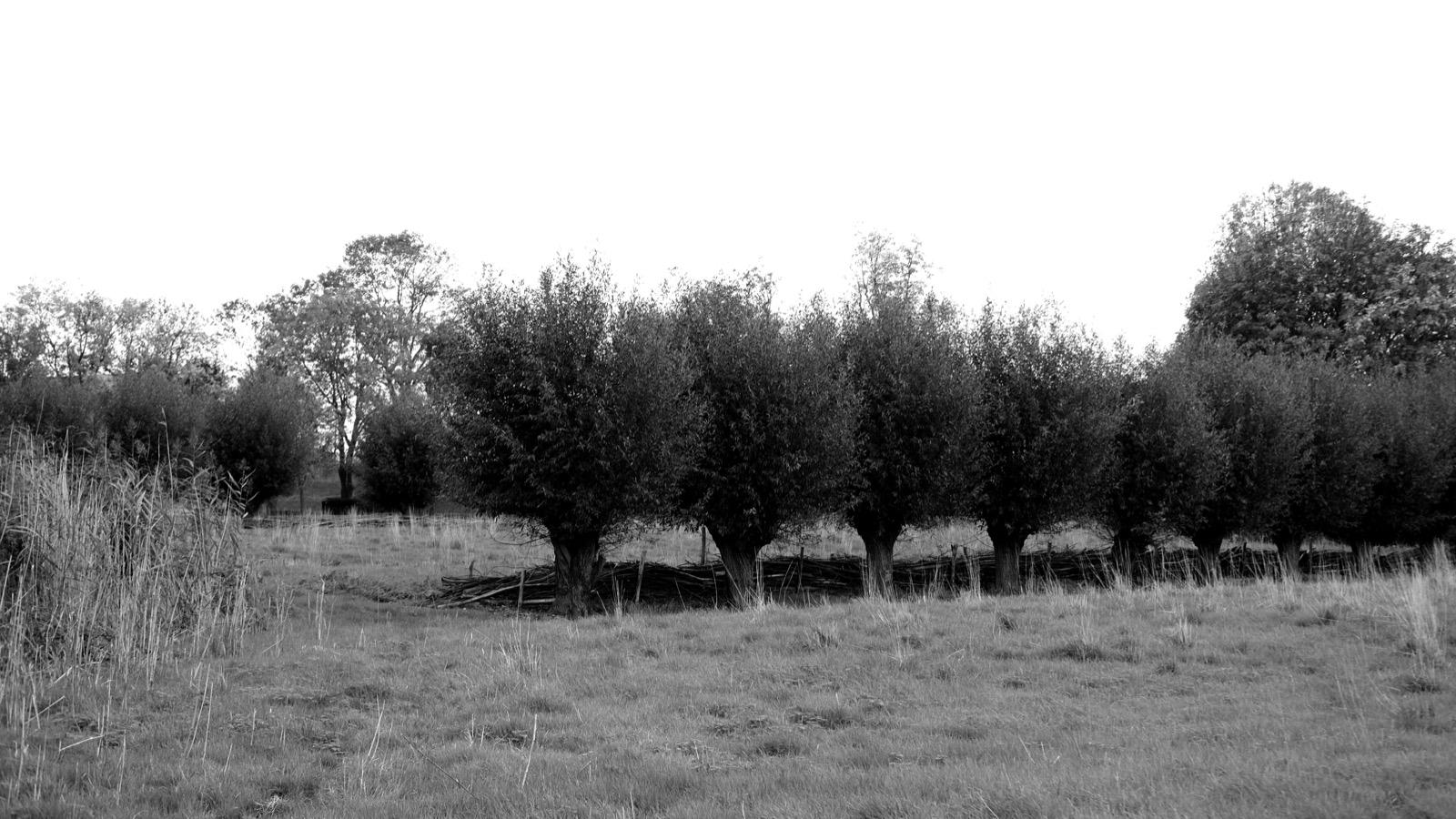
The gradual flooding of the old polder submerged these traces, turning them into eventual archaeological treasures for a distant generation to discover. In the year-long rituals held by the elder guardians of the island, the landscape elements and buildings were celebrated and honored, and finally returned to the land to become itself once more. Many new plant and animal species began to settle here, building their homes in the transformed environment. Migratory birds carried the unfolding story of this unusual transformation southward.
Mutual flourishing
Many plants of the old polder were transplanted into neighborhood gardens, which provide much of the food and building materials for the inhabitants. People relearned when and how to harvest and work with local plants. The new public space of the neighborhood is now a coherent landscape, no longer divided into categories such as ‘public green’, ‘nature reserve’, or ‘agricultural land’. Today, all land in De Esch serves the wellbeing and mutual flourishing of all inhabitants—human and non-human alike.
Back to map
The urban development of the neighborhood was increasingly shaped by the inhabitants themselves, creating local governance systems that included more-than-human voices and constituencies. In the beginning, this was very experimental, but local knowledge holders—like the Rotterdam-founded Zoöp—contributed their insights. Together with the dogs and the many humans who learned to speak on behalf of other beings, a new form of democracy began to take shape.
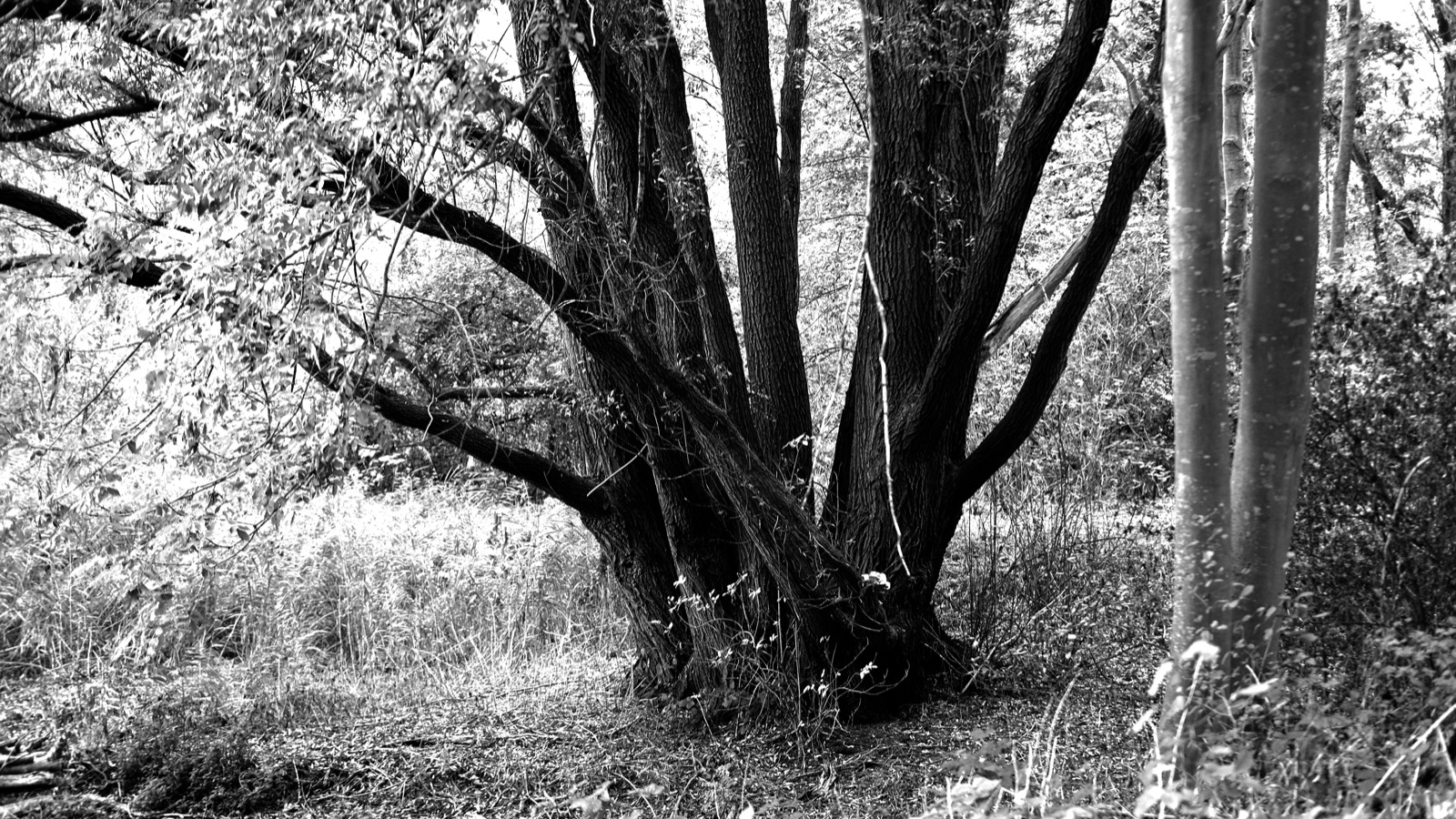
Beyond ‘for’ or ‘against’
During the island’s transformation, this tree was recognized as a non-human elder—one of the first of its kind. It carried the wisdom of the nature area into the future: using this knowledge, the inhabitants wrote many of the founding principles for the newly connected neighborhood. They saw the tree’s body as a reflection of how to move beyond the human-made binary of nature versus culture. In the past, it had been the coppicing of people that co-shaped the growth of many willow stems—a being made of multitudes. Or was it a beaver chewing on the young stems and shoots?
The many stories of this tree, and of countless other non-human inhabitants, helped humans look beyond simply being ‘for’ or ‘against’ change. The land’s ongoing cycles of growth and decay, regeneration and renewal, contamination and sedimentation—evaporating, rising, falling—helped them heal, little by little, from centuries of separating narratives.
What, then, were the founding principles that people learned from this tree?
Back to map
Learning from the dogs, today the entire neighborhood of De Esch follows seasonal flows, tidal changes, and weather moods. How and when people move through the landscape is guided by ever-changing conditions. Adaptation is the main skill taught in the neighborhood schools, and creativity is the measure for all evaluations. Some of the best Dutch swimmers and horticulturists have been born here. Ecological knowledge—knowing your home—is of the highest value, and it is gathered through ‘going for a walk’: a walk to your garden, your school, your workspace, or a walk to the south—into the old city.
Cycles of regeneration
Time here is perceived and lived more intensely, cyclical and interconnected. All seasons have their own little festivities, and new rituals have begun to take shape—like the monthly moon swims, connecting the body to the tidal energy of the full moon. Every year, the inhabitants bring green waste from the communal gardens to the shoreline, tie it into little floats, and set them alight. This annual fire festival celebrates the cycles of regeneration embedded in the practicalities of waste management and seed dispersal. The floating bonfires send good wishes to the island of De Esch, to the Maas, and into the city beyond.
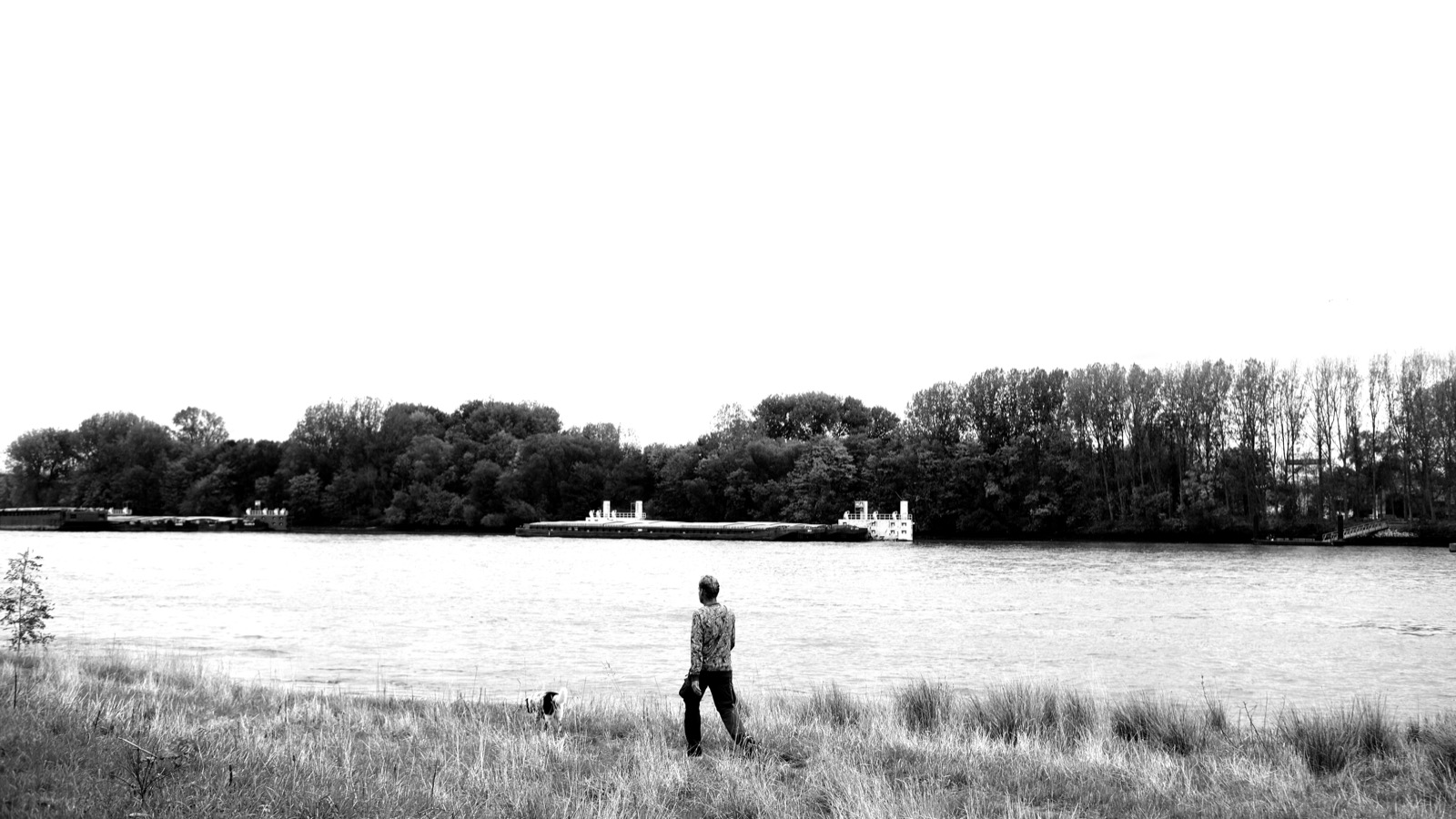
The European inland skippers passing by here from time to time return home with stories of these water-loving people of Rotterdam and this strange yet inspiring place on the northern shore. At first, this landscape and its swimming inhabitants seemed unusual to them, but in their bodies, they could feel their own longing to submerge. And so, by word of mouth and desire, more and more places in Europe began to follow the example of the Rotterdammers of De Esch.
Here, you are invited to choose your route back. Follow the curving dike along the Nieuwe Maas and reflect on what you can learn from the waters. Or return along the small path behind the tree elder and through the young forest, following the straight footpath while listening closely to the soils.
Either way—learn from the dogs: tread lightly and look carefully, listen to everyone around you, and smell and sniff continuously, everywhere. Remember to greet kindly, be hospitable, and stay curious.
Back to map
Anna Maria Fink | Atelier Fischbach
This project was part of the Building Bridges manifestation organised by OMI 2025.