
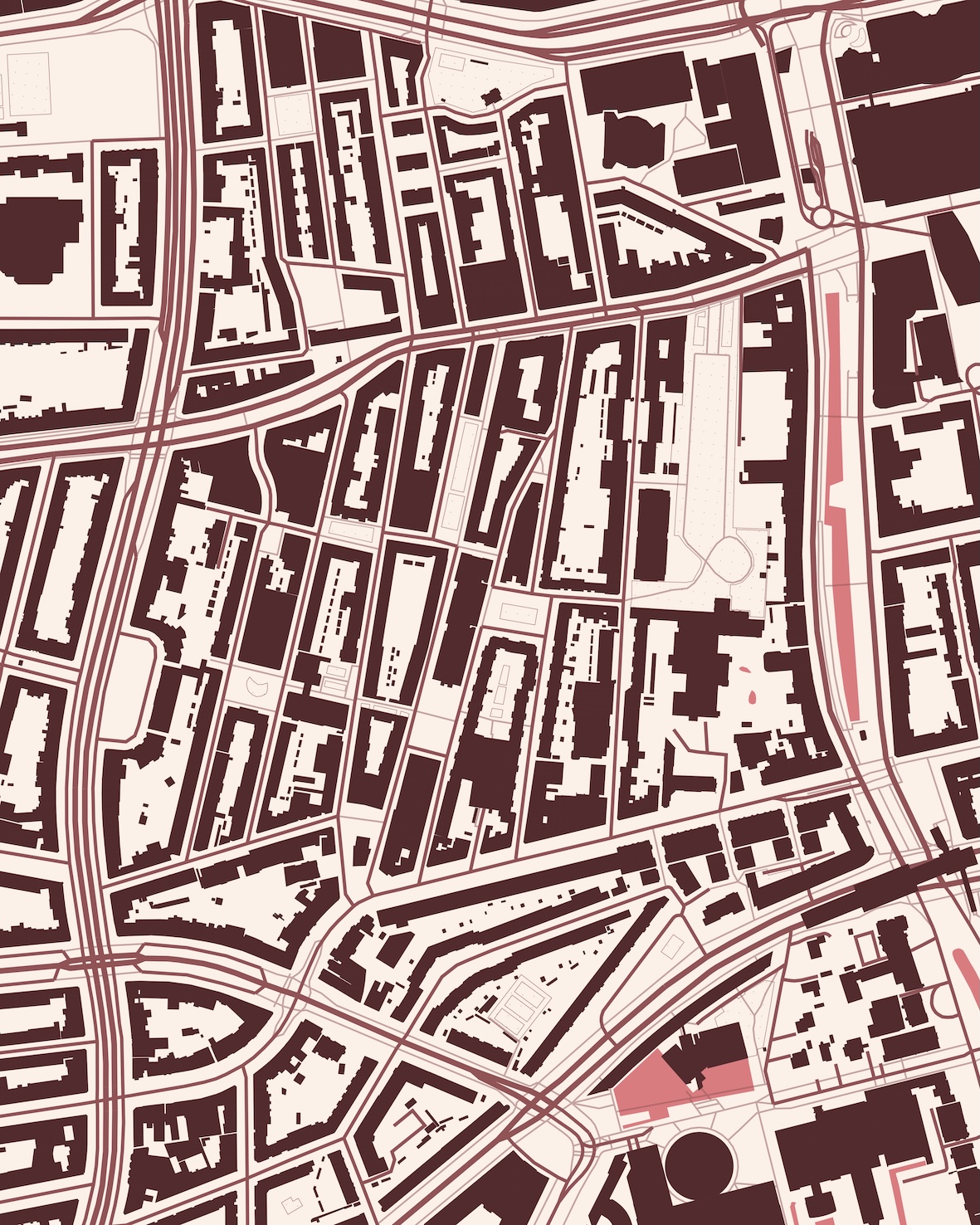
After a competition for the renewal of the Oude Westen neighbourhood in 1969, residents preferred the design submitted by a number of young architects from the Academy of Architecture. The proposal by the work group around Pietro Hammel and Nico Witstok, both residents of the Oude Westen took the functioning of the existing city as its starting point. The only locations they indicated on two drawings – a development plan and a traffic plan – were development sites, public spaces and traffic flows through the area.
Foto: Ossip van Duivenbode
In een periode van ruim 20 jaar wordt gewerkt aan het behoud én de vernieuwing van het Oude Westen. Huizen worden gerenoveerd, samengevoegd en uitgebouwd. Vervallen panden worden vervangen door nieuwe woningen. In de wijk komen pleinen, speeltuinen en sociale voorzieningen in plaats van fabrieken en bedrijven. Er groeit een nieuwe visie op woningbouw en jonge architecten krijgen een kans om te bouwen.
Woondek, foto: Max Milikan
Architectural experiments
Ten new-build schemes from the period 1970-1990 show the variety of solutions devised to make space in the Oude Westen for good-quality homes, amenities and play areas. The result is an array of architectural experiments that explore new typologies and a unique design language.
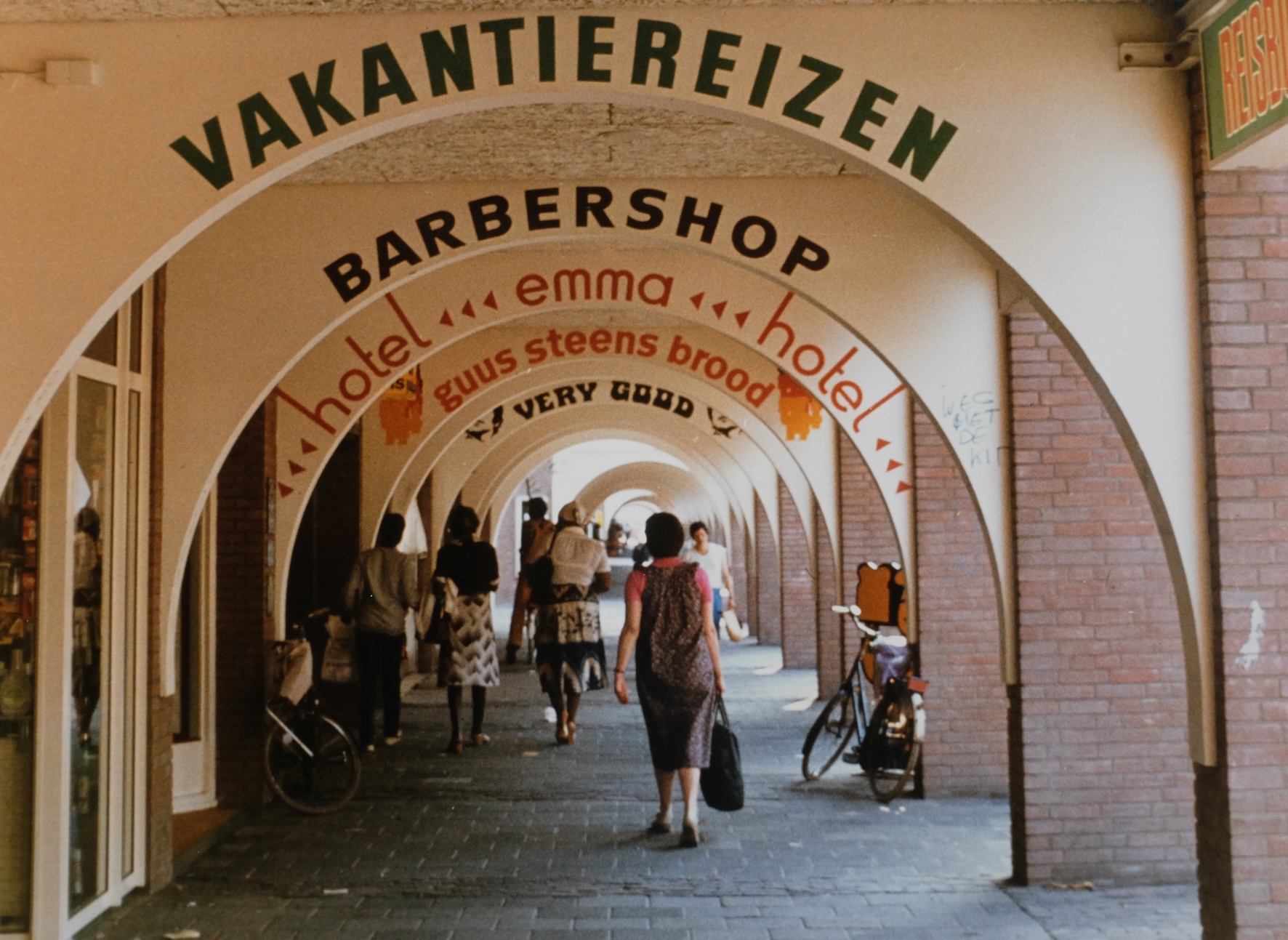
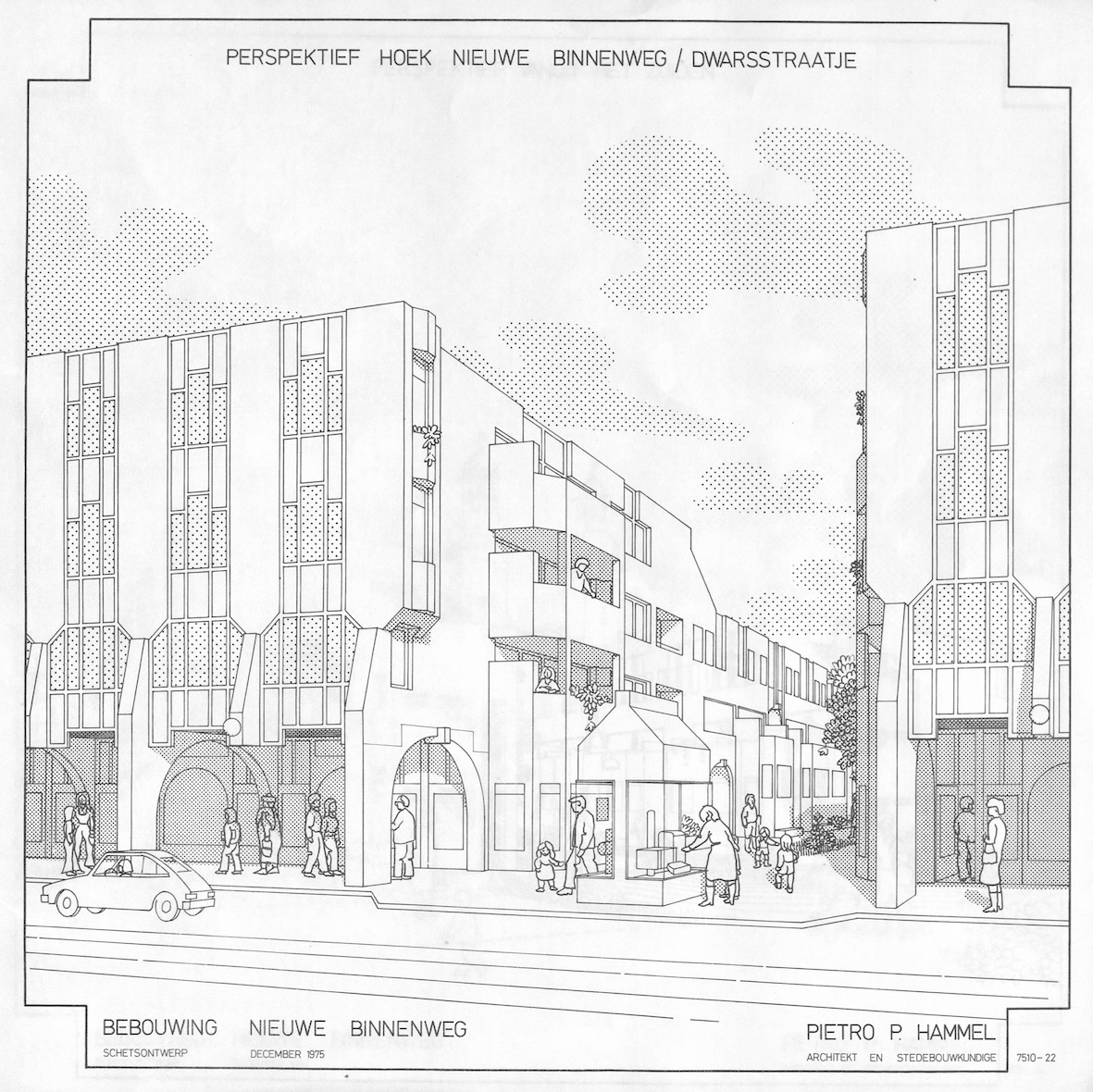
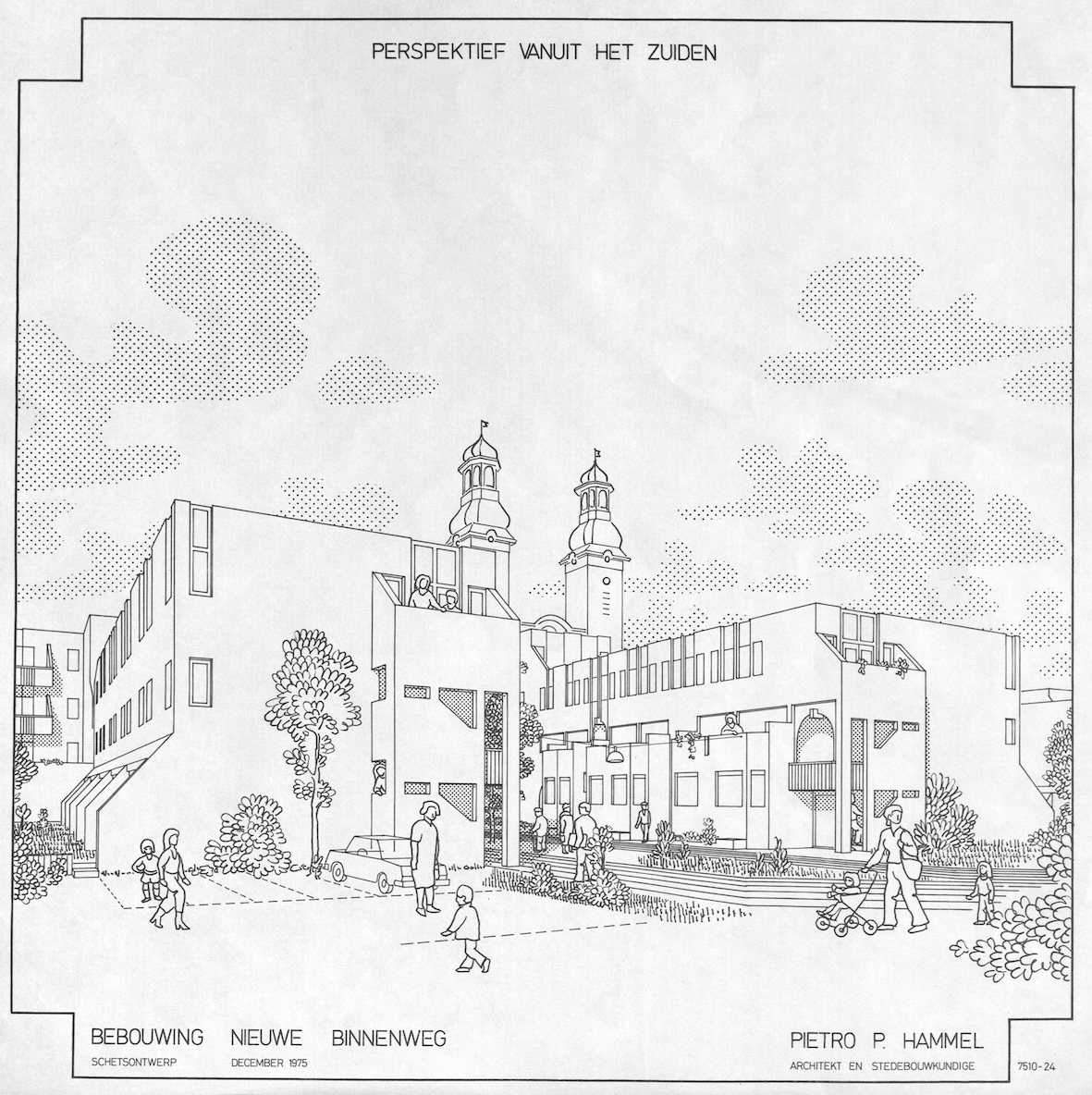
Architect Pietro Hammel was involved in urban renewal for many years. Early on, he voiced his opposition to the sweeping demolition of old neighbourhoods, and he became a key advisor to the Oude Westen Action Group. The Boogjes project was his crowning achievement: 125 dwellings, shops and a hotel. Taking the form of an arched gallery – known as the Boogjes (‘Arches’) – the arcade in front of the shops was designed to create a cosily convivial atmosphere, but it also felt unsafe. The distinctive arches disappeared after the building’s redevelopment by Mecanoo in 2007
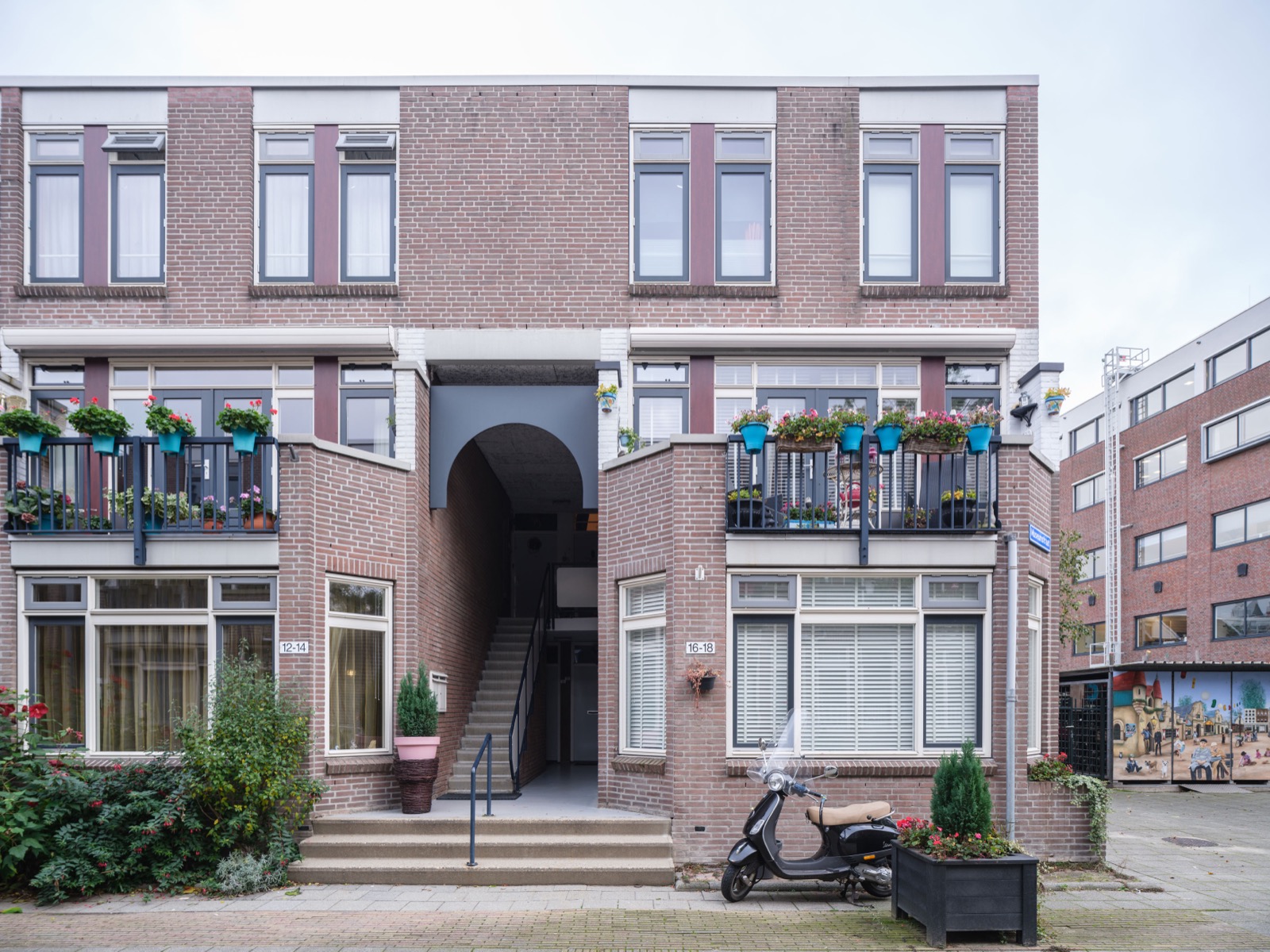
The architecture reflects the trend towards small-scale design in the 1970s, a style also derogatively referred to as ‘New Fussiness’. It initially appeared in urban renewal schemes, with brickwork facades, concrete components and bay windows for vertical articulation, and coloured timber balconies. Hammel: ‘The craze for New Fussiness cannot be halted, and I’m delighted to be part of it’.
Terug naar kaart
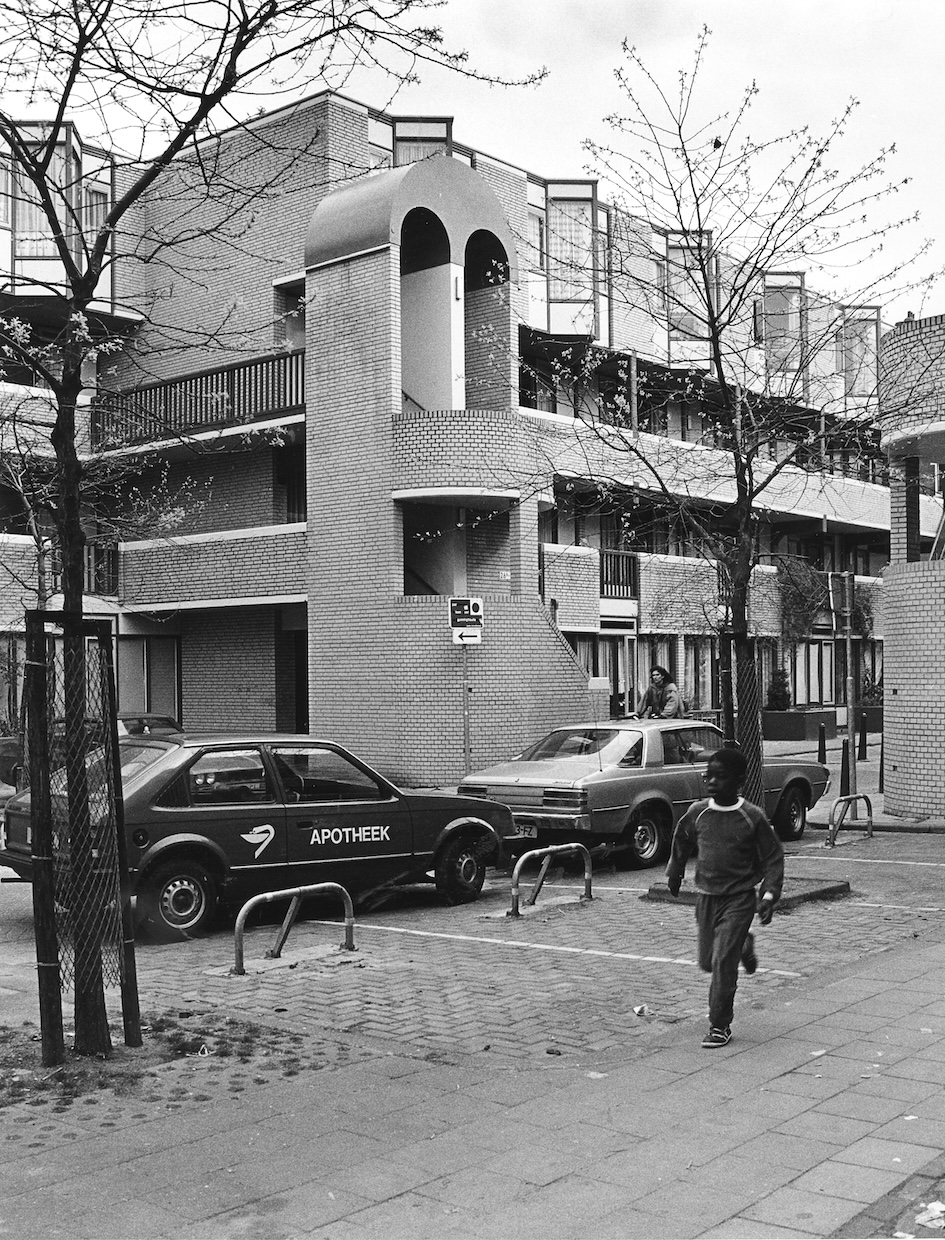
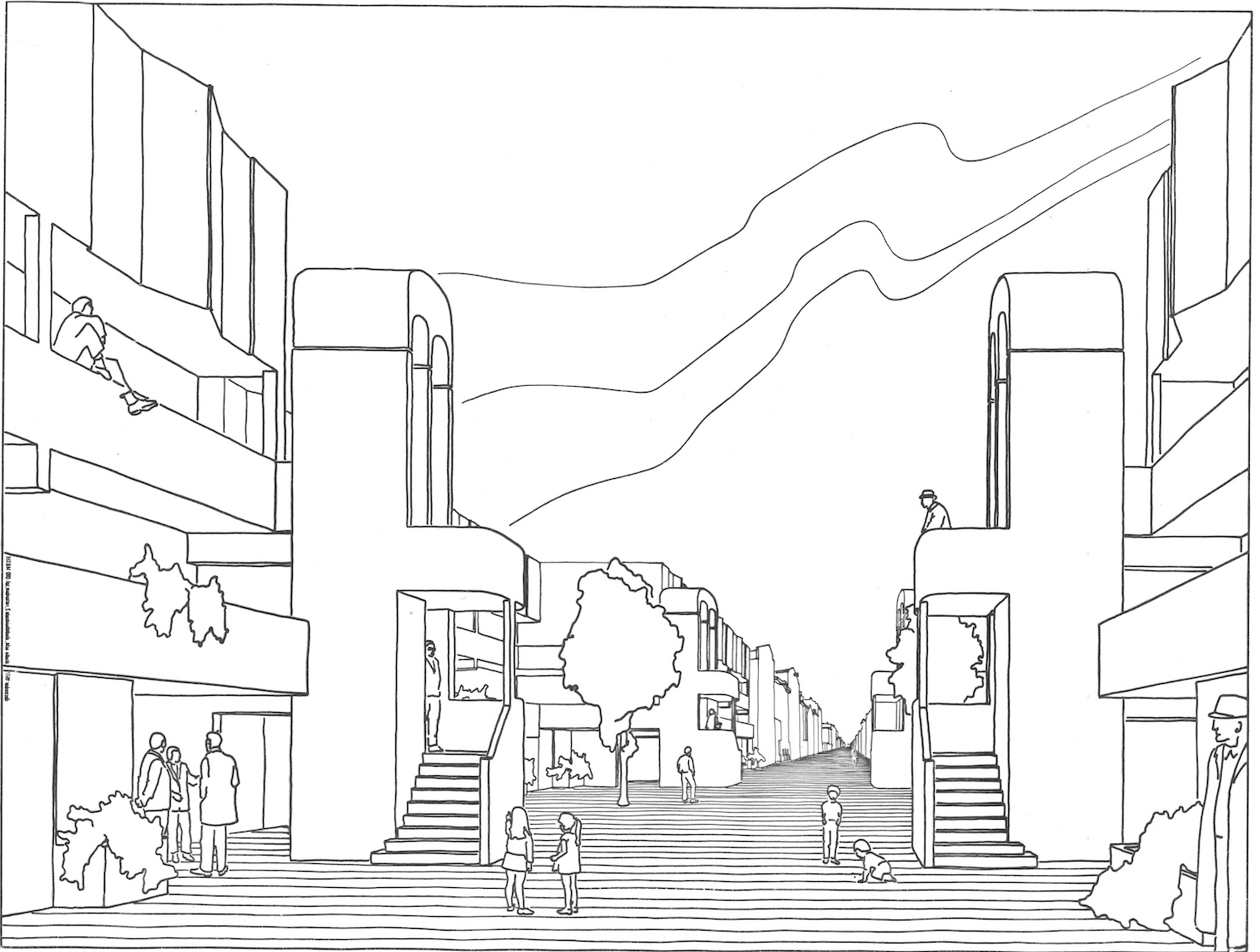
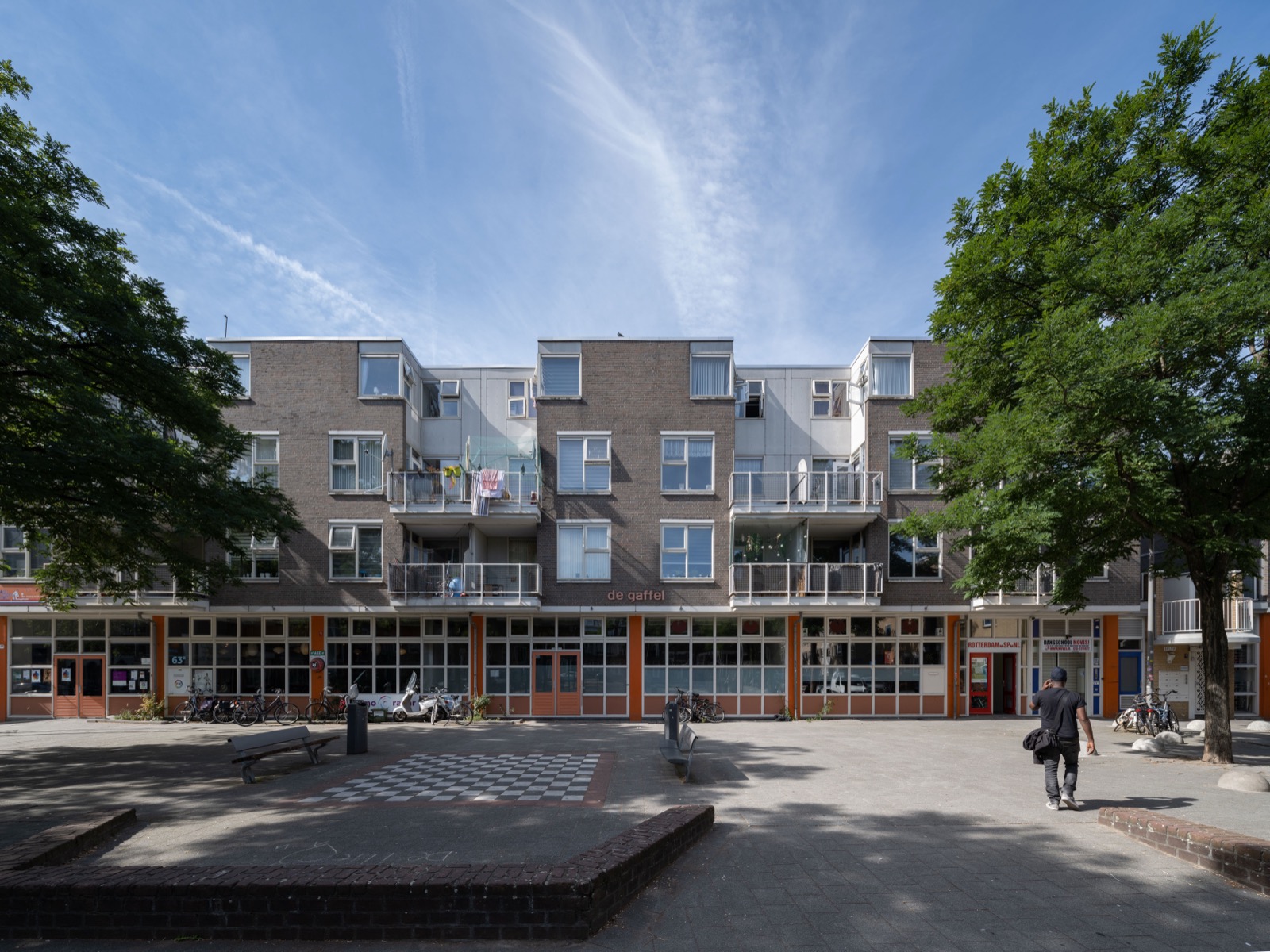
To create more space in the narrow Gouvernestraat, the building blocks are set back wherever possible. The transitions to the widened sections are marked by monumental staircases that interrupt the endlessly long street and enliven the street profile. It mostly consists of maisonettes.
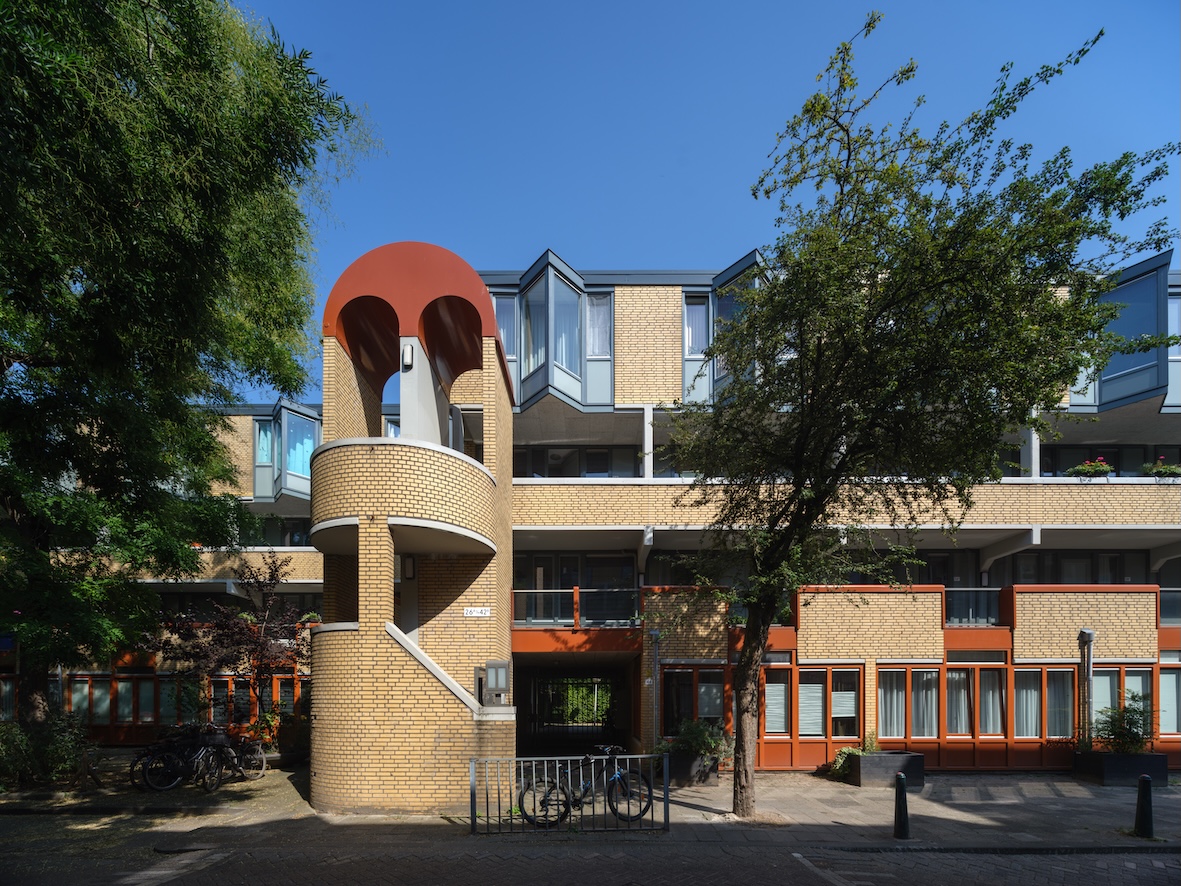
This project was a self-conscious attempt to improve the architecture and urbanism of the Oude Westen with contemporary materials. Unlike most urban renewal schemes of the period, it features a totally different colour and style. The abstract stepped saw-tooth pattern in the facades deviates from the norm. In 2022, DaF architects gave the original colour scheme a contemporary twist during the renovation.
Terug naar kaart
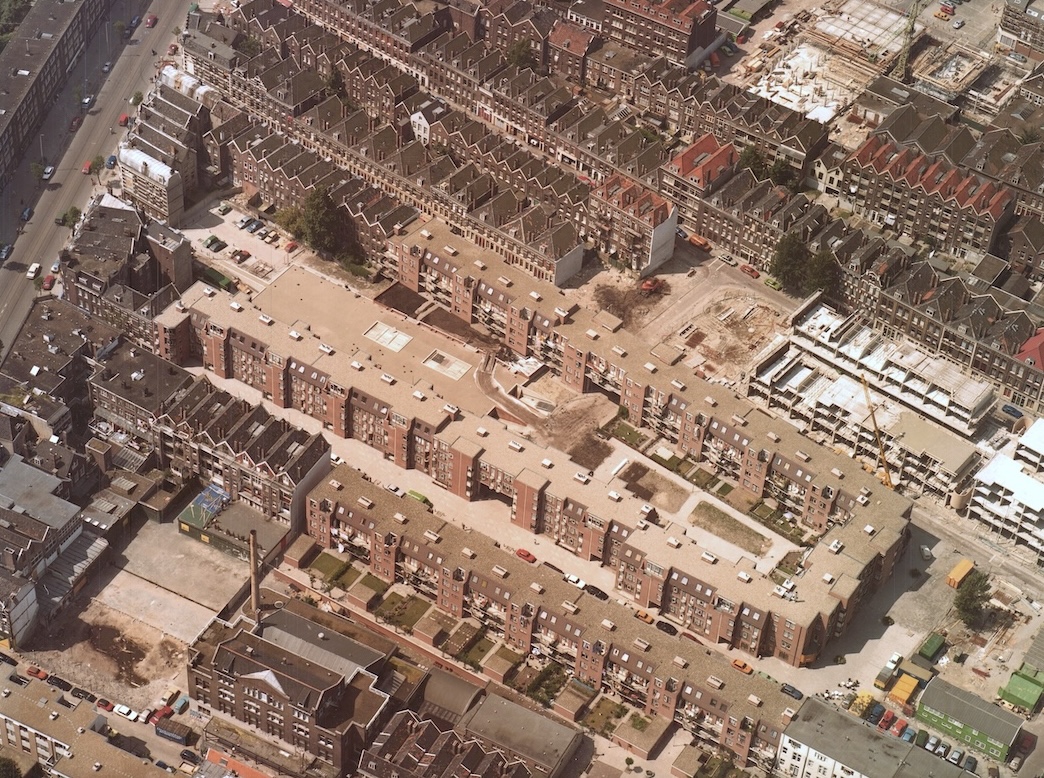
Andries van Wijngaarden is a typical urban renewal architect. He had learned the profession mostly through practice, and he combined a knowledge of both floor plans and building systems, combined with a keen sense of social commitment. His intensive way of working involved lots of consultations, meetings and presentations in which he always sided with residents in trying to realize good-quality and affordable homes.
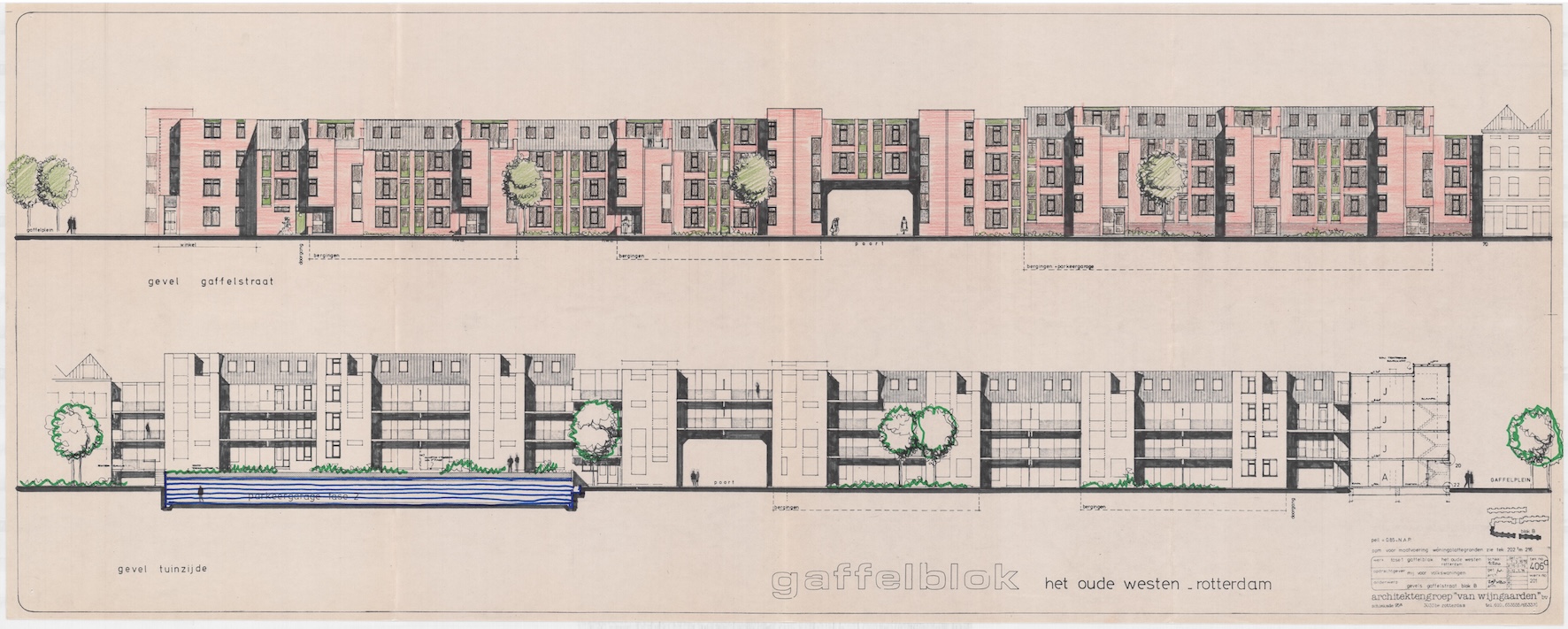
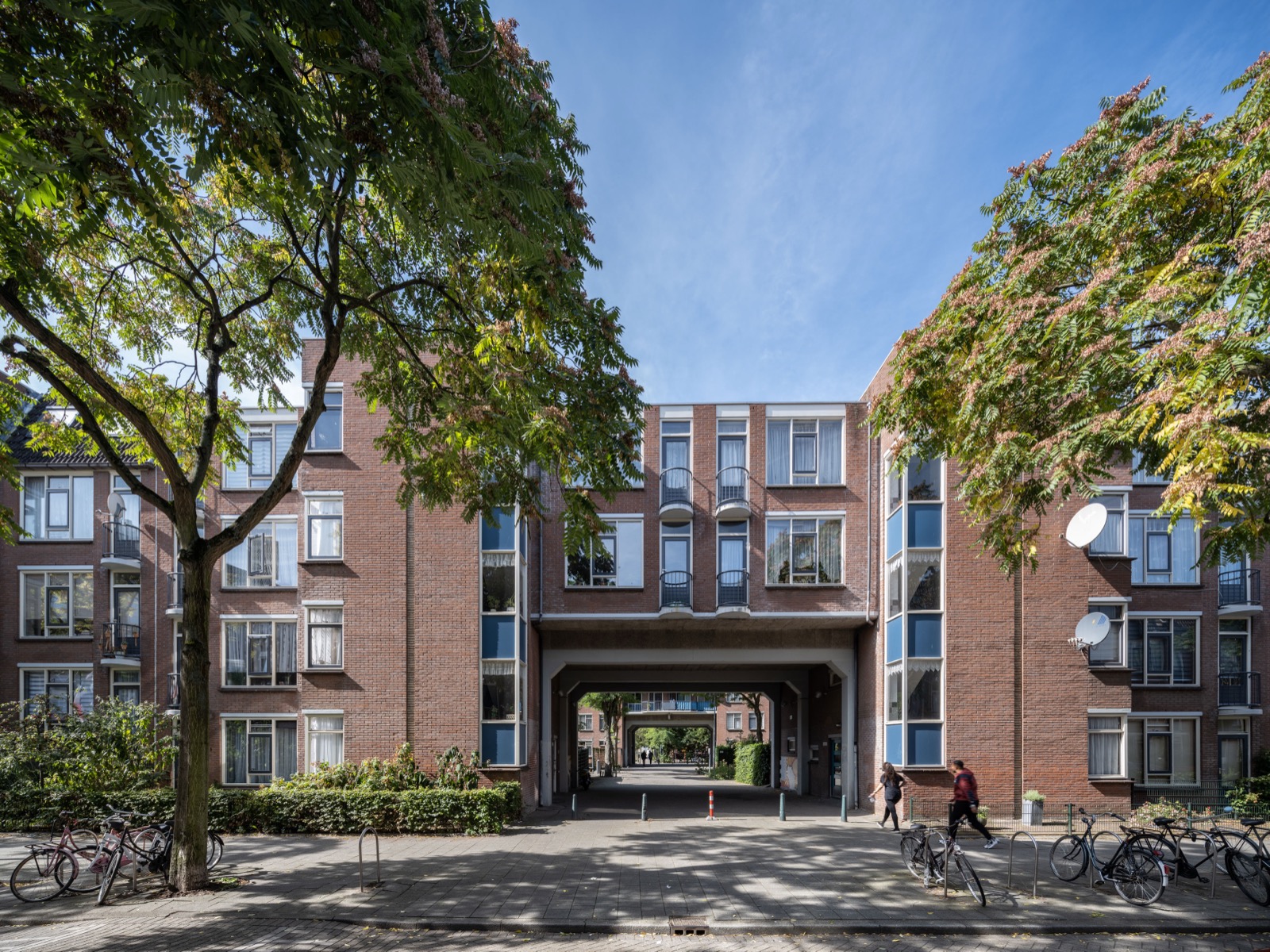
Removing the original street here and demolishing two building blocks created space for one new block with a spacious courtyard. The complex has a poured concrete structure – 184 dwellings and a car park with 95 spaces – with small-scale architectural features. Key to the design are the floor plans. Facade compositions and materials were of secondary importance. Van Wijngaarden: ‘In the early years of urban renewal, we didn’t have much time to think about beauty.’
Terug naar kaart
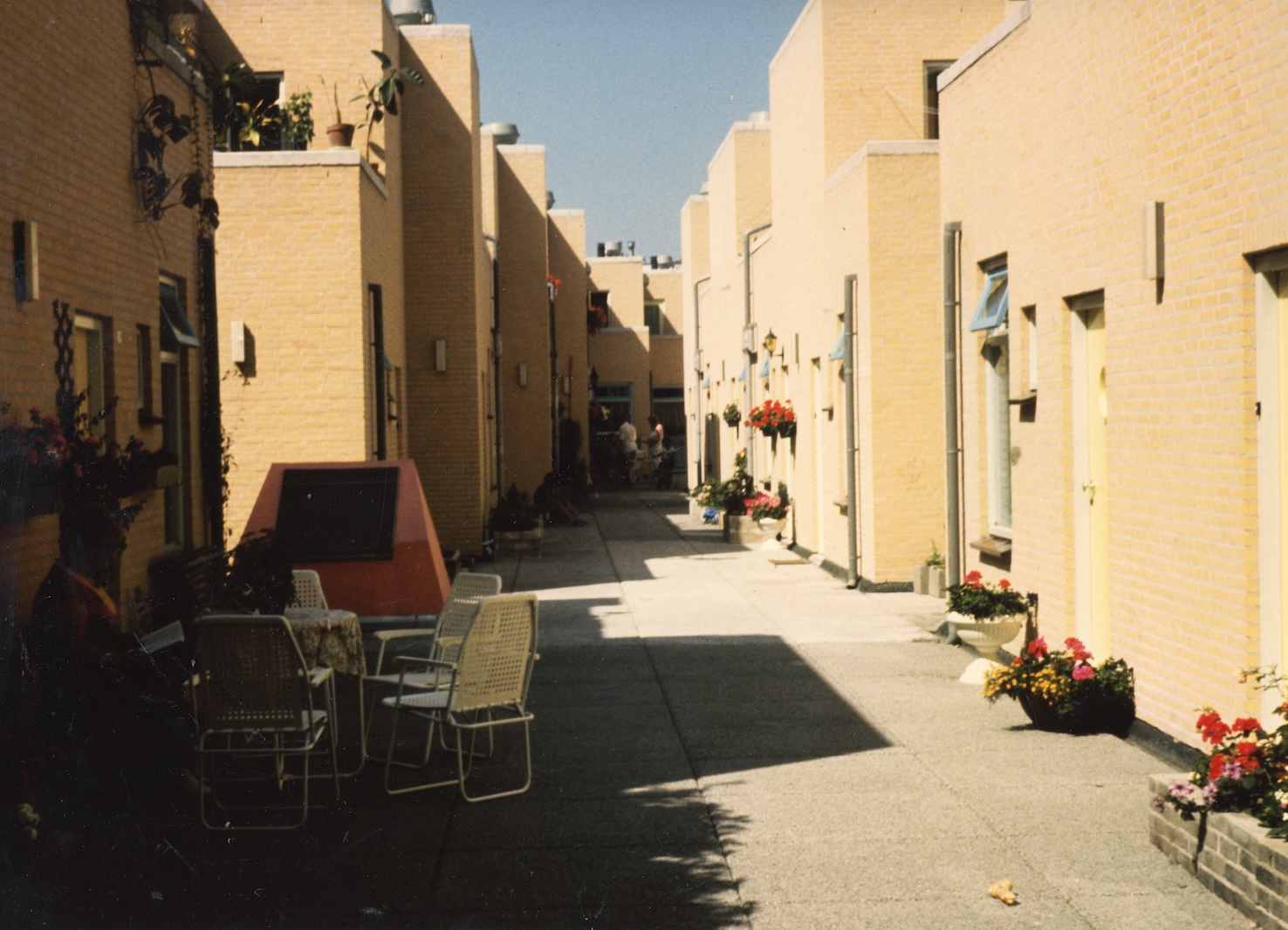
Reflecting the desire to rebuild as many homes as possible in the neighbourhood, the complex included not only the centre but also 29 homes. The complex occupies a narrow tapered site. The elevated residential street flanked on both sides by maisonettes is accessed by stairs from the surrounding streets. As a result, the residents share a raised space that feels playful thanks to the staggered dwellings.
Features include yellow and red brickwork, a grid of panels, an abstract horizontal strip with identical windows and gridded balcony fences. Roof lights draw natural light into the shared spaces of the medical centre. The interior was specially designed by interior architect Pieter Stalenhoef, who came up with a comprehensive design with a friendly atmosphere that makes visitors feel at ease. He gave each of the medical practices a colour of its own.
Terug naar kaart
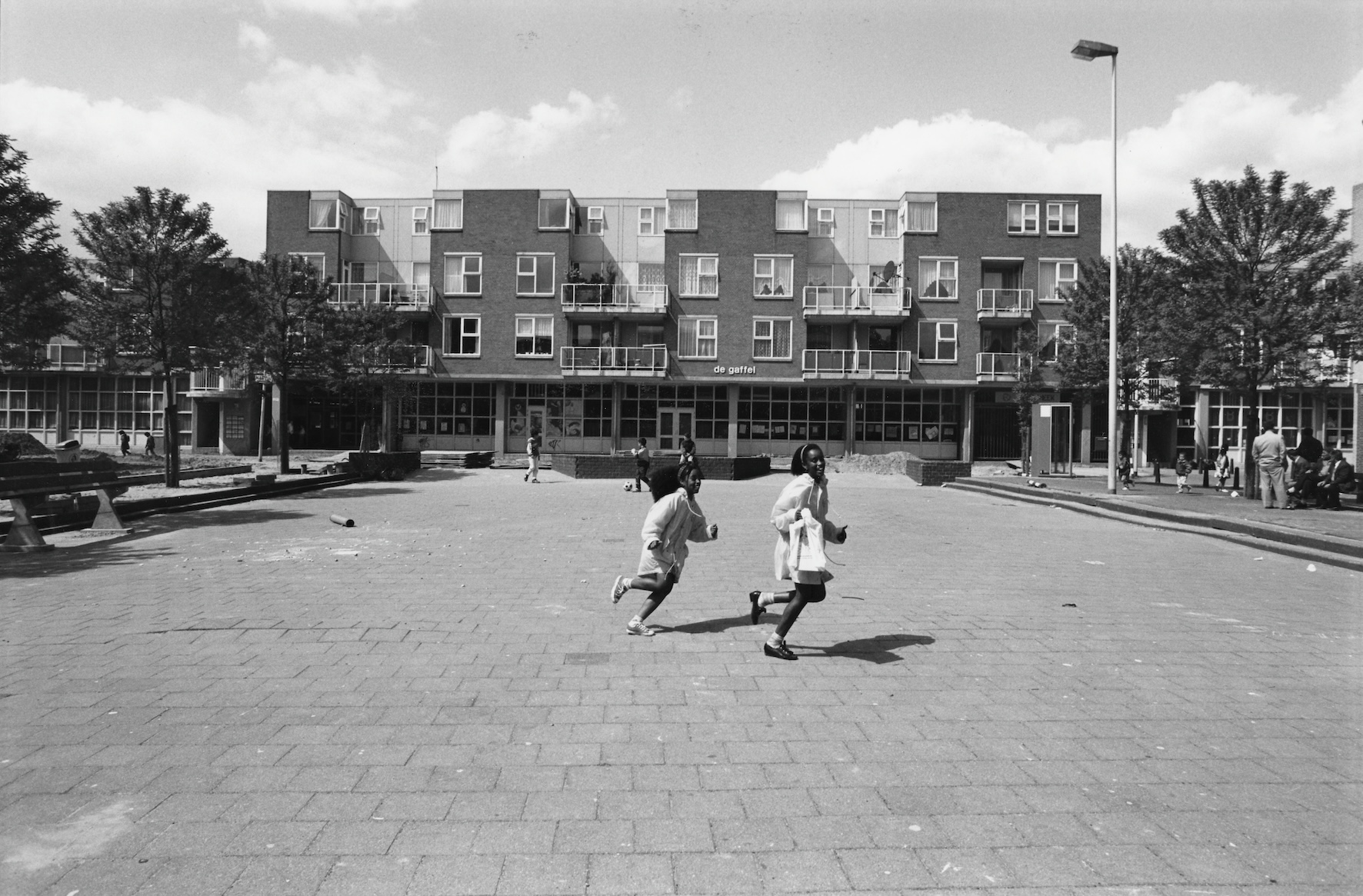
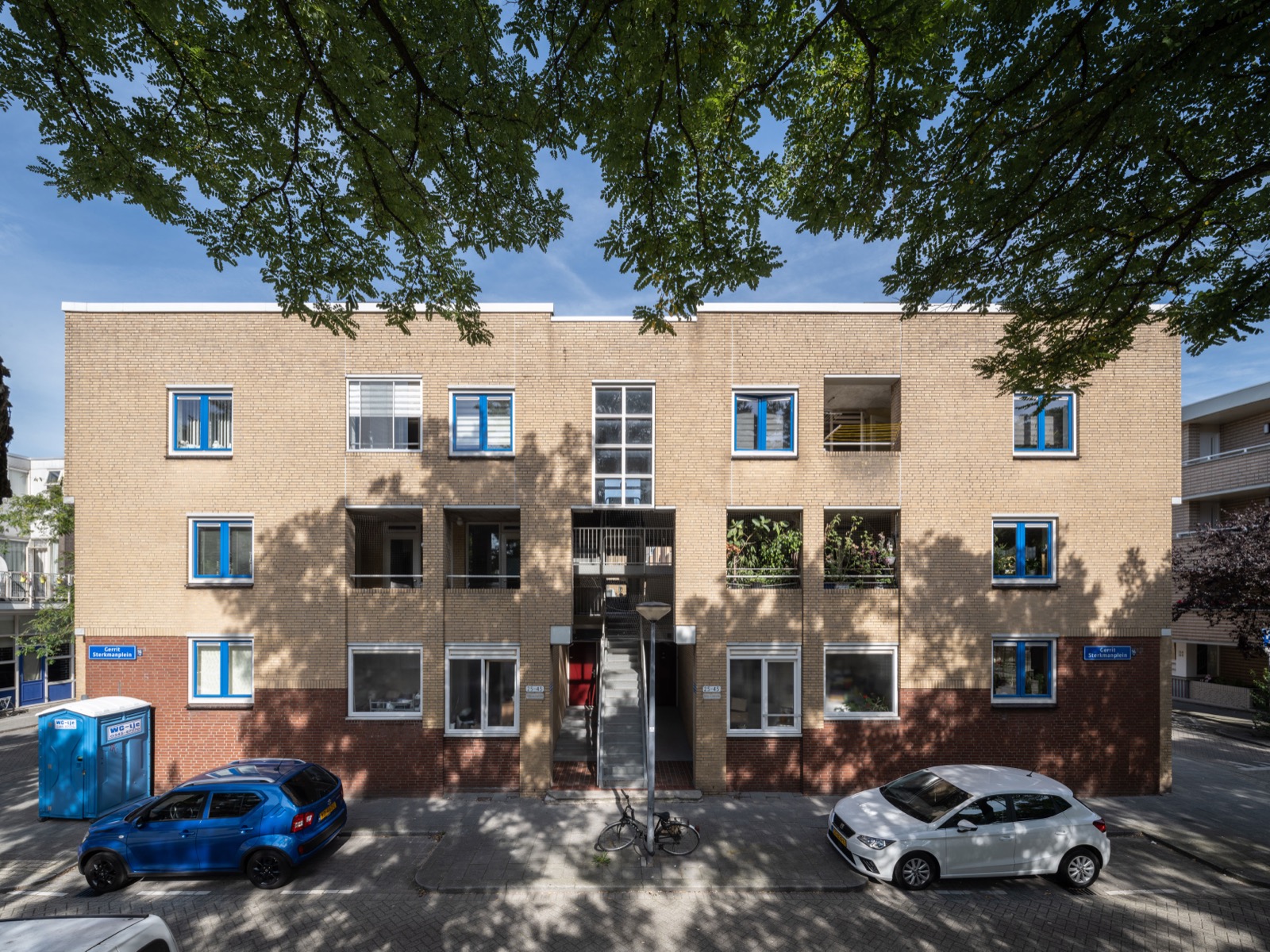
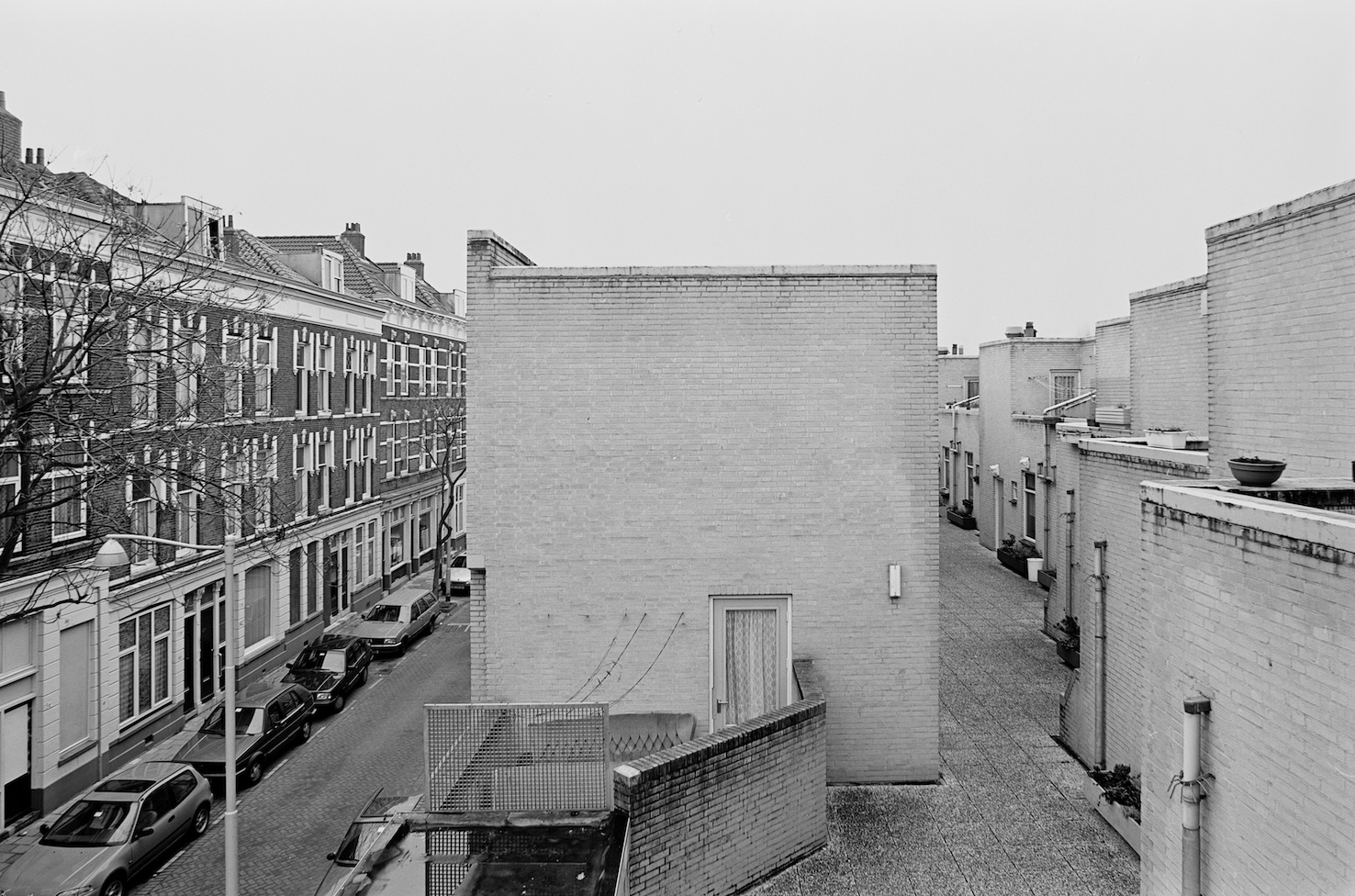
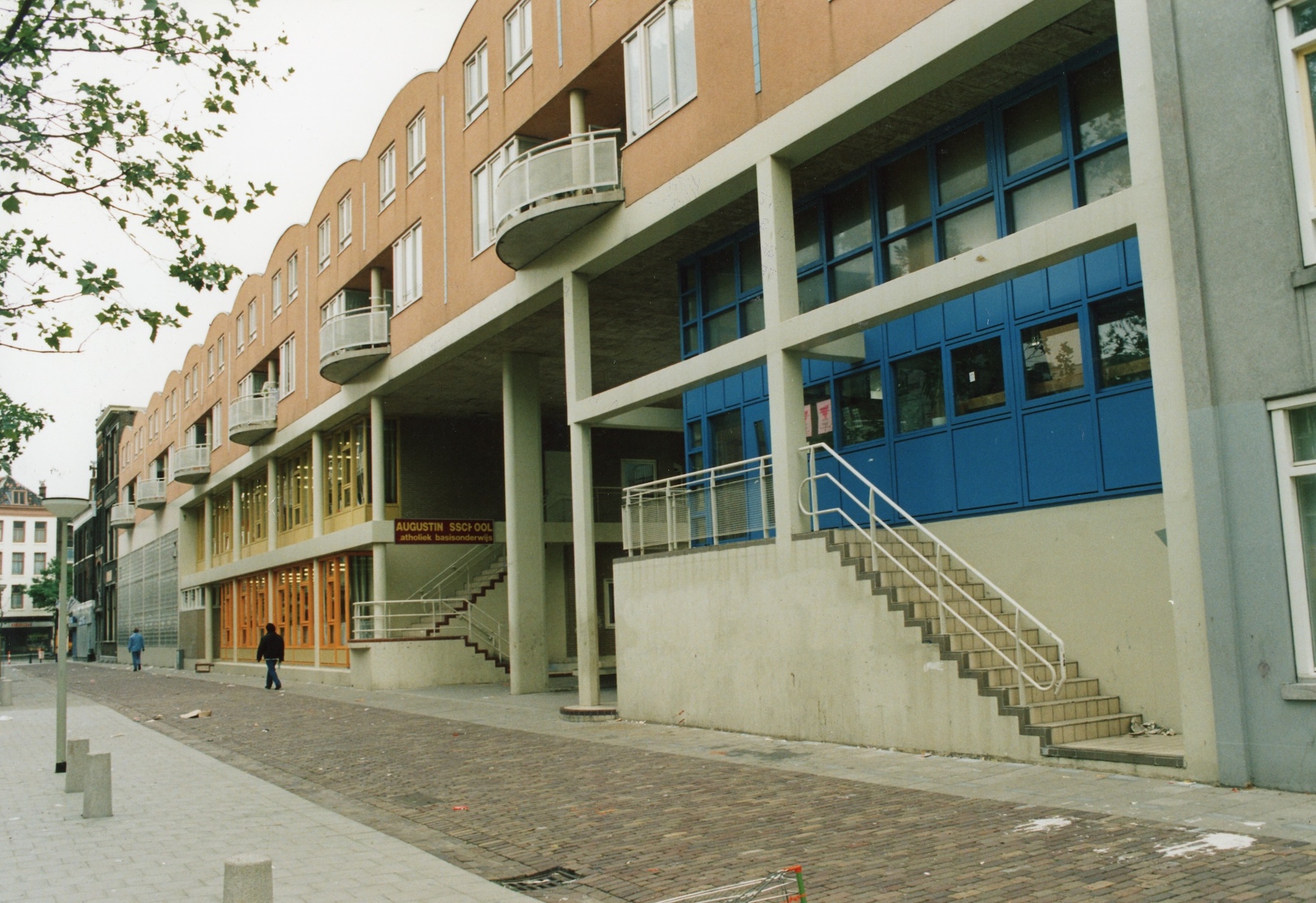
On 1 October 1982 the first pile was driven into the ground. The complex contained 54 dwellings, a clubhouse, a letterpress workshop, a crèche, a library and a primary school. The block was created by breaking open the street pattern in two places: Kogelvangerssstraat and Doorbraak. Moreover, the block bordered two new small squares, Gerrit Sterkman Square and Toni Koopman Square.
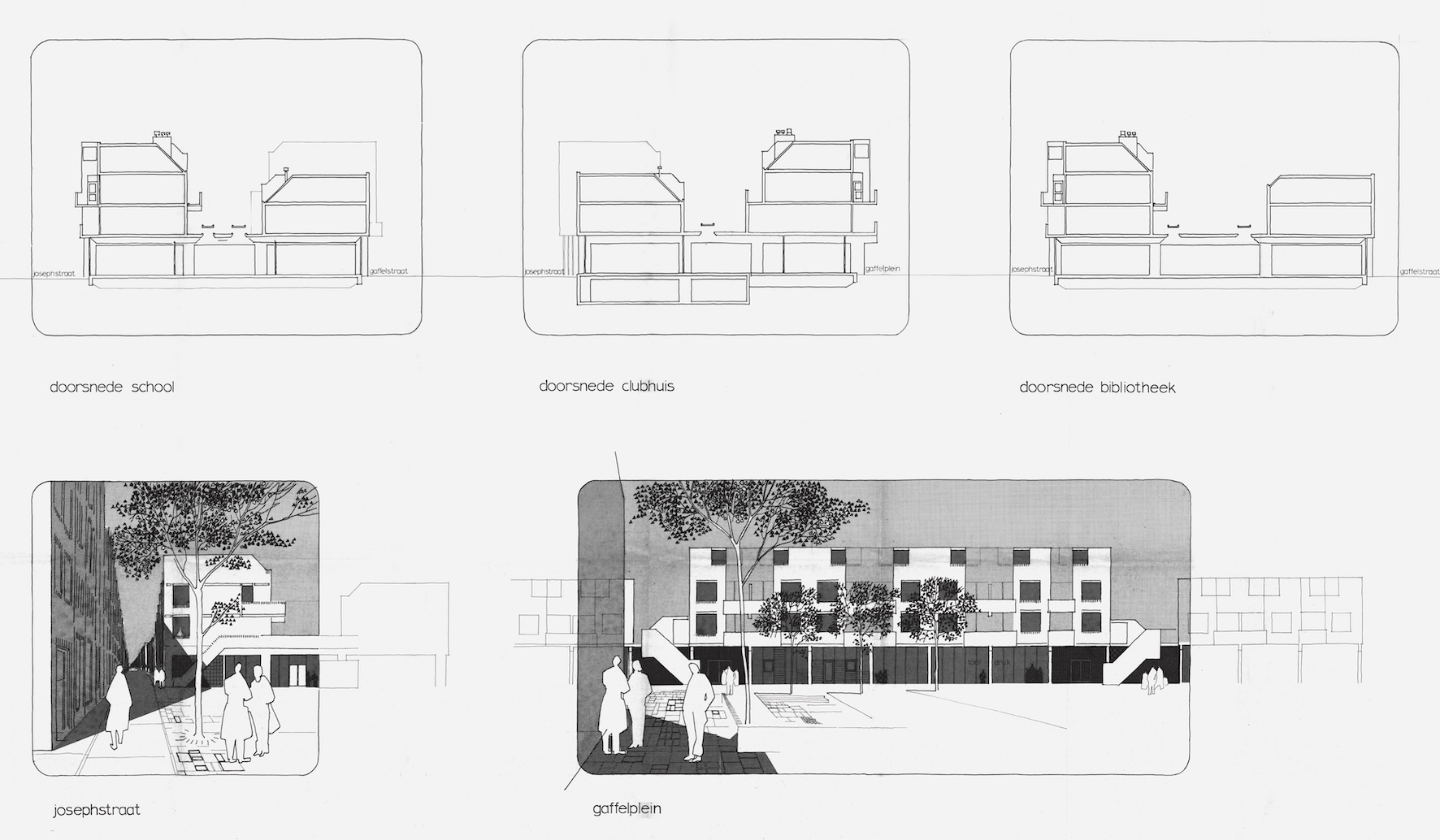
Special functions are located on the ground floor behind a neutral facade of transparent and opaque panels. The dwellings above are mostly wrapped in brickwork facades. Arranged along an internal street, are maisonettes. Ground-floor spaces receive natural light through strips of glazed bricks. The high and low volumes are separated from one another by striking half-round enclosed staircases, which were opened up again shortly after completion of the building. An original version of such a staircase is located on the northern side of Kogelvangerstraat.
Terug naar kaart
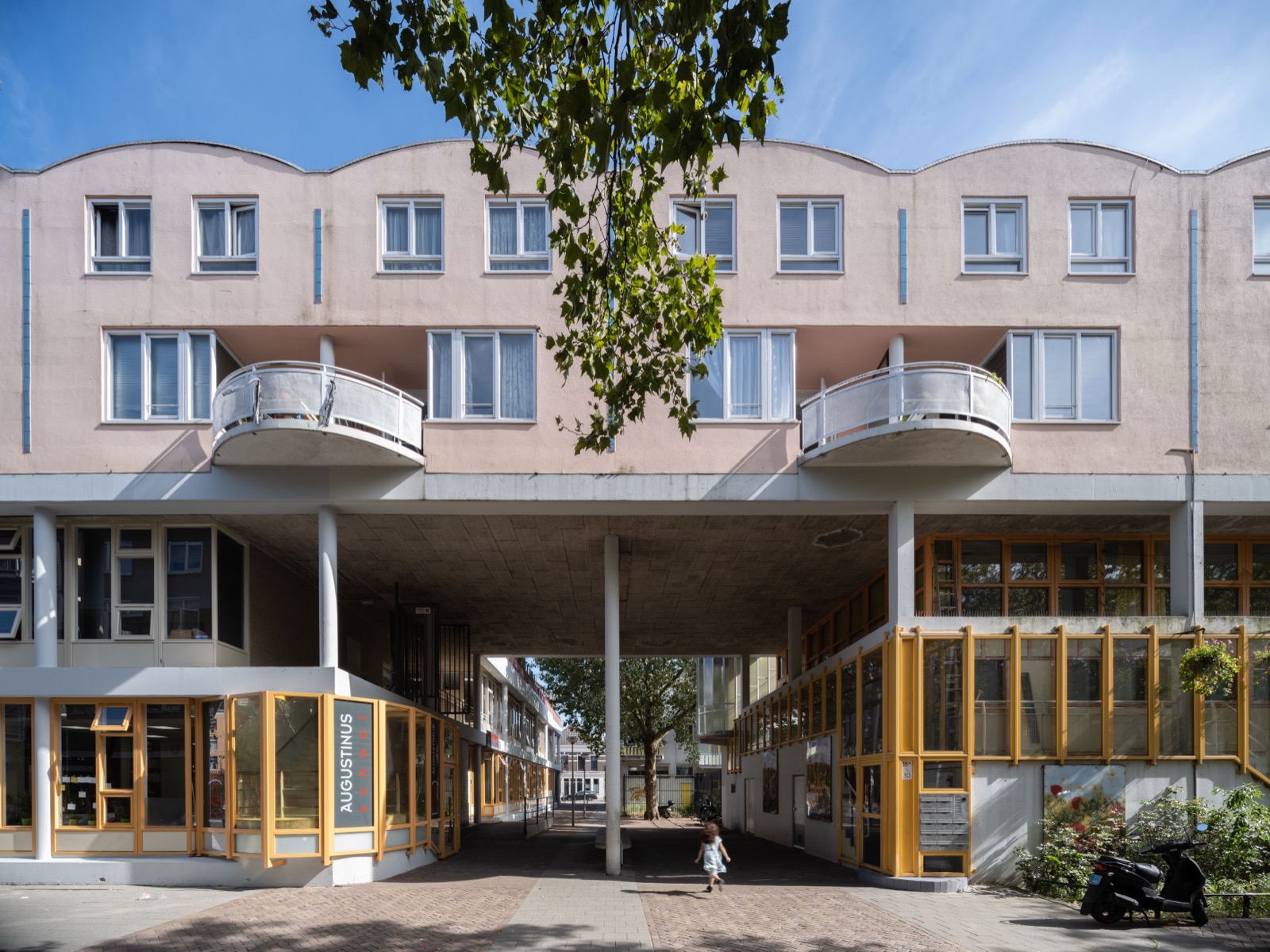
Architecture firms such as Mecanoo, DKV and Girod & Groeneveld gave a new impetus to urban renewal in the mid-1980s. In their projects they deviated from the standard architecture of urban renewal by introducing modern materials and an abstract design language. This project is also optimistic and innovative in its use of glazed brickwork, untypical pink stuccowork, metal fencing and exposed concrete structure.
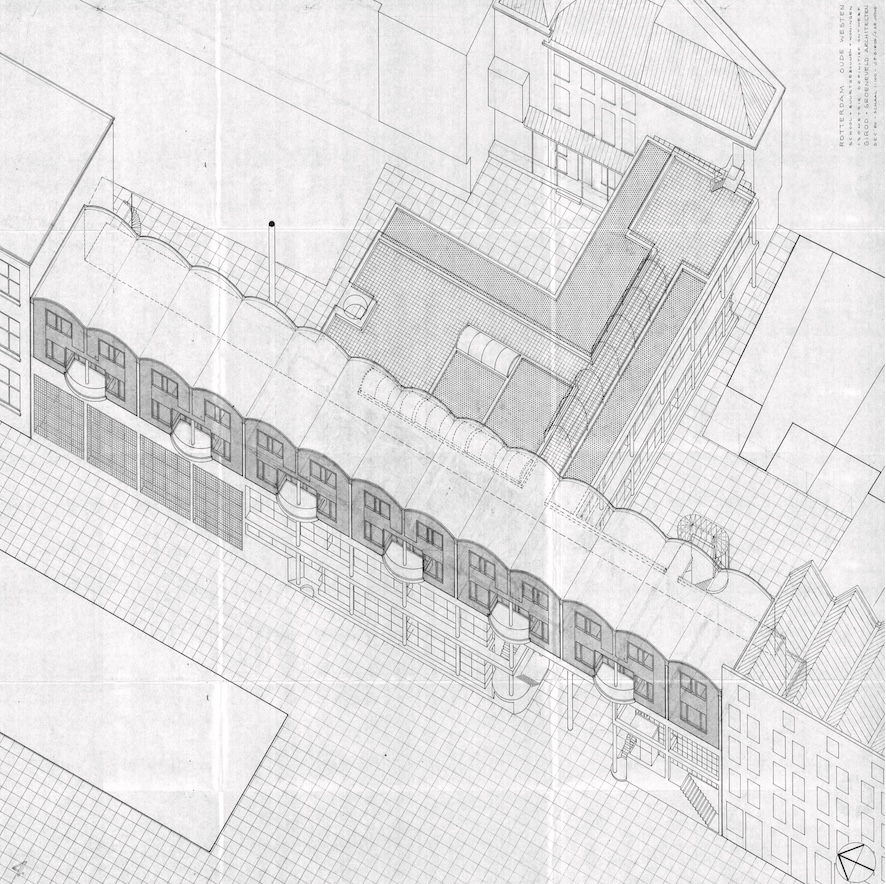
The school facade contains as much glass as possible. The gymnasium features a facade of glazed bricks to admit natural light during the day and allow artificial light to illuminate the street at night. The maisonettes are accessed from a residential deck at the rear. The dwellings have a semi-circular roof that plays on the then popular mansard roof; both refer to the typical old Rotterdam street walls topped by pitched roofs.
Terug naar kaart
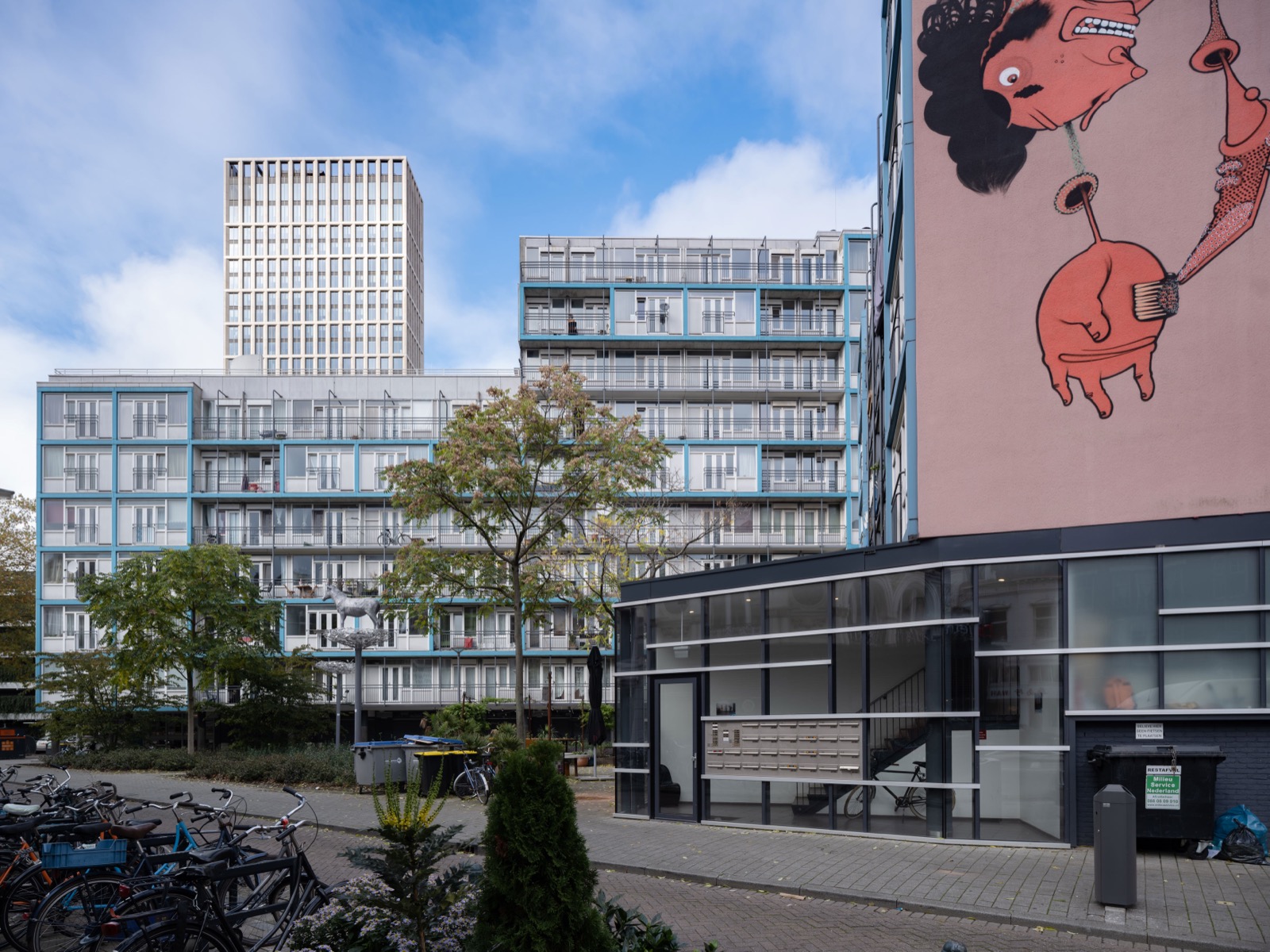
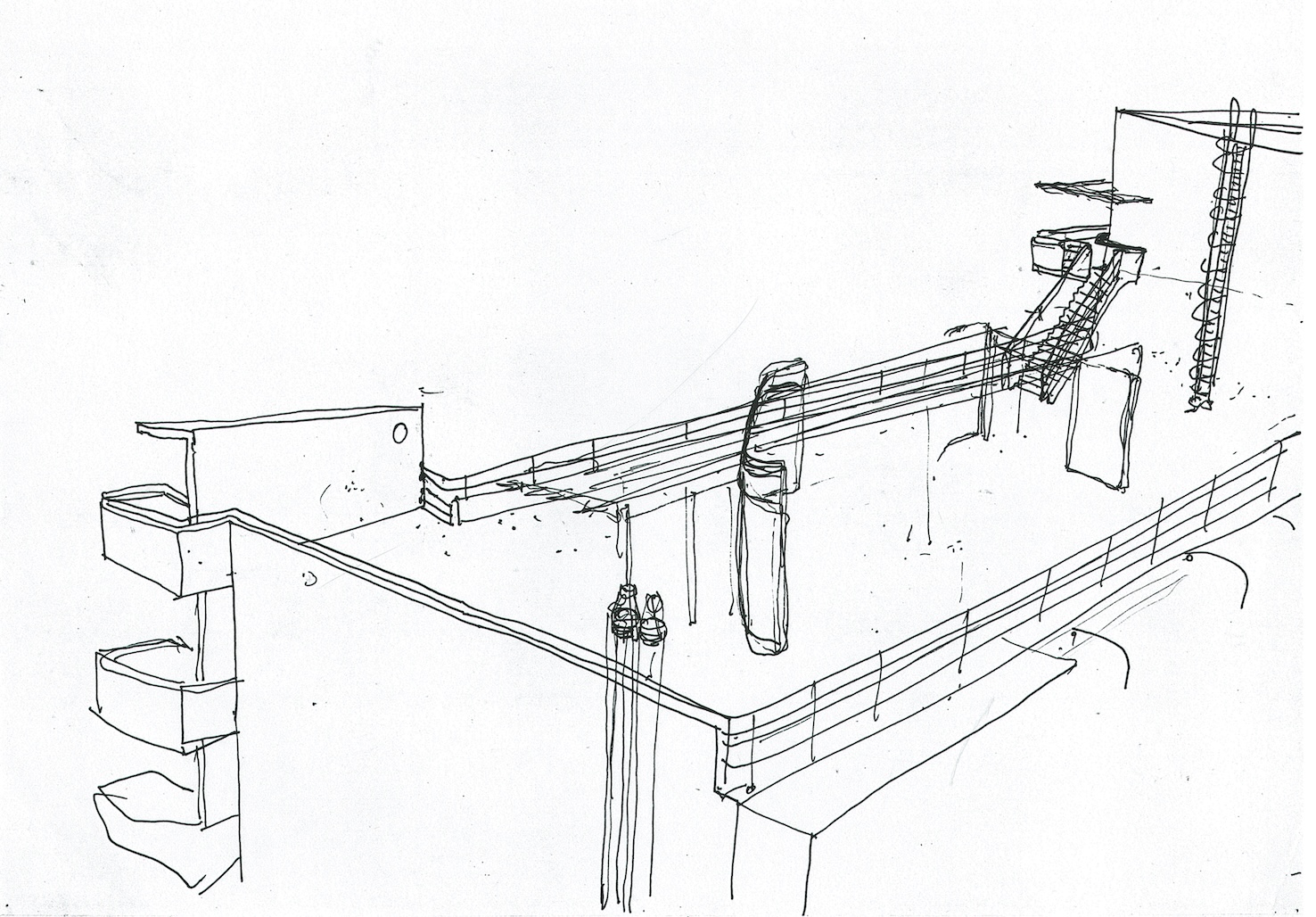
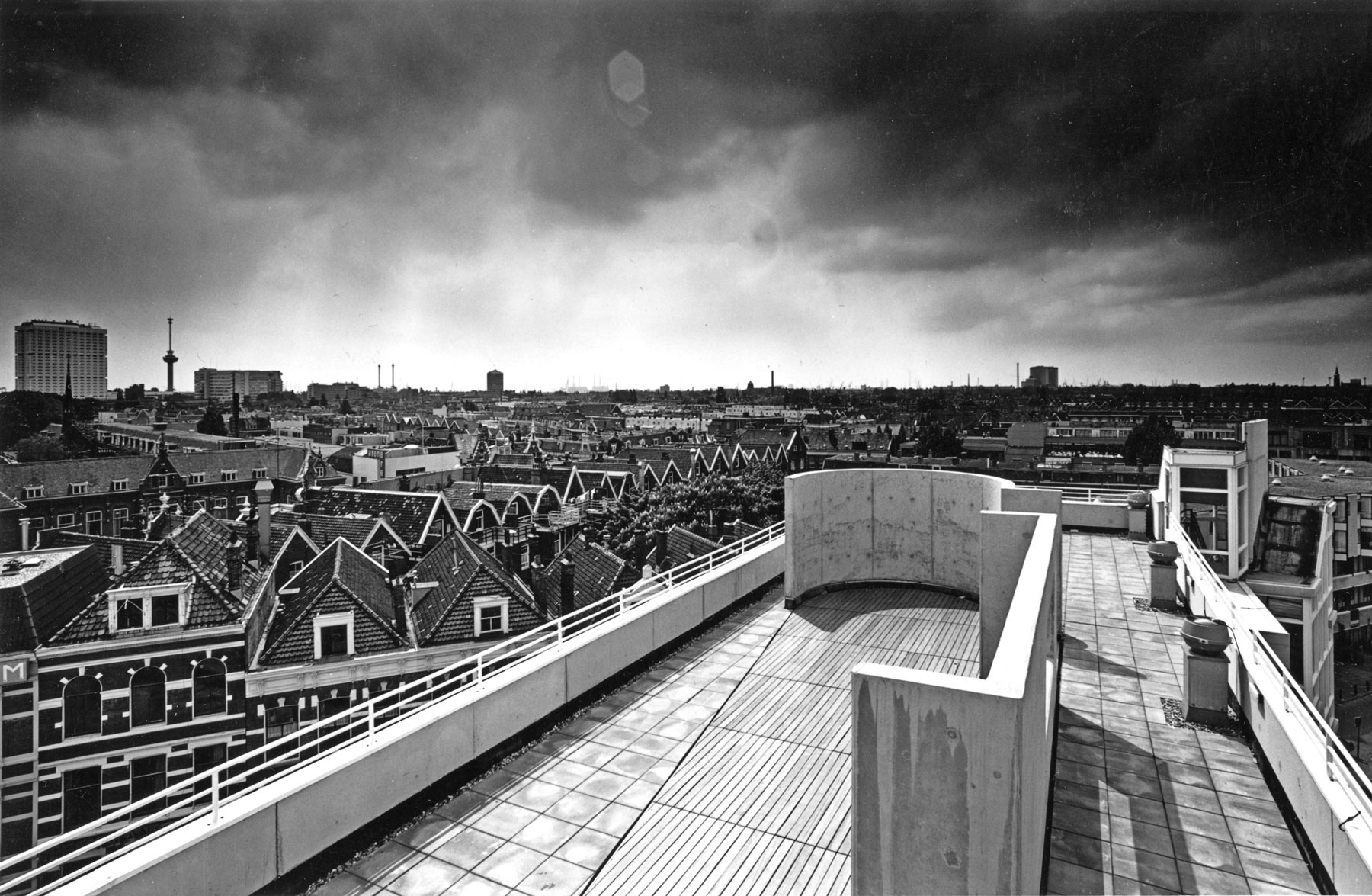
In April 1981, a competition to design a residential complex for young people on Kruisplein elicited 196 entries. A design by three students from Delft was selected as winner. These students opened an architecture office called Mecanoo, which would grow to become of the leading offices in the country today. Mecanoo convincingly demonstrated that excellent architectural quality could be achieved in urban renewal and public housing.
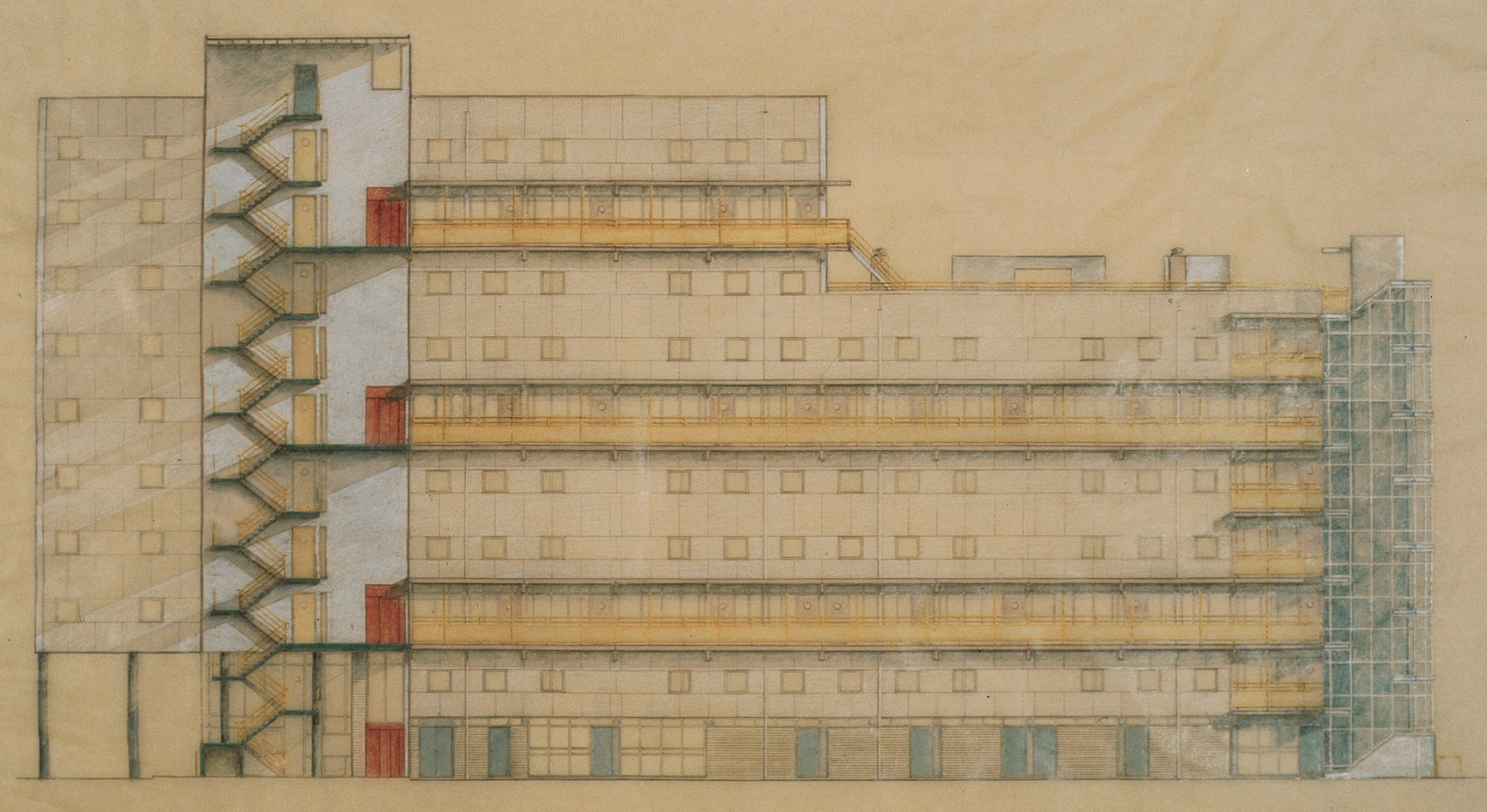
The result was a building with well-elaborated and flexible floor plans in an architecture inspired by Dutch Functionalism. From then on, abstract compositions and stucco facades became the norm in urban renewal. According to the jury report of the Rotterdam Maaskant Prize for Young Architects, won by Mecanoo in 1987: They achieved a level of quality previously considered unattainable, with carefully elaborated spatial compositions, floor plans, access typologies and facade compositions, and buildings carefully integrated into their context thanks to the sophisticated use of materials, details and colours.
Terug naar kaart
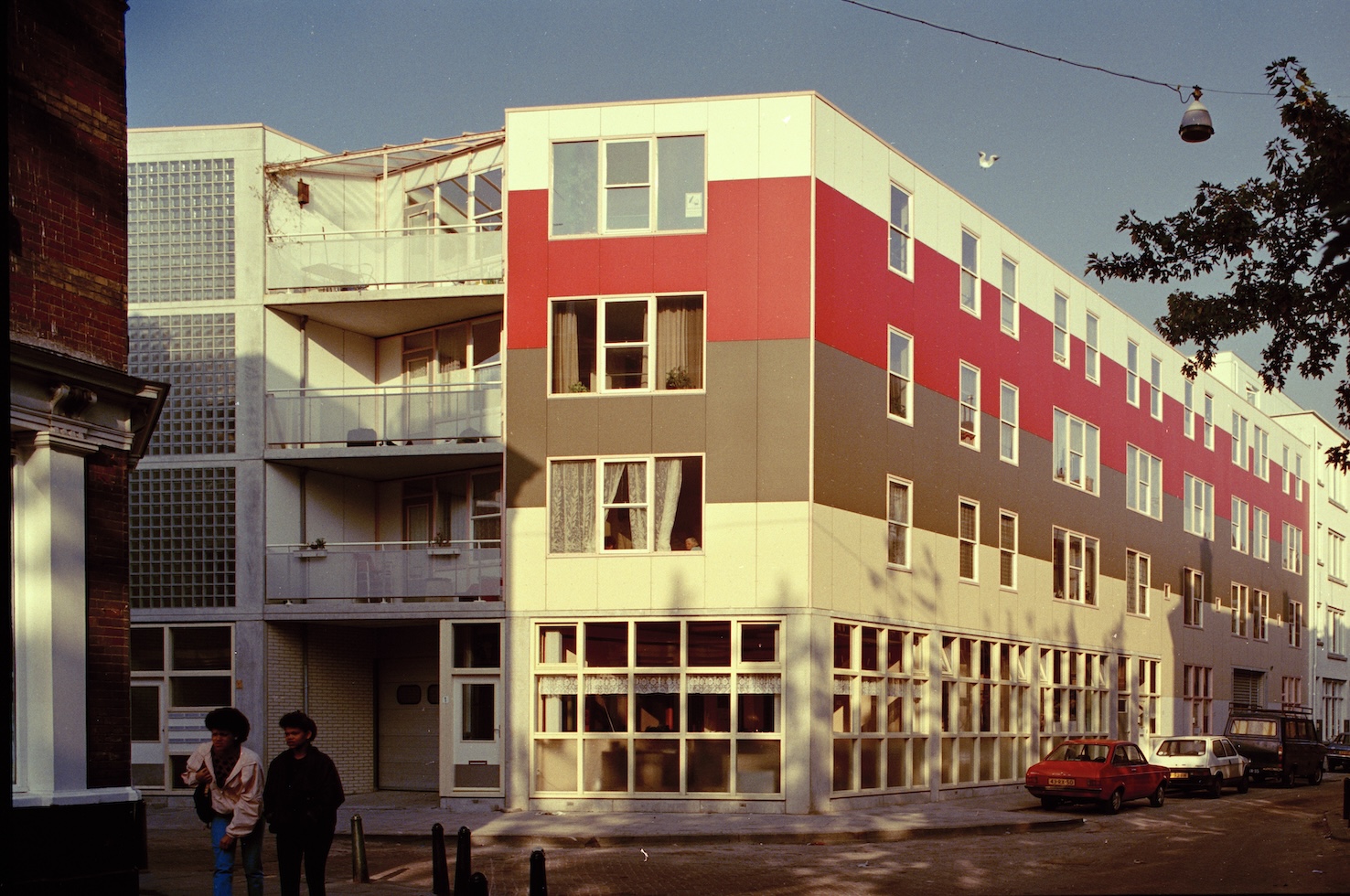
The redevelopment of the Adrianastraat and Van Speykstraat consists of five insertions into the street walls. This design was preceded by a study of the composition of urban building blocks and of the architects of Dutch Functionalism. A key aspect of the scheme was the very careful elaboration of the individual dwelling within the urban block. The abstract pattern of the synthetic facade panels renders the individual dwelling unrecognizable. The original colours scheme, highly distinctive in the graphic composition of the facades, were very characteristic for this project.
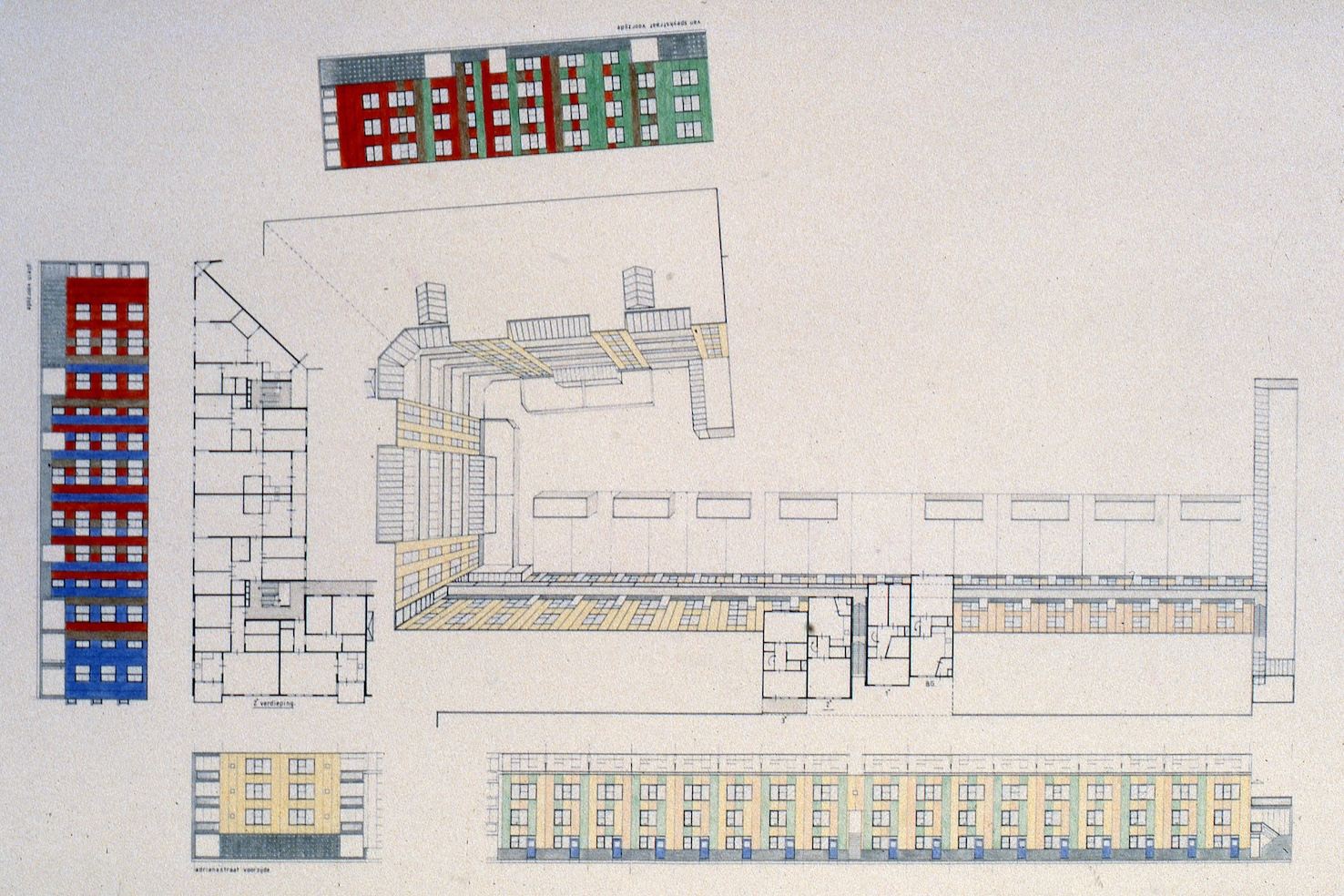
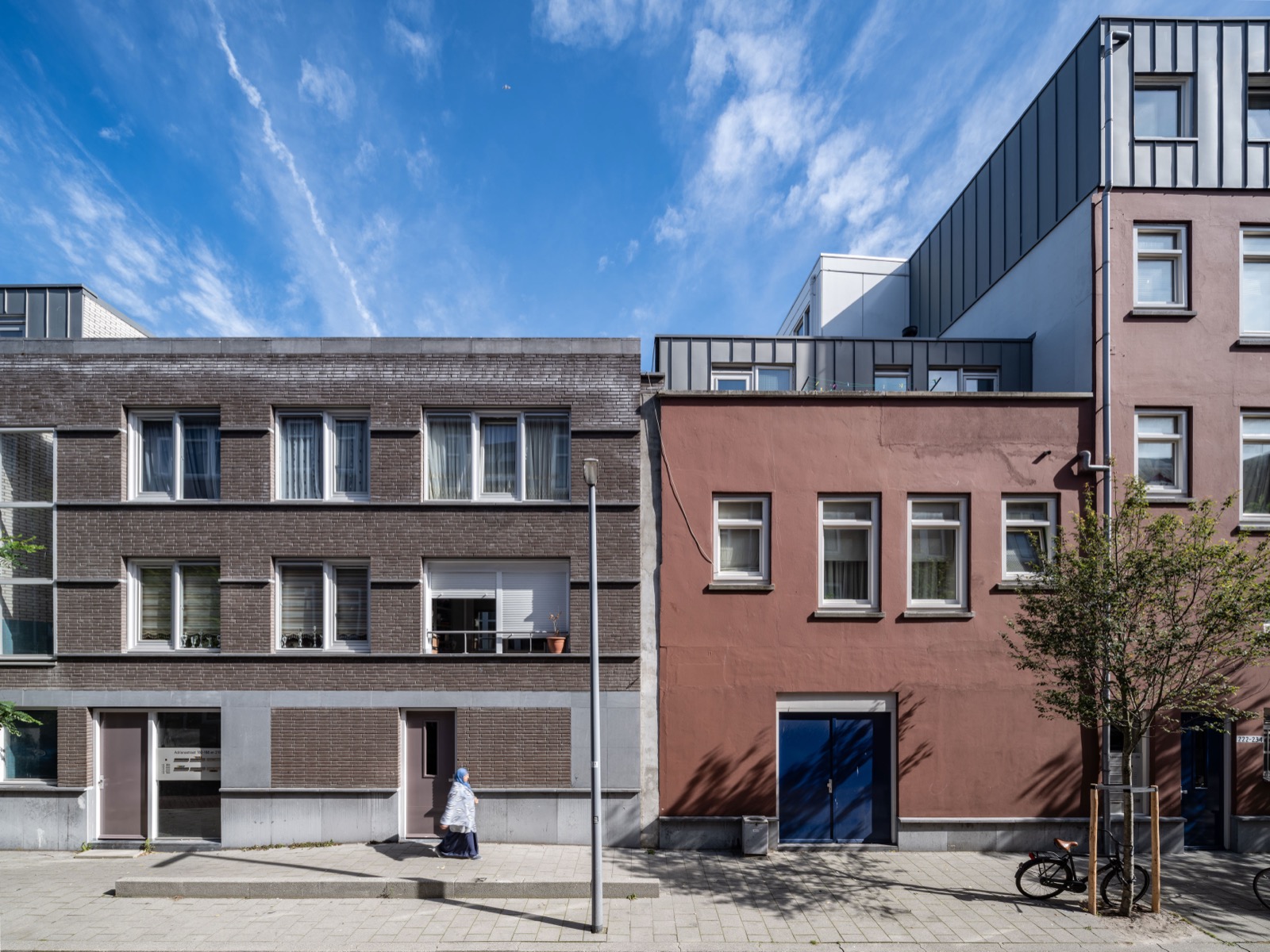
The section of the block largely consists of two maisonettes stacked on top of each other. Ground-floor dwellings have their living rooms facing the courtyard and their open kitchen overlooking the street. In the upper apartments, accessed by staircases on the street side and a gallery at the rear, the orientation is reversed: living room to the street and open kitchen to the gallery. In 2010, a new generation of designers at De Nijl rigorously replaced this facade of laminated Trespa panels with traditional brickwork and stonework.
Terug naar kaart
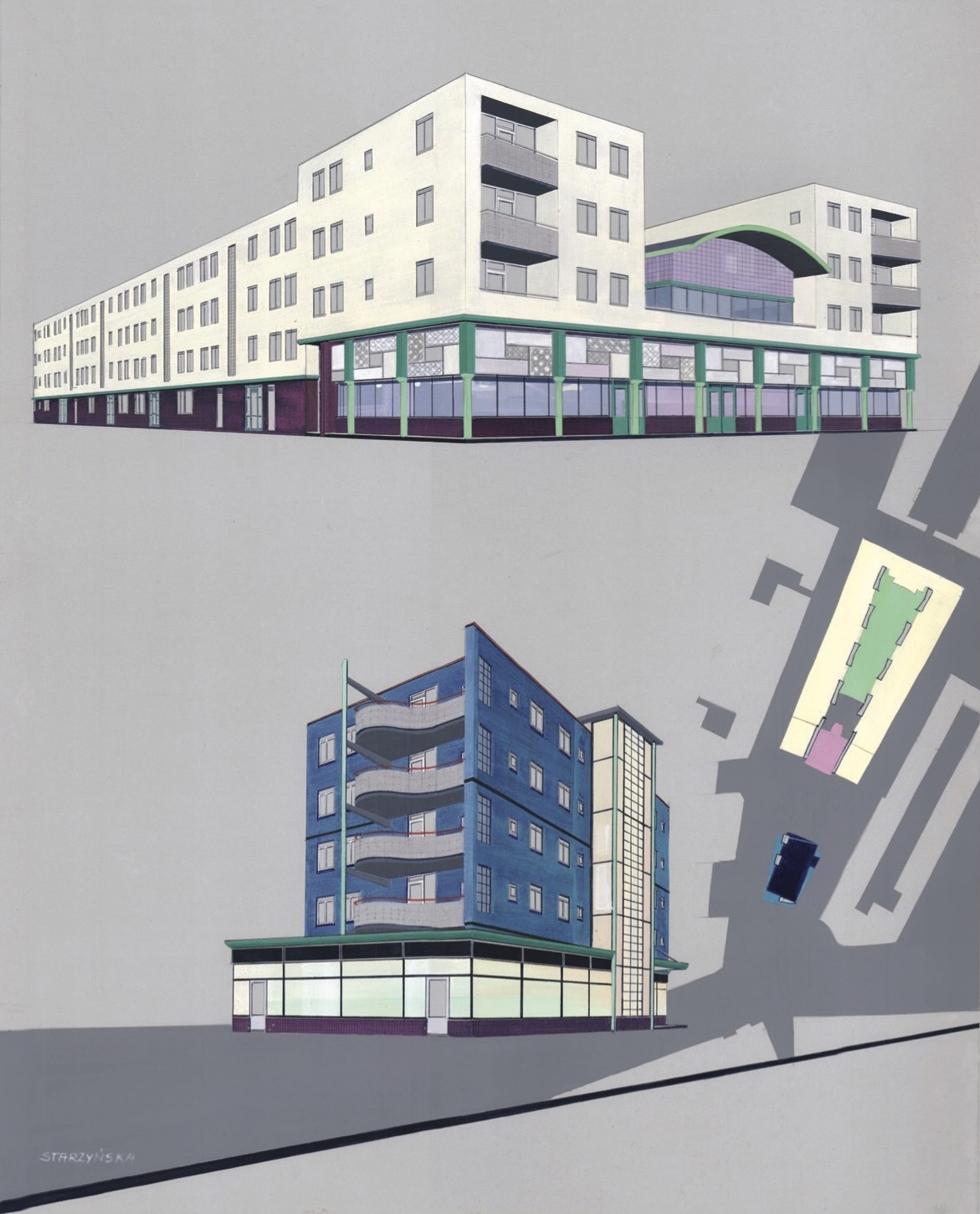
Dividing the scheme into two buildings created a new square: Rijnhoutplein, named after the 2.37-metre-tall Rigardus Rijnhout. The large block has a curved roof and a facade of glazed bricks at its tip. It consisted of 69 dwellings, a hammam and a sports hall above. The bathhouse, was not a commercial success and soon closed. The building was then occupied by a clothes shop until 2000. In January 2013 the vacant building became the home of Leeszaal West. The contours of the bathhouse are still legible in the floor.
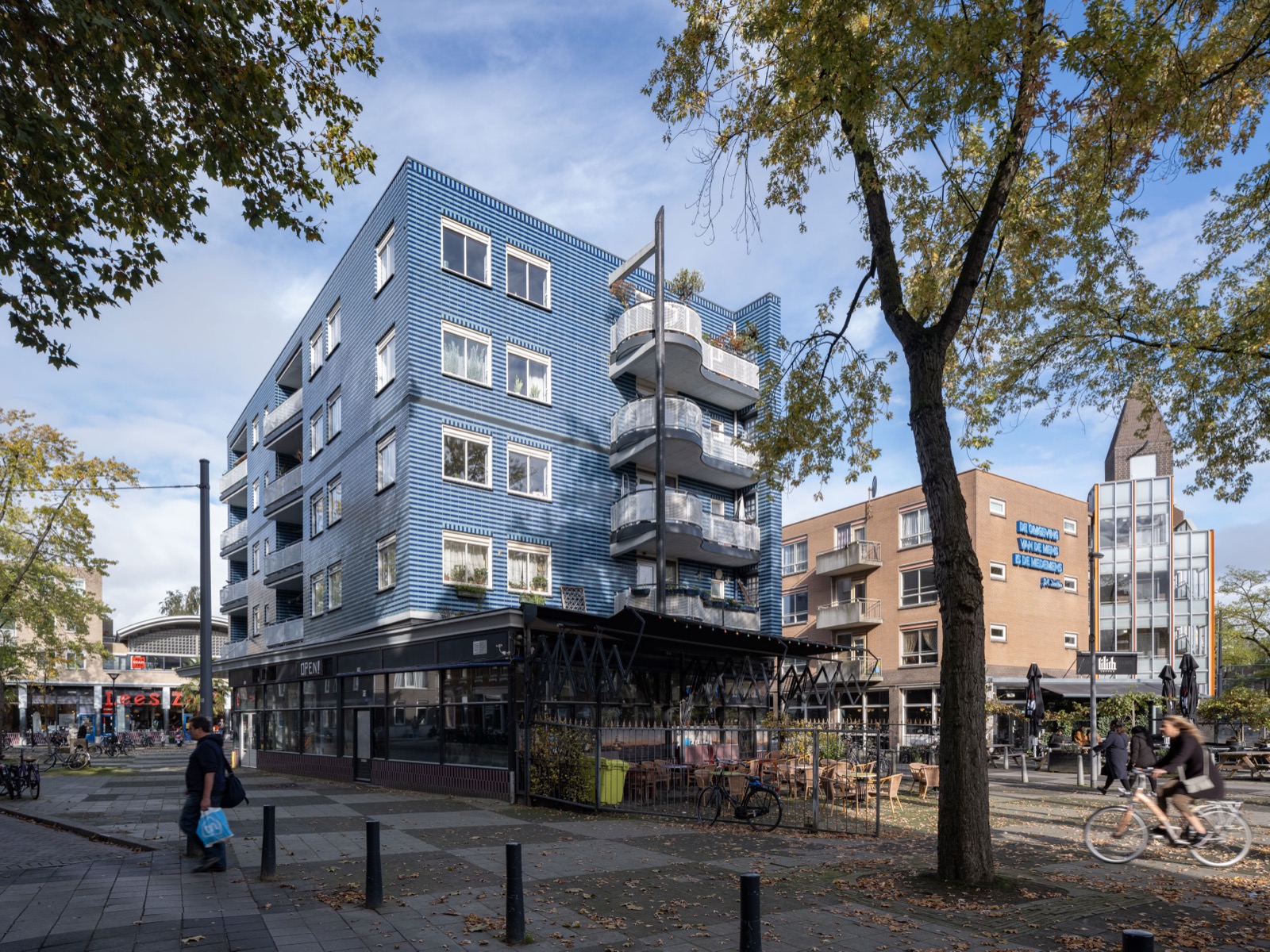
The blue block with 12 dwellings replaced a dilapidated block containing the well-known Café Hoboken at the tip. In the 1970s, this café was the home base of the activists and Trotskyites of socialist Rotterdam. Architect Paul van der Weijden: ‘The Blue Block was a delight: a café and shop, a spacious staircase and pleasant city apartments. Exuberant materials and sturdy, very sustainable details, striking in design and colour: a genuine Urban Villa’.
Terug naar kaart
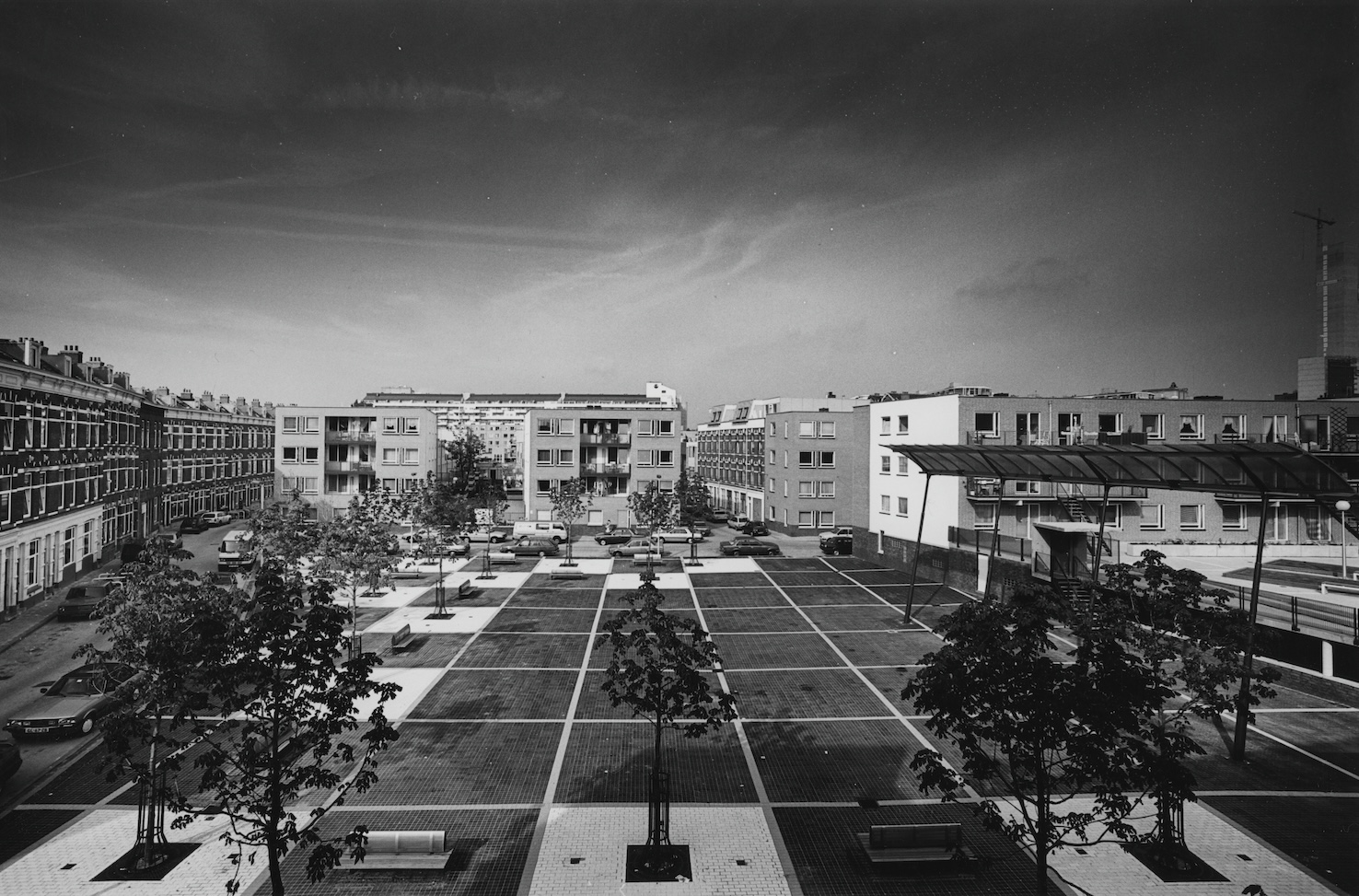
The renewal around Tiendplein involved the partial demolition of narrow building blocks to make space for a new neighbourhood square, Zijdewindeplein. The public area features benches and a strikingly monumental light fixture. On the street side of the existing Tiendplein is a lively urban square lined with cafés. A large opening on the site of the former side-street connects the two worlds: the neighbourhood and the city.
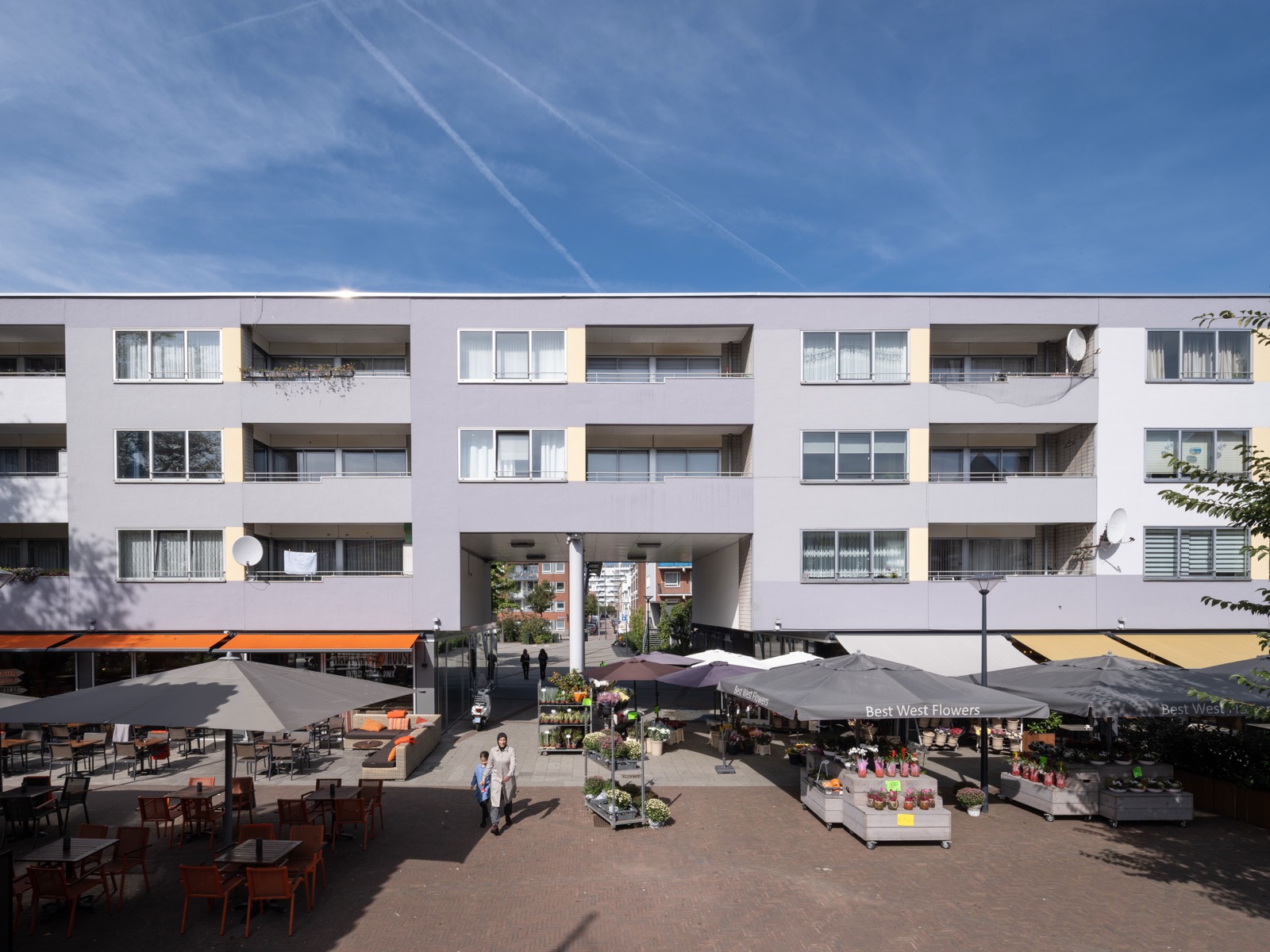
After the success of Kruisplein, Mecanoo developed into a leading office for urban renewal. Tiendplein is typical of the transition in urban renewal architecture in the 1980s. The use of materials is bold, with both brickwork and stucco, and a corner solution of rough concrete. Moreover, apartments are accessed by both staircases and galleries. The development comprises 97 dwellings and 650 square metres of retail and commercial space.
Terug naar kaart