
Post 65 – Blaak
Bekijk routeBlaak, 1988, Stadsarchief Rotterdam
Blaak, 1988, Stadsarchief Rotterdam
general text

1
2
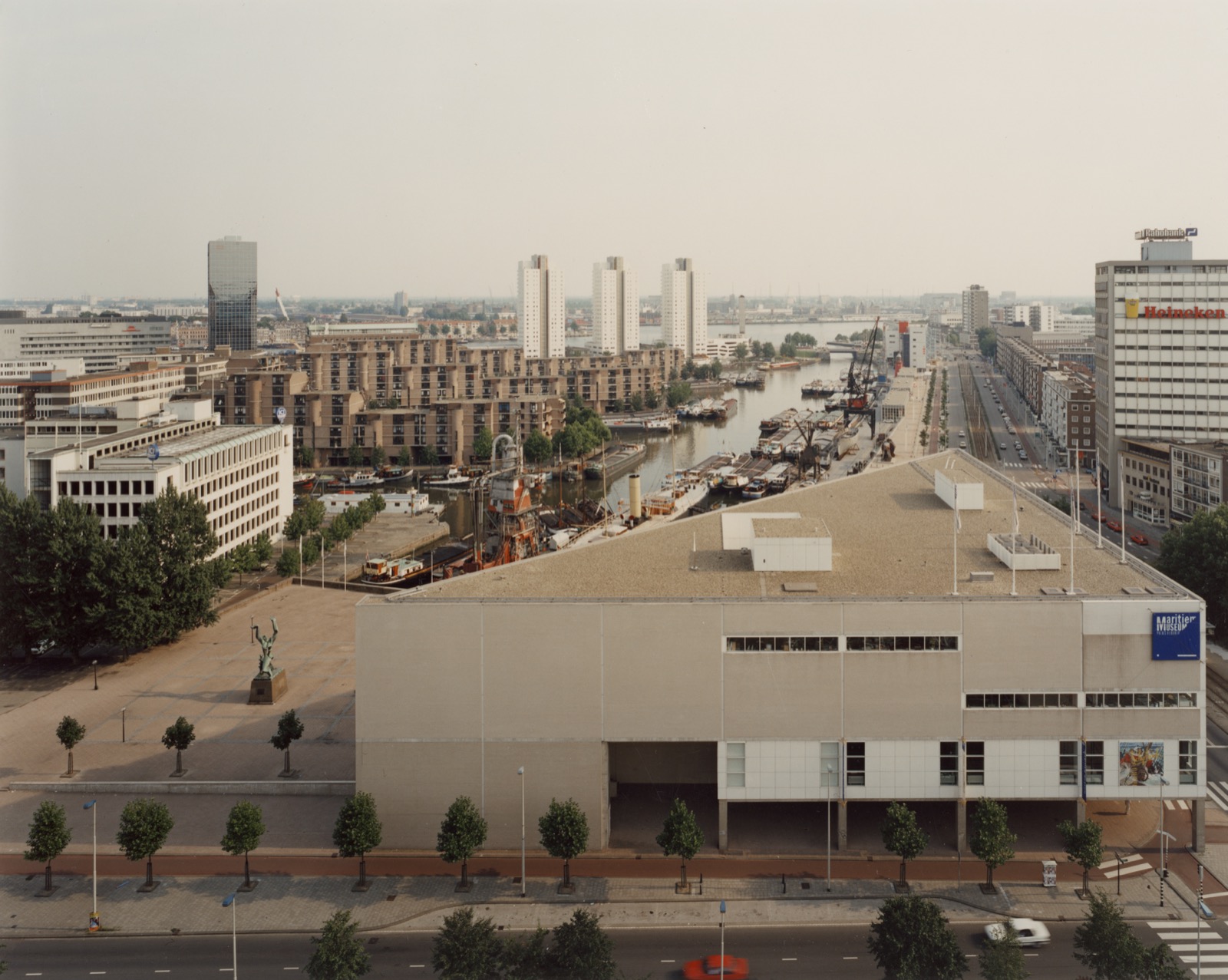
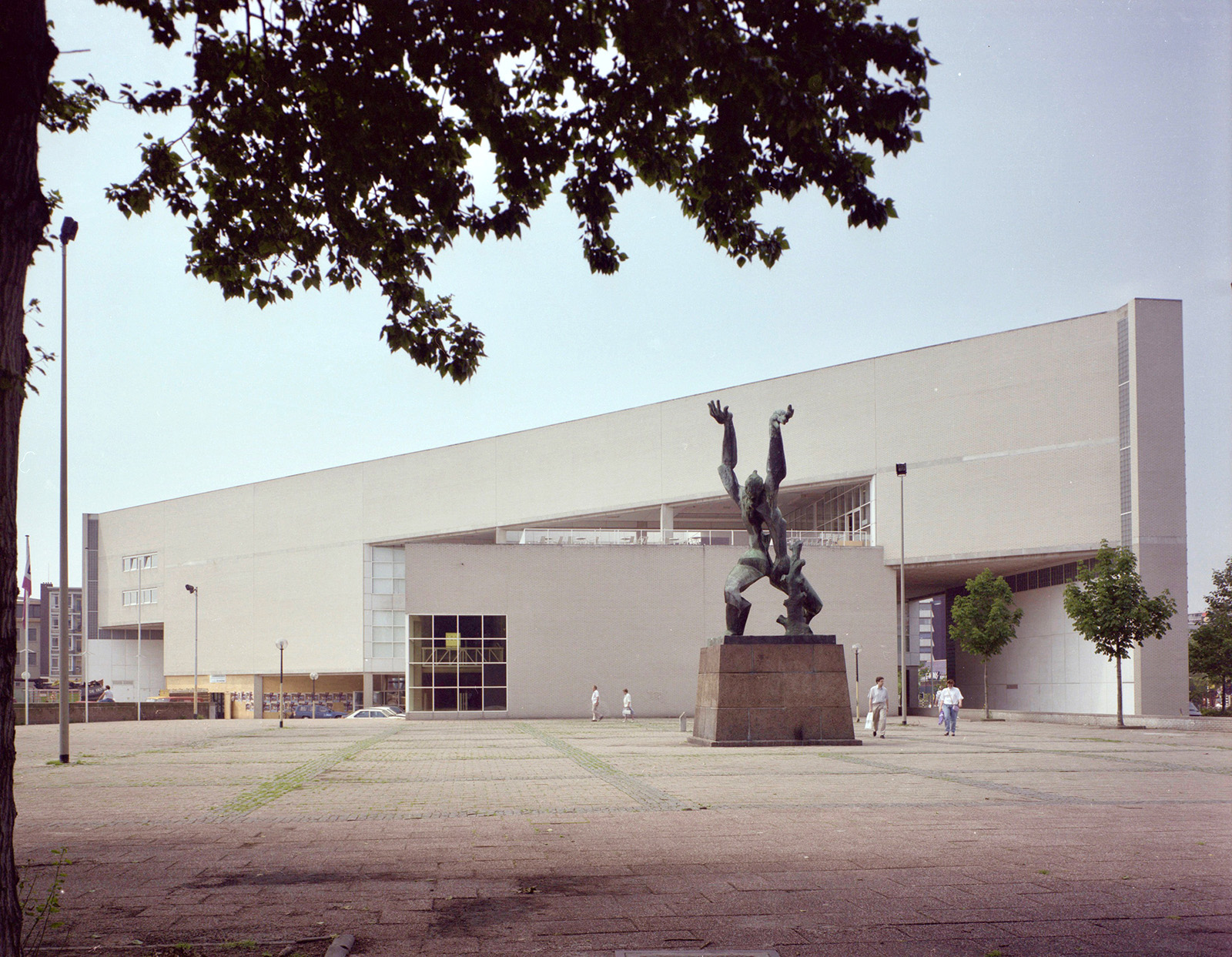
The Maritime Museum marks the transition from city to port. The museum was a key part of the City Centre Plan, which put maritime tourism at the top of the agenda. The inner-city docks and quays became the setting for new recreational uses, with historical ships and pedestrian routes. The museum features a modern composition that reflects the trends of its time: ‘thematic, analytic, technically explanatory, relevant, provocative and educational’ instead of the customary chronological narrative.
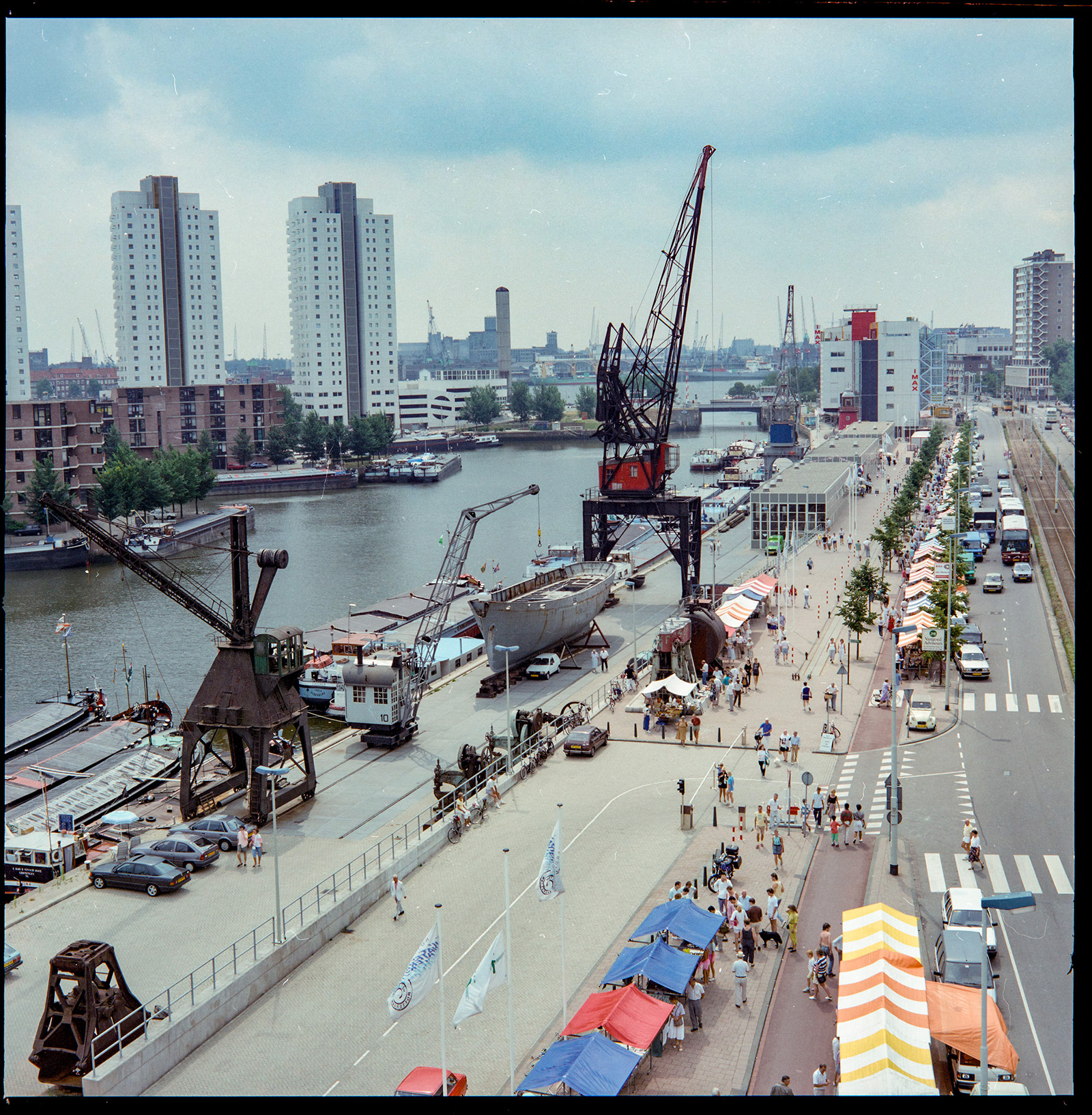
From a windswept spot to waterside city
For many years Churchillplein was kept open because it offered a view of the river. In the 1970s, however, architect Jan Hoogstad called it a ‘windswept spot’ and dismissed the ‘window to the river’ as a myth. This paved the way for the Maritime Museum, which at the time was looking for a new location. Quist designed the museum building with accompanying pavilions along the quay. The museum prompted the further development of the ‘Water City’, which targeted various forms of recreation along the waterfront. The Walk of Fame and the IMAX theatre appeared on Leuvehaven, and a pedestrian boulevard and café pavilion enlivened Boompjes. A new pedestrian route connected all these attractions, from Museumpark to Witte de Withstraat and continuing to the entertainment area around Oudehaven.
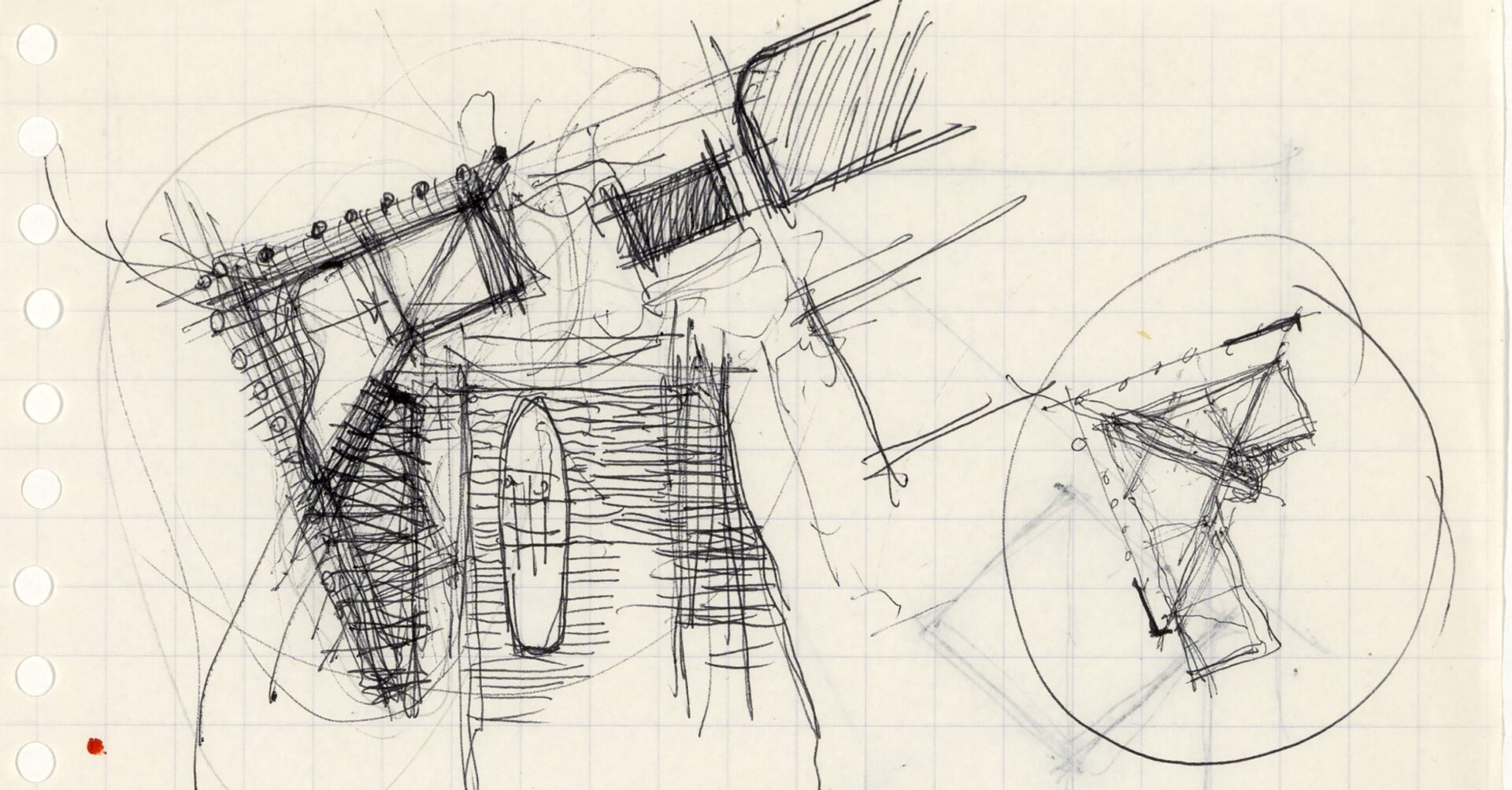
The new Maritime Museum had to be representative of the port of Rotterdam, located next to water in the city centre. The Leuvehaven site offered space for a museum, pavilions and an outdoor exhibition. From the shortlist of invited architects – Aldo van Eyck, Wim Quist, Marius Duintjer, Onno Greiner and Herman Hertzberger – the selection committee in 1981 chose Quist. His first sketches show how the museum acquired a clear form on the drawing board.
A feature of Quist’s architecture was his search for an essence and an aversion to passing trends. He created coherent forms out of straightforward and simple materials. That is illustrated by the Maritime Museum, where he succeeded in accommodating a complex programme in a triangular main form.
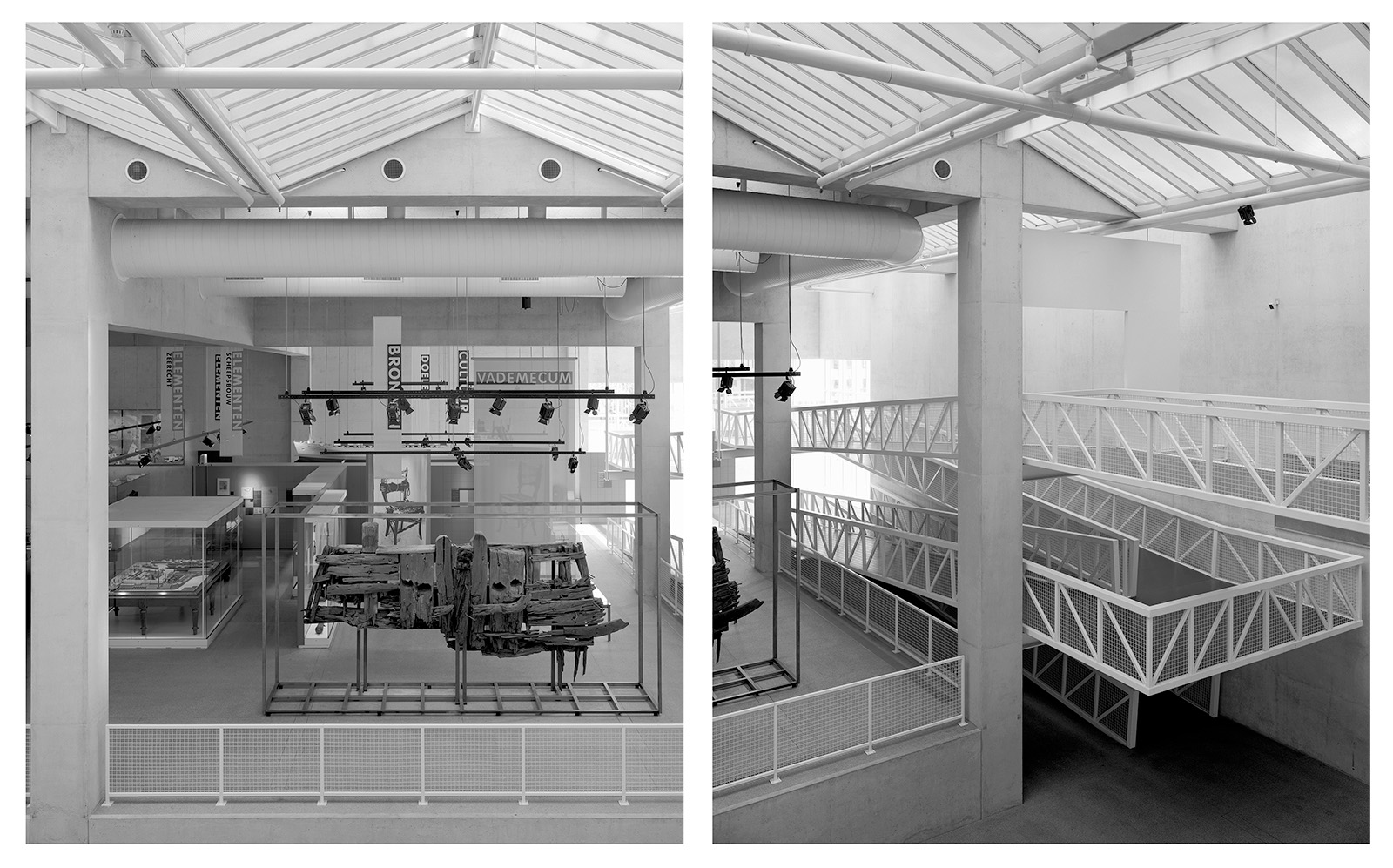
He elaborated his design for the Maritime Museum on grid paper, which helped determine the column grid. The museum consists of public spaces such as the entrance hall, permanent display of the collection, library and galleries for temporary exhibitions. The seemingly simple building features protruding and recessed elements, with arcades and windows offering surprising views of the city and port. Routes through the museum weave together open and closed spaces, taking visitors past vistas via voids and ramps. Quist constantly connects indoor and outdoor space, the city and the port.
Terug naar kaart
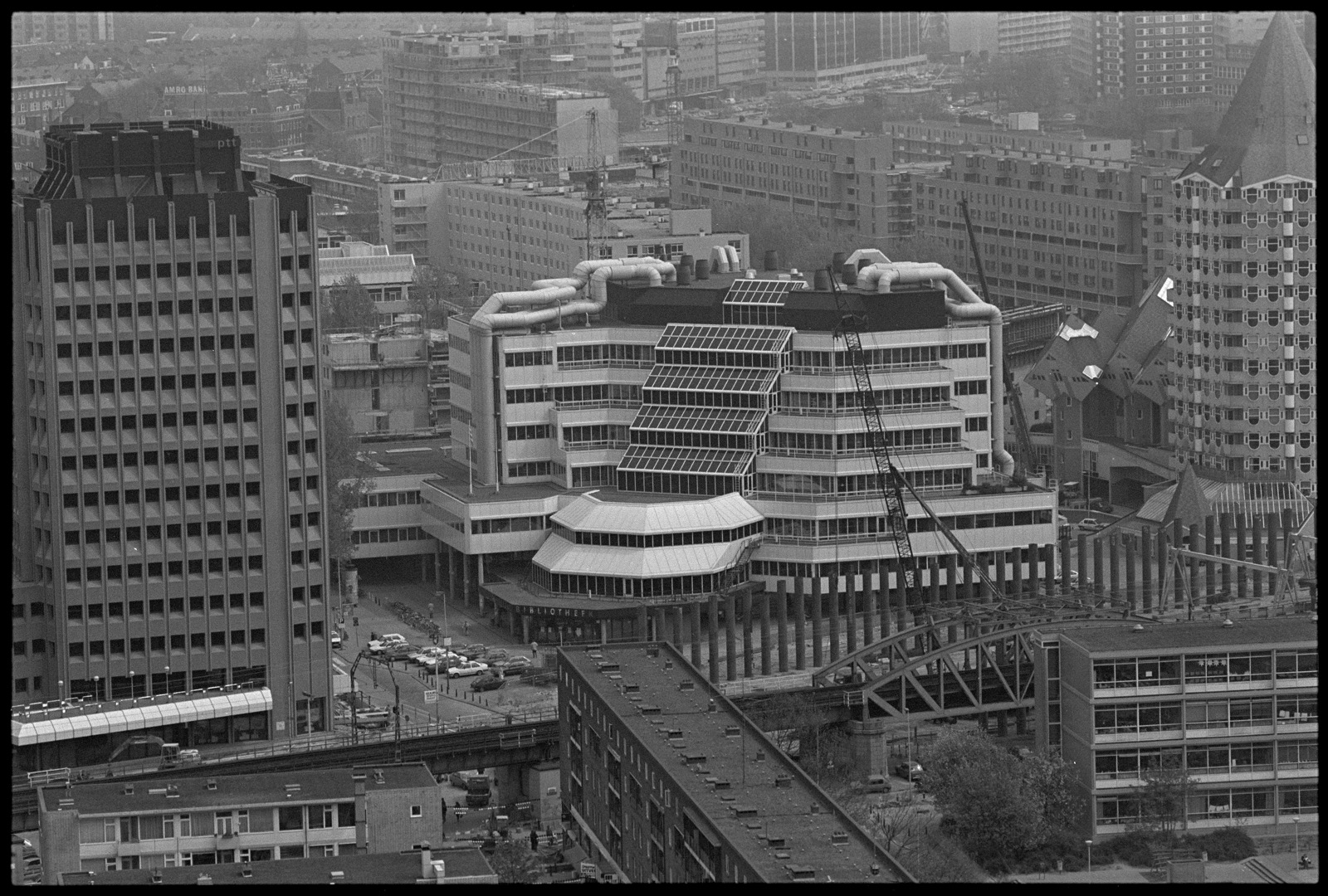
The Central Library was one of the first new large cultural facilities built in the city in the early 1980s. The area around Binnenrotte developed rapidly with the construction of the PTT Tower, the metro station and the Cube Dwellings, which together with the Central Library and the Market Hall now form a mishmash of public interiors in different styles of architecture. As architect Hans Boot – who worked on the design of the Central Library in the late 1970s – aptly put it at the time, this is the ‘Disney corner of Rotterdam’.
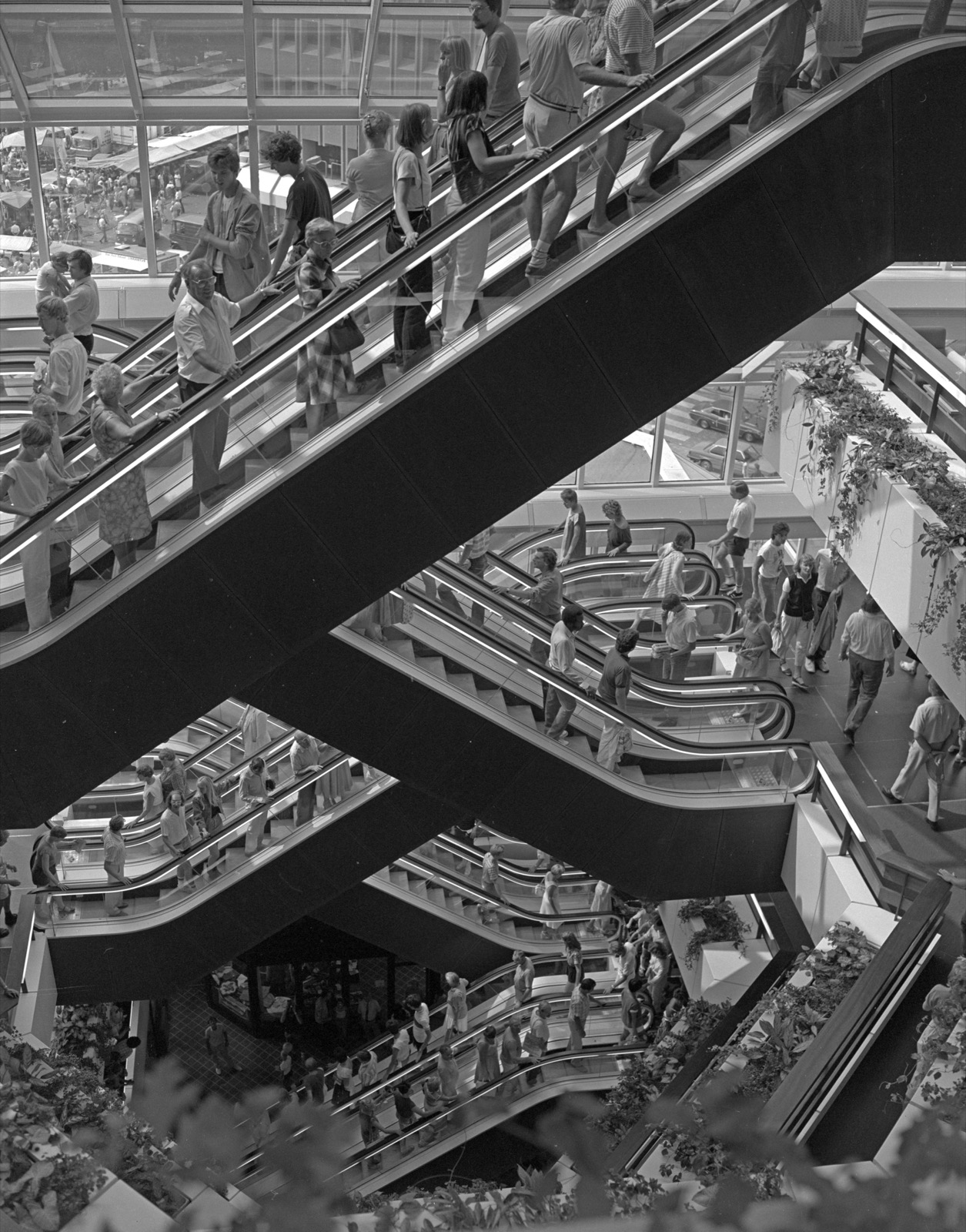
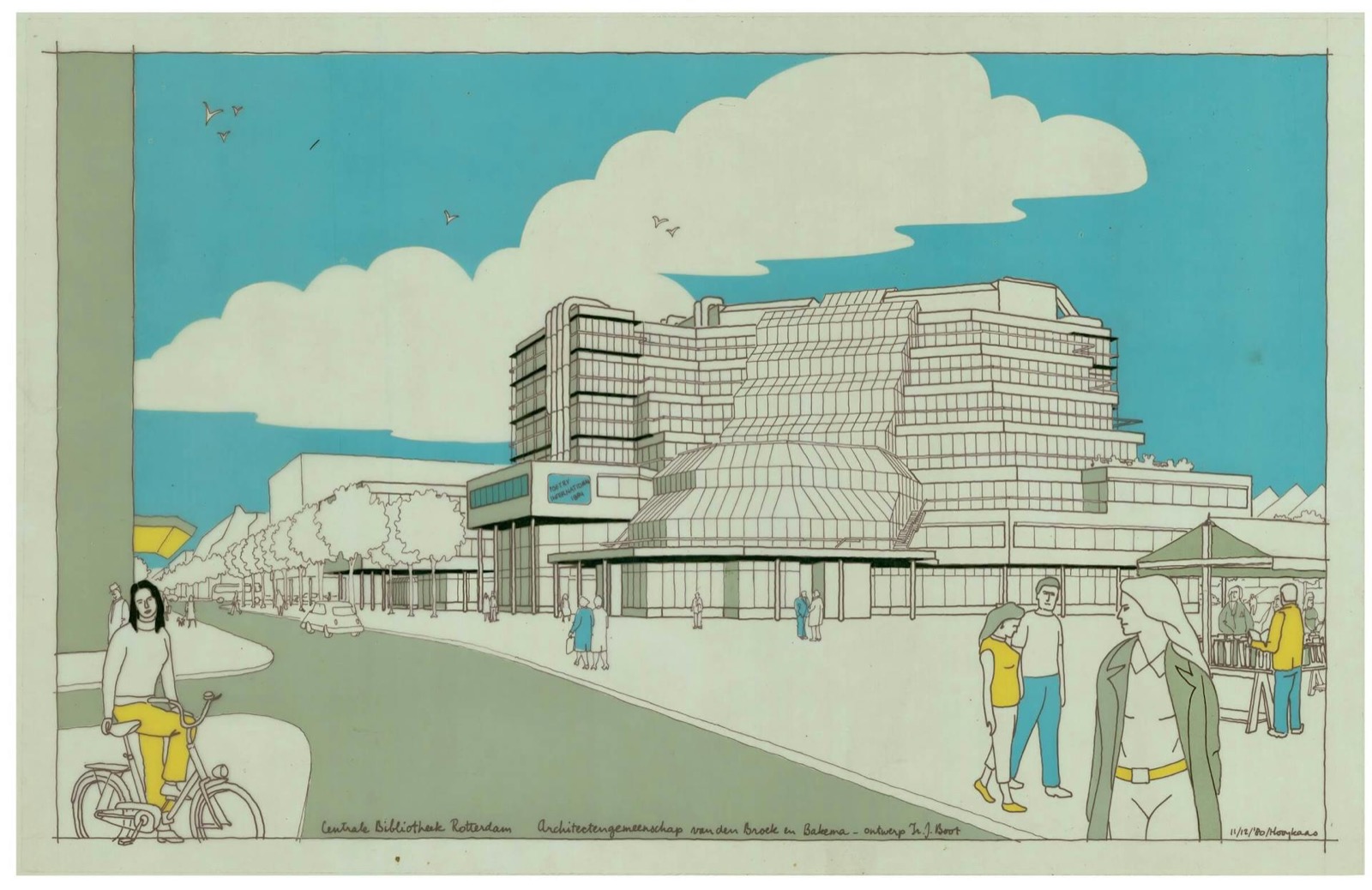
The area around Blaak had to become a counterpart to all the functionalist architecture in the city centre, with the new Central Library playing a leading role. The library had to be an ‘open, inviting, centrally located building accessible for everybody’ that ‘occupied a prominent place in Rotterdam’s social and cultural life’. After a heated debate, the proposal with ‘stacked squares’ by Van den Broek and Bakema beat the introvert design by Carel Weeber. In his speech to mark the start of construction in 1980, alderman Pim Vermeulen commented: ‘The new library will be a building without thresholds, literally and figuratively. […] A building in which nothing is obligatory and everything is allowed’. When it opened, the Central Library was one of the biggest public libraries in Western Europe, quickly becoming a major public attraction with more than a million visitors a year.
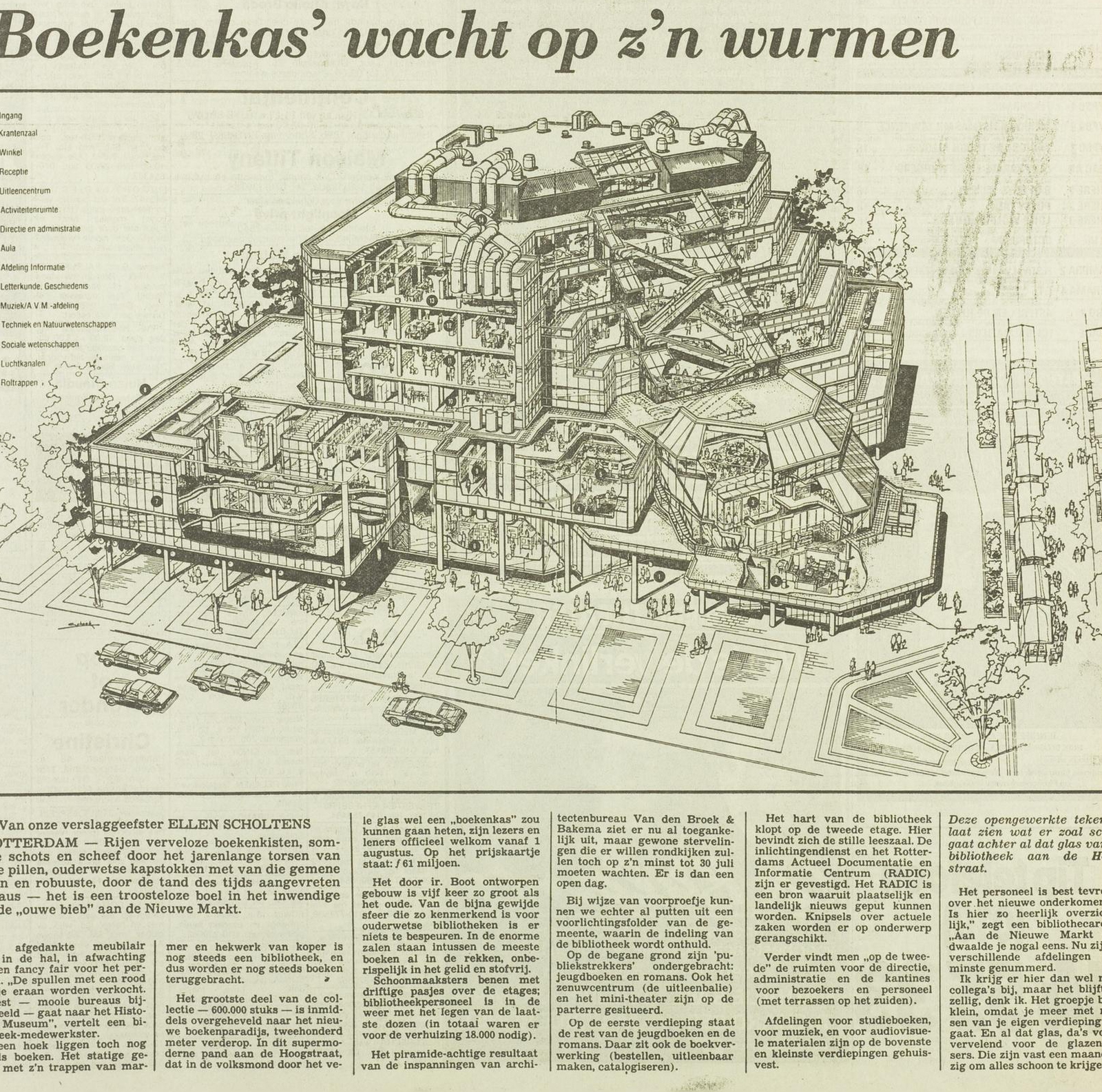
The design by Jaap Bakema and Hans Boot from the architecture firm of Van den Broek and Bakema consists of a pyramid-shaped stack of ‘squares’ of decreasing size. The public space extends through the building as it were. That is also why the sketch design showed entrances on a number of sides. Architect Jaap Bakema wanted to have as many books as possible visible on library shelves rather than hidden in storage: ‘An abundance of books – so impressive! But hidden from the public – to me that was very strange.’
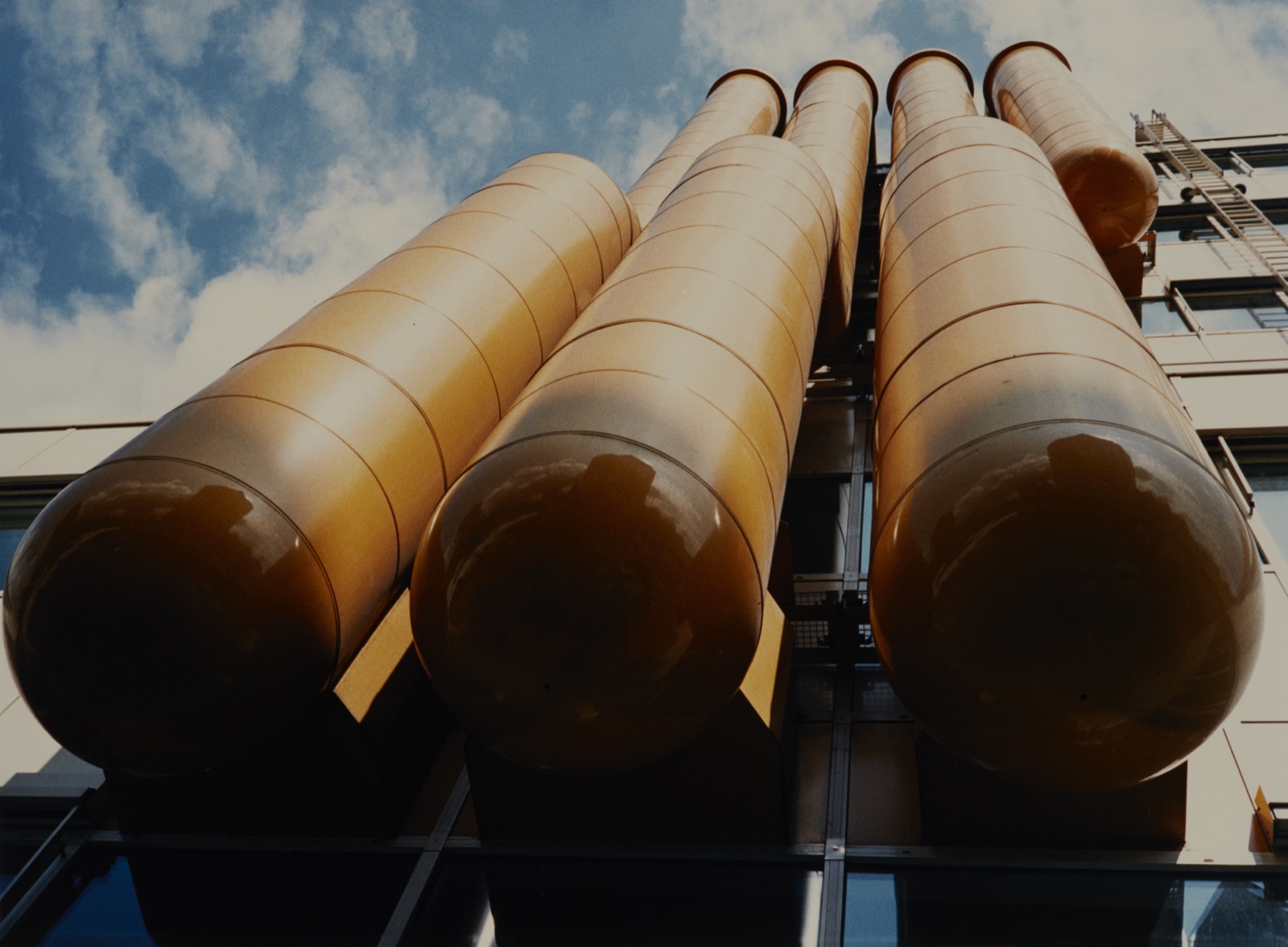
As many technical installations as possible were attached to the exterior, among them the iconic yellow tubes, to create an open interior. The large glazed cascading roof draws daylight in and creates a connection with the surrounding city. Bakema designed a different atmosphere for each activity, such as reading and studying. And he added: ‘If you look from those squares you can exactly see the tower of the church: the city.’
Terug naar kaart