
Post 65 Files – Weena and Coolsingel
Explore the brutalistic colossi and mirrored towers of the city centre
Bekijk routeCoolse Poort, Ossip van Duivenbode
Rotterdam 1986, Stadsarchief Rotterdam
In the late 1970s, gigantic office blocks began appearing right in the heart of the city. Within a short period of time, buildings such as the Hofpoort, Rotterdam Building, AMRO Tower, Coolse Poort, and Blakeburg rose into the skyline. These massive office complexes, with their striking appearance—featuring façade panels in dark red, dark brown, and exposed aggregate concrete—came to define the cityscape.Subsequently, the Weena was designed as an urban boulevard characterized by numerous high-rise buildings and the headquarters of major companies.
Explore the post-1965 architecture of Rotterdam’s city center with this remarkable route.

1
2
3
4
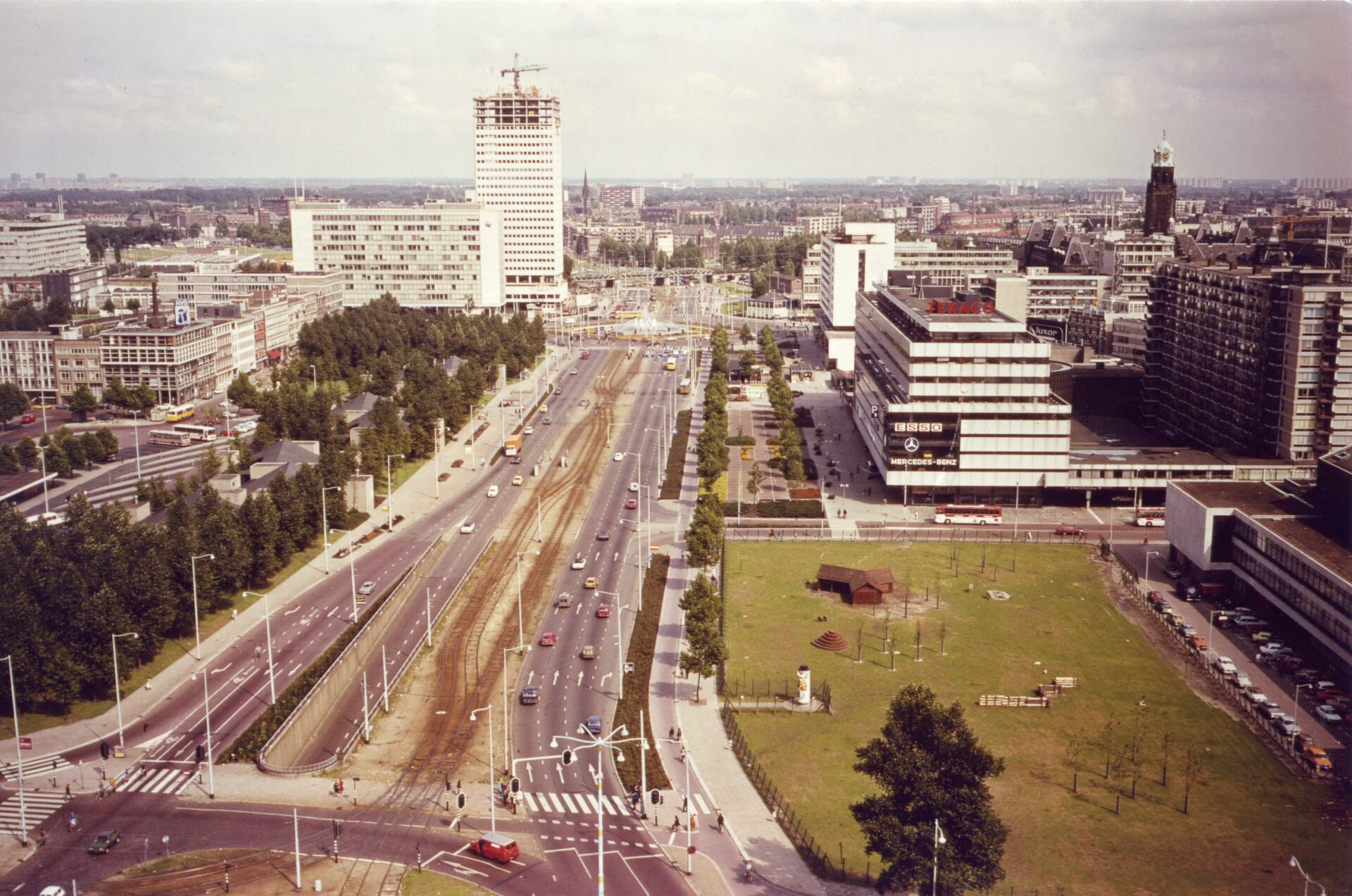
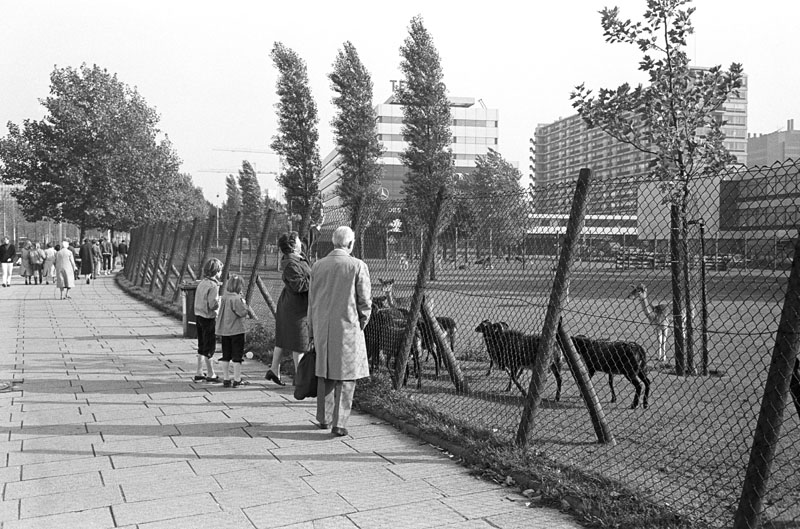
The 150-metre-wide Weena remained a large, open expanse until the late 1980s. The Basisplan (1946) was implemented in phases to leave space for development by future generations. This resulted in a range of temporary uses: from a car park and a deer park to a site for the C’70 and Hiero festivals. Moreover, construction of the metro line from Central Station to the south bank of the river was made easier by the lack of buildings.
Owing to increasing discontent among Rotterdammers with the design of their city centre, they were invited to submit ideas during the City Centre Day held in 1976. That was followed a year later by a competition in which architects came up with ideas for the Weena. None of the over 70 entries convinced the jury, which advised that the schemes be used as study material.
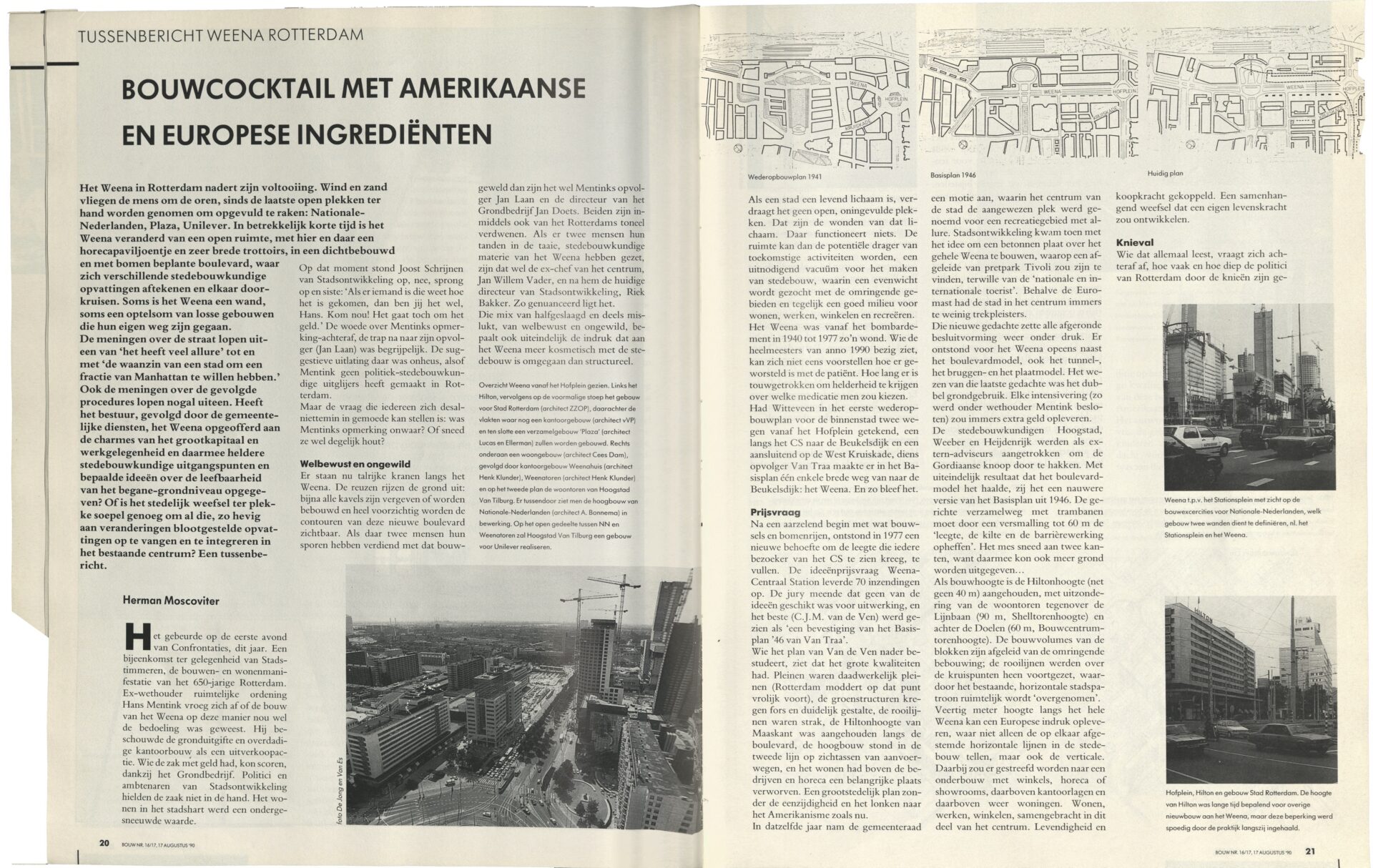
Four alternatives were proposed for Weena East (between Central Station and Hofplein): a slab model that covered over the roadway, a tunnel-slab model, a grid model and a boulevard model. All of them included a mixture of living, working and entertainment. The boulevard model emerged victorious in the end, as it lent itself to phased development.
In the 1980s the economic impetus created by the arrival of multinationals proved more important than the intended multifunctionality. Investors were welcomed with open arms and conditions for locating here were applied flexibly. The Weena developed into a business district, home to the head offices of Shell, Stad Rotterdam insurance company, Nationale Nederlanden and Unilever.
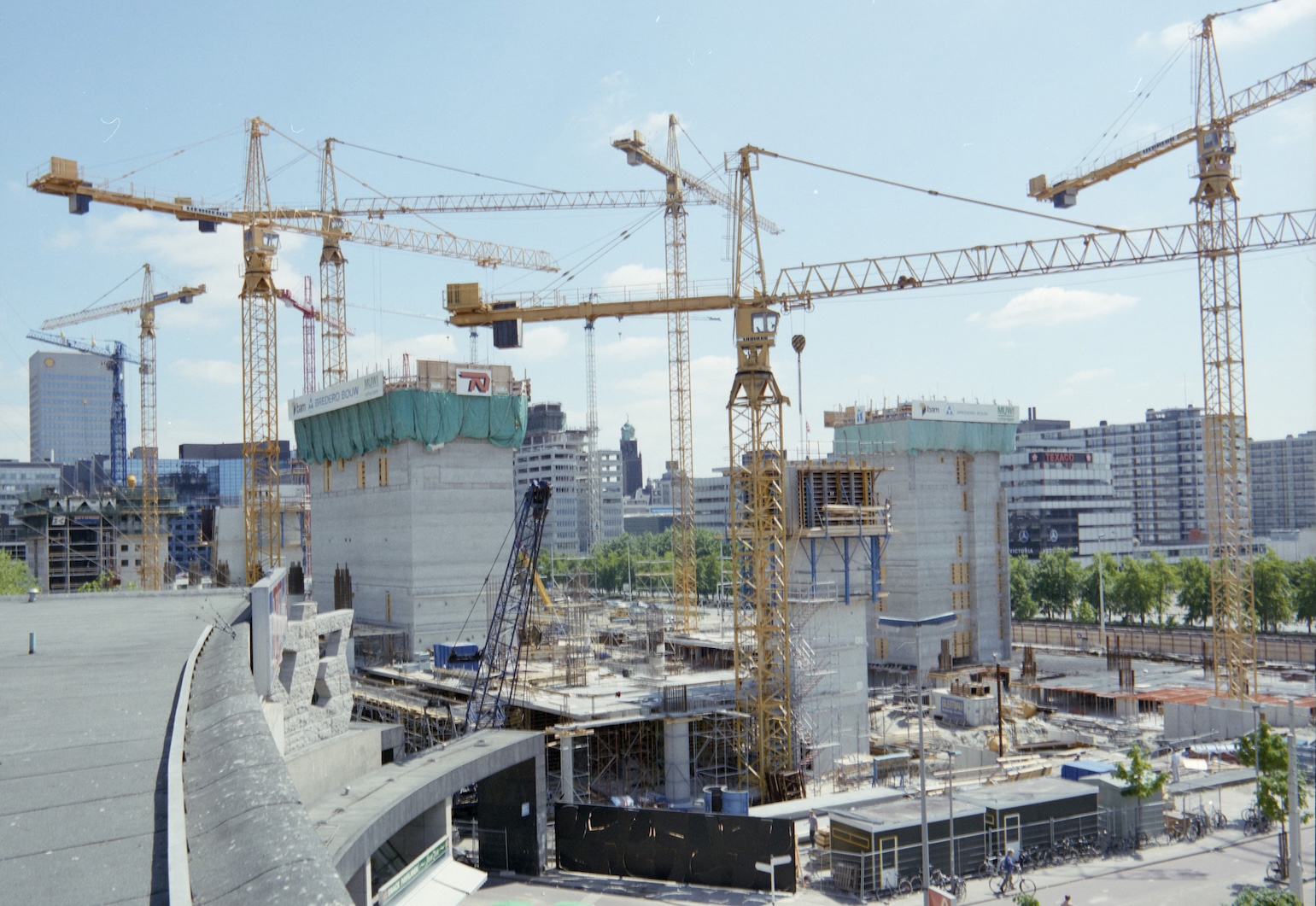
Those companies saw their head offices as physical calling cards. Each of them wanted to stand out architecturally. Yet common characteristics can be detected, especially in the use of reflective materials and the recessed plinth. The idea was to create covered pedestrian areas that emphasized the human scale of the city boulevard.
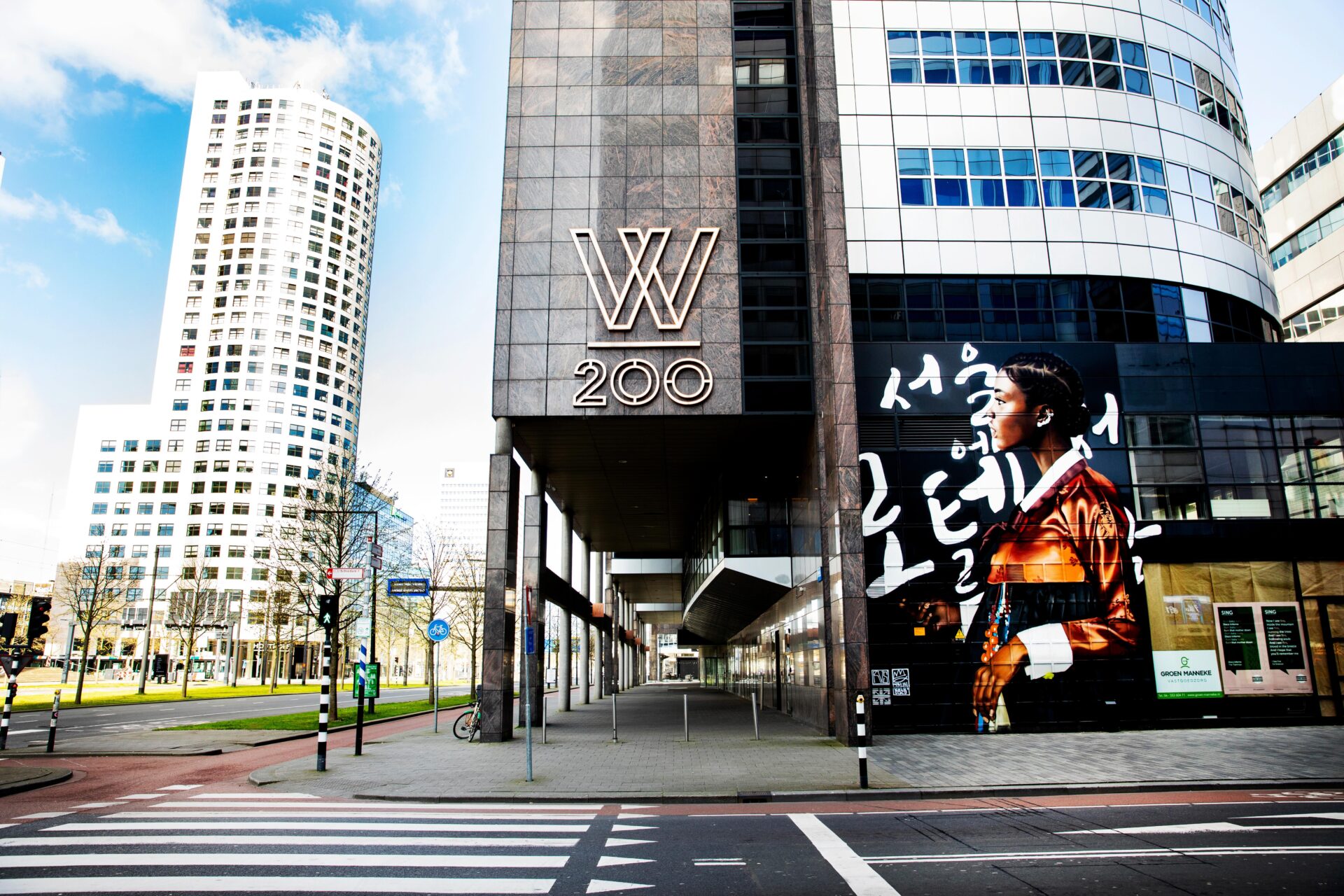
Mixing functions comes up again in today’s discussions about the development of the Rotterdam Central District, which includes the Weena. Housing will become more prominent, and more public functions will be added. And, as part of the high-rise zone, new and taller towers will appear along the Weena.
Terug naar kaart
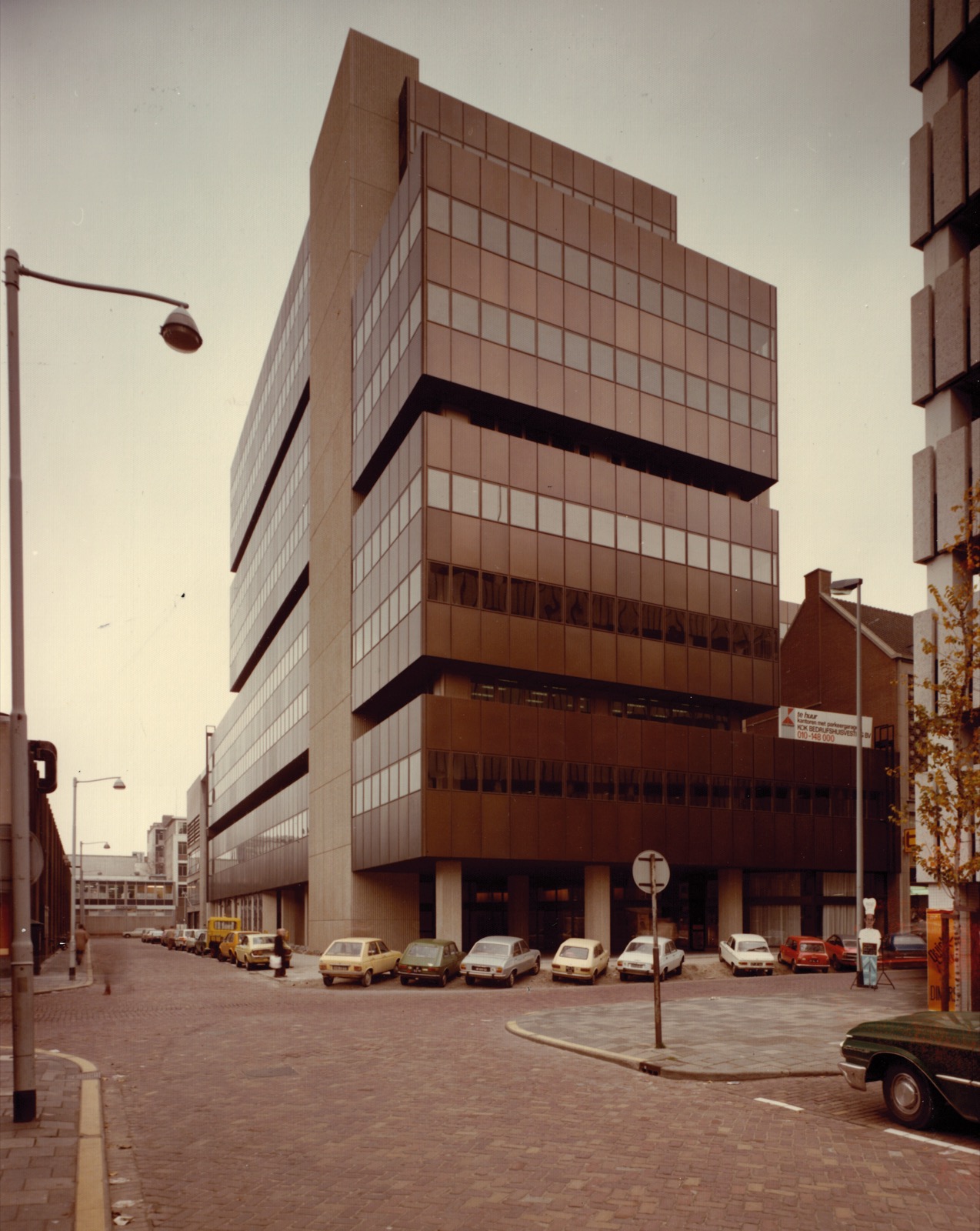
Kraaijvanger Architects designed this office colossus in 1972 on the site of the previously demolished Sint Lucia Convent. The Rotterdam Building had no fewer than 22,000 m2 of lettable floor space and a spacious car park for 335 cars.
Building volumes of various heights are staggered around a central core, making the gigantic office complex blend into the surrounding context, ranging from low-rise development along the Lijnbaan to high-rise buildings on Coolsingel. In earlier designs, footbridges linked the building to nearby blocks.
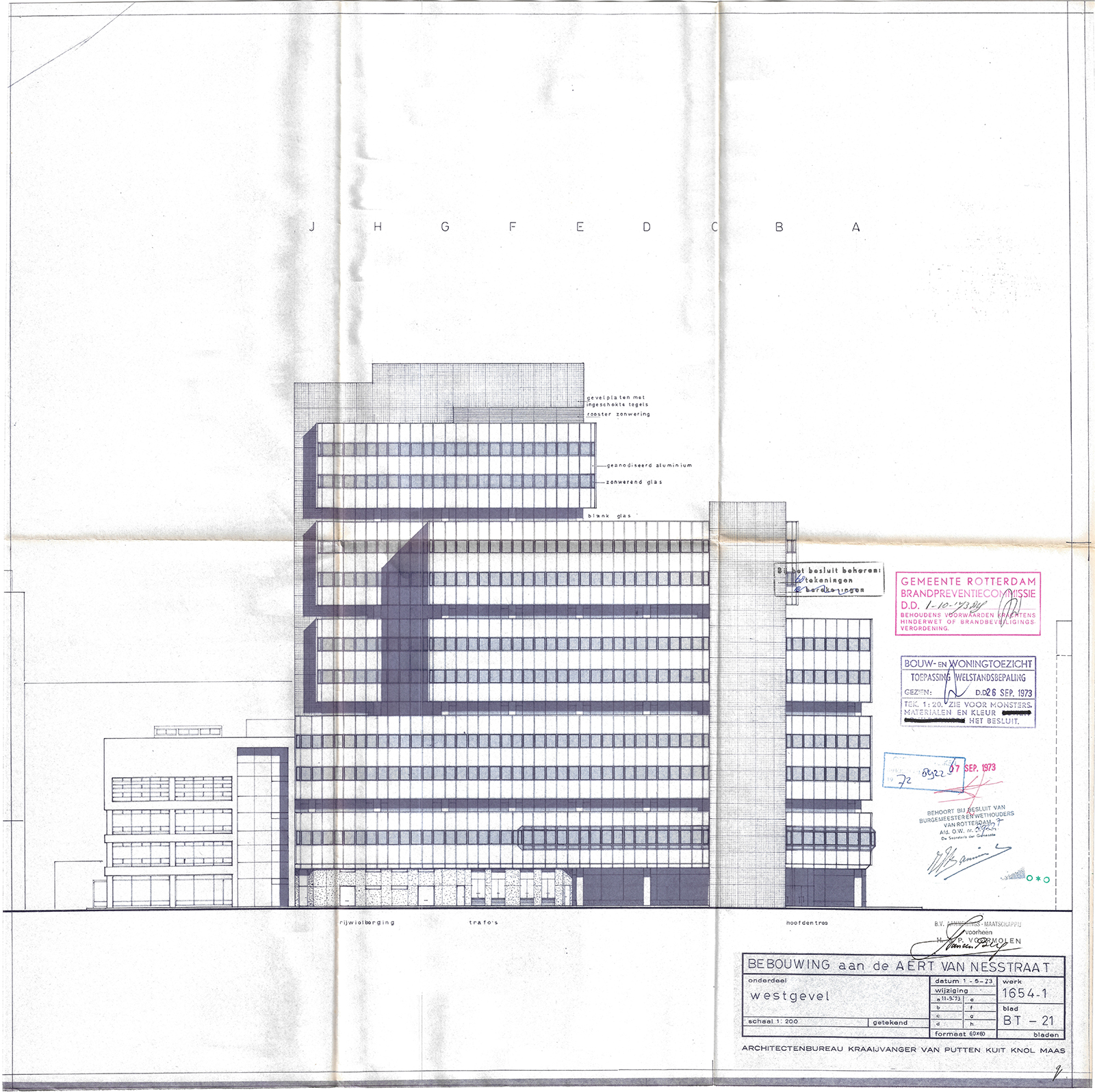
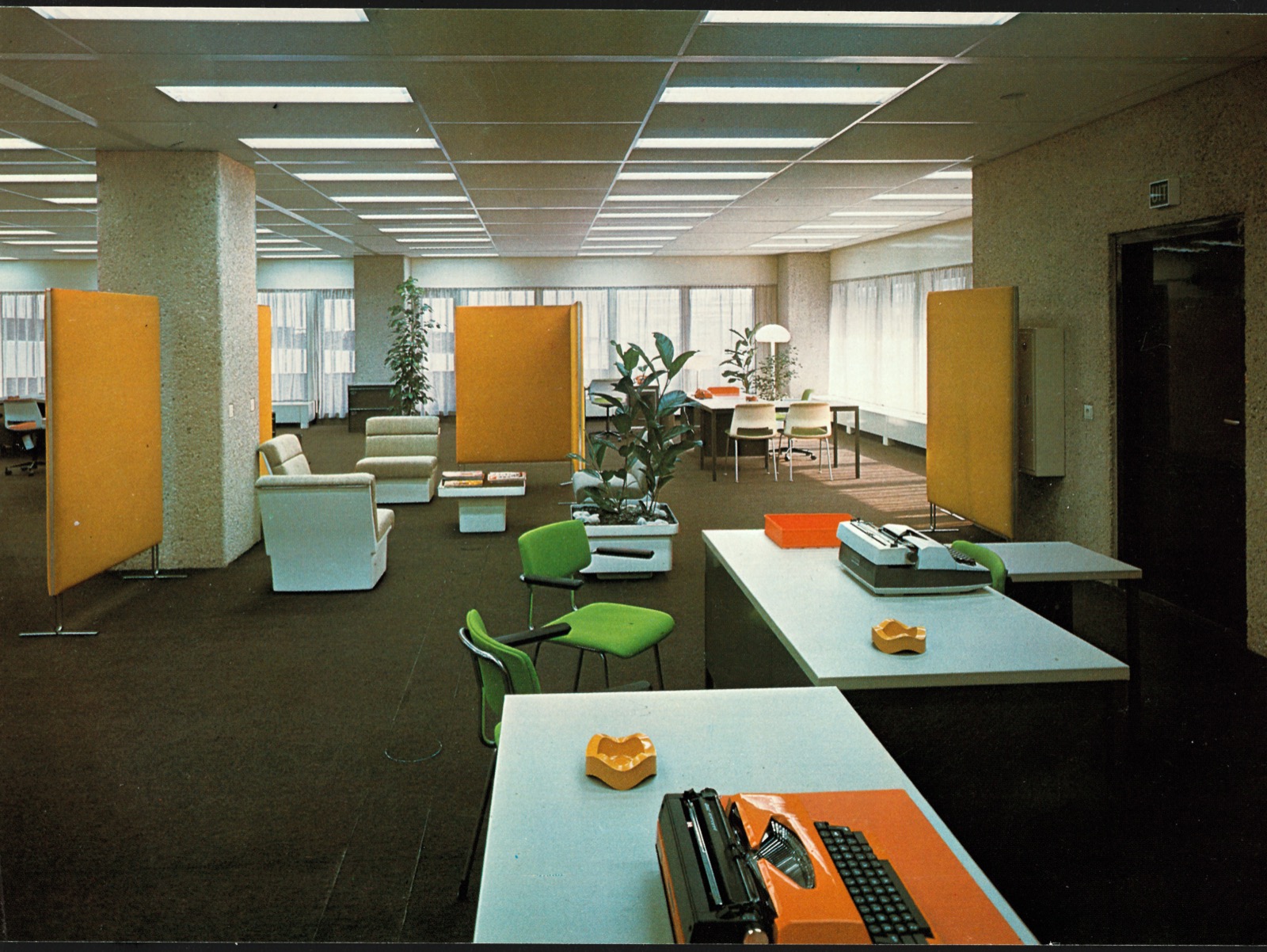
Height variations create multiple terraces and loggias. This strong articulation is emphasized by vertical concrete columns and sleek bronze-coloured façade panels with brown heat-absorbent glass. The Rotterdam Building contains flexible office space that is let to tenants. It was Kraaijvanger’s first building with a flexible floor plan.
Rotterdam Building is now undergoing a transformation, again by Kraaijvanger Architects, to improve its rental potential and to make it future-proof. One of the interventions concerns upgrading the plinth in order to draw the public life of the city indoors.
Terug naar kaart
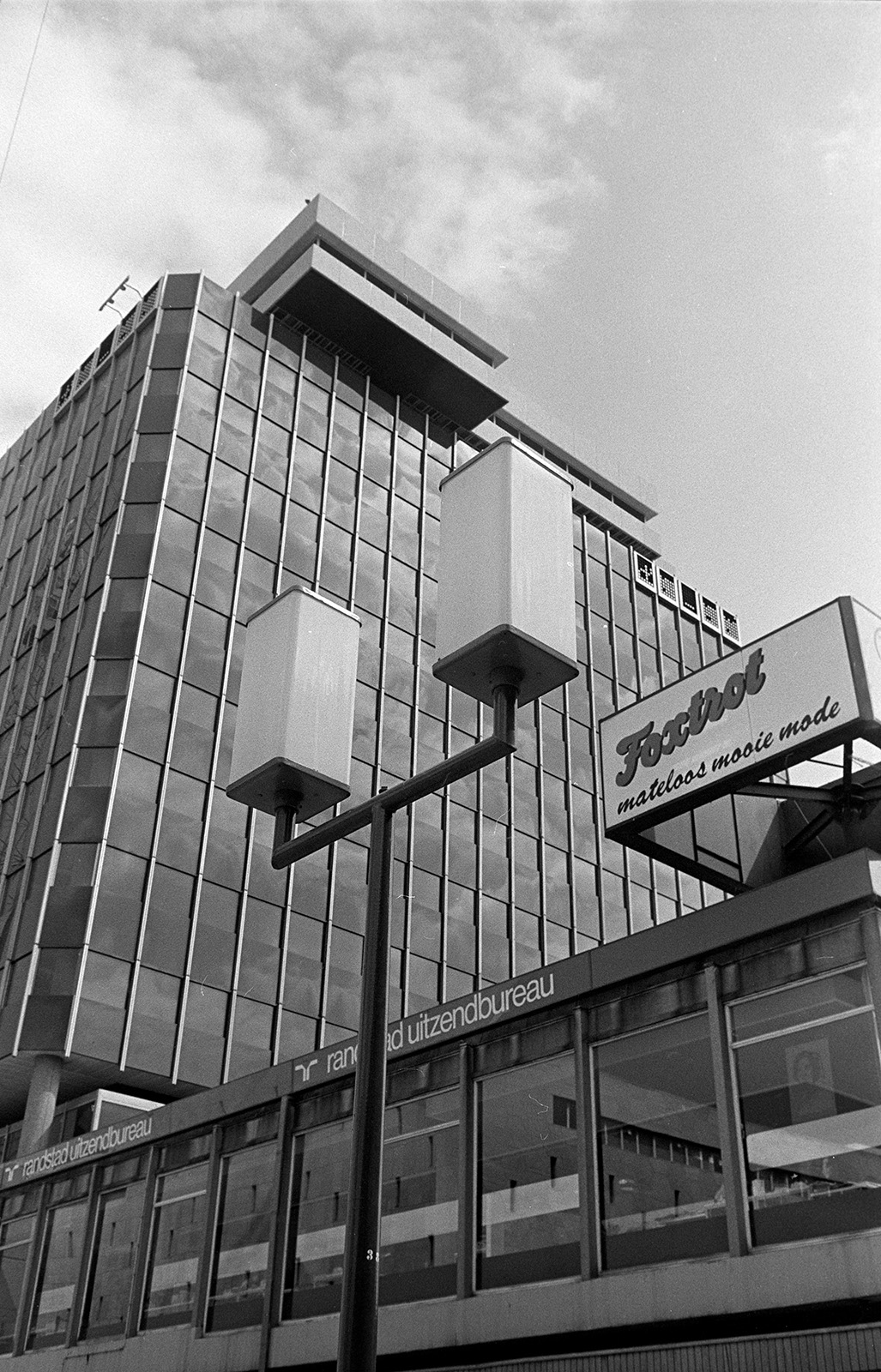
After the merger of the Amsterdamsche Bank and the Rotterdamsche Bank (AMRO), Kraaijvanger Architects and A.J.B. van de Graaf were commissioned to design an office tower. This new tower had to align with the existing Rotterdamsche bank building designed by H.F. Mertens (1948) and the recently extended Lijnbaan (1966).
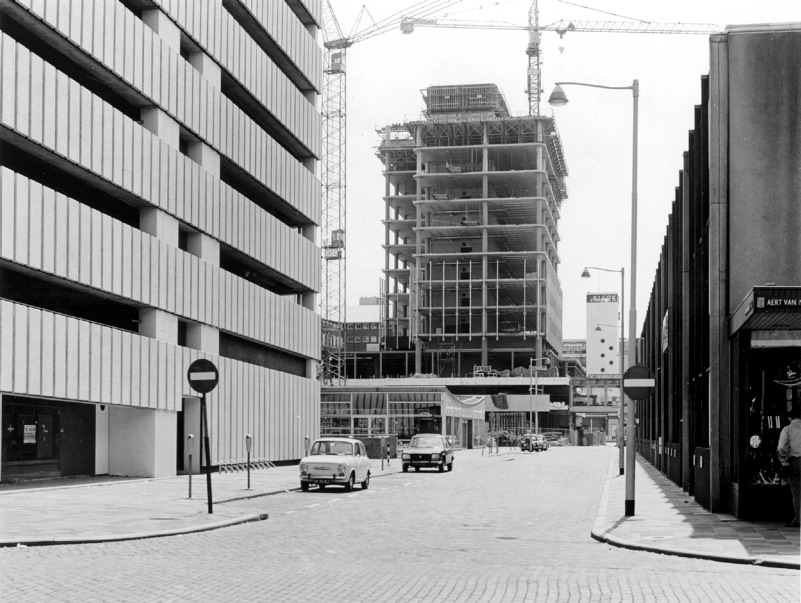
The solution was found in two staggered low-rise volumes. This chimed with the wish expressed by the city council to ensure that the streetscape remained vibrant. Placed on the low-rise volume was an 11-storey tower wrapped in concrete and brown glass that was sustainable and reflective. The two L-shaped wings were arranged around a concrete core containing six passenger lifts, a goods lift and toilets. The tower was completely occupied by ABN AMRO, where more than 1500 employees could work.
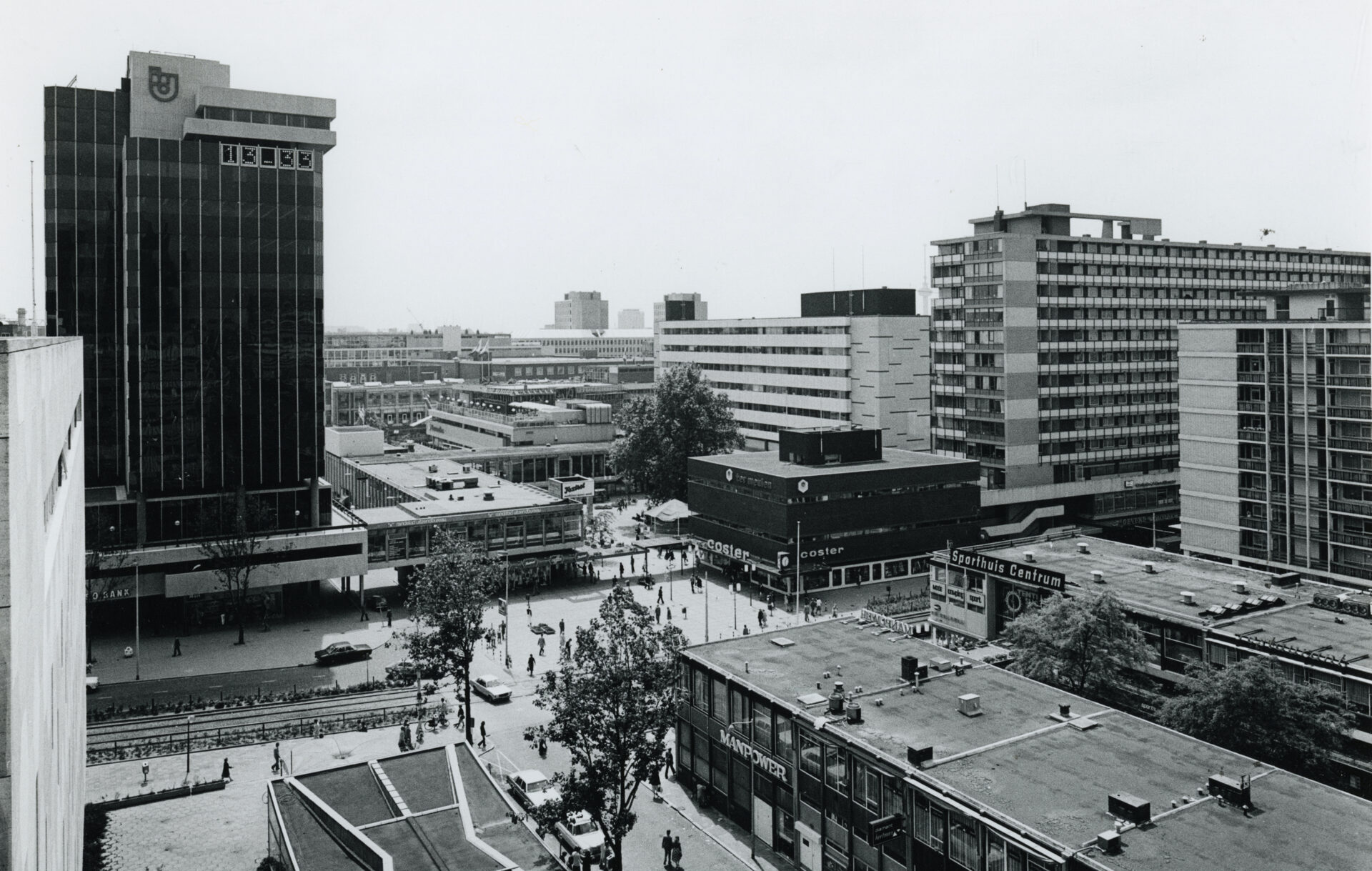
Despite the careful integration into the surrounding context, it was decided in 2008 that the tower was of no notable architectural merit. It was initially planned to demolish the tower entirely, to make way for a multifunctional building designed by OMA.
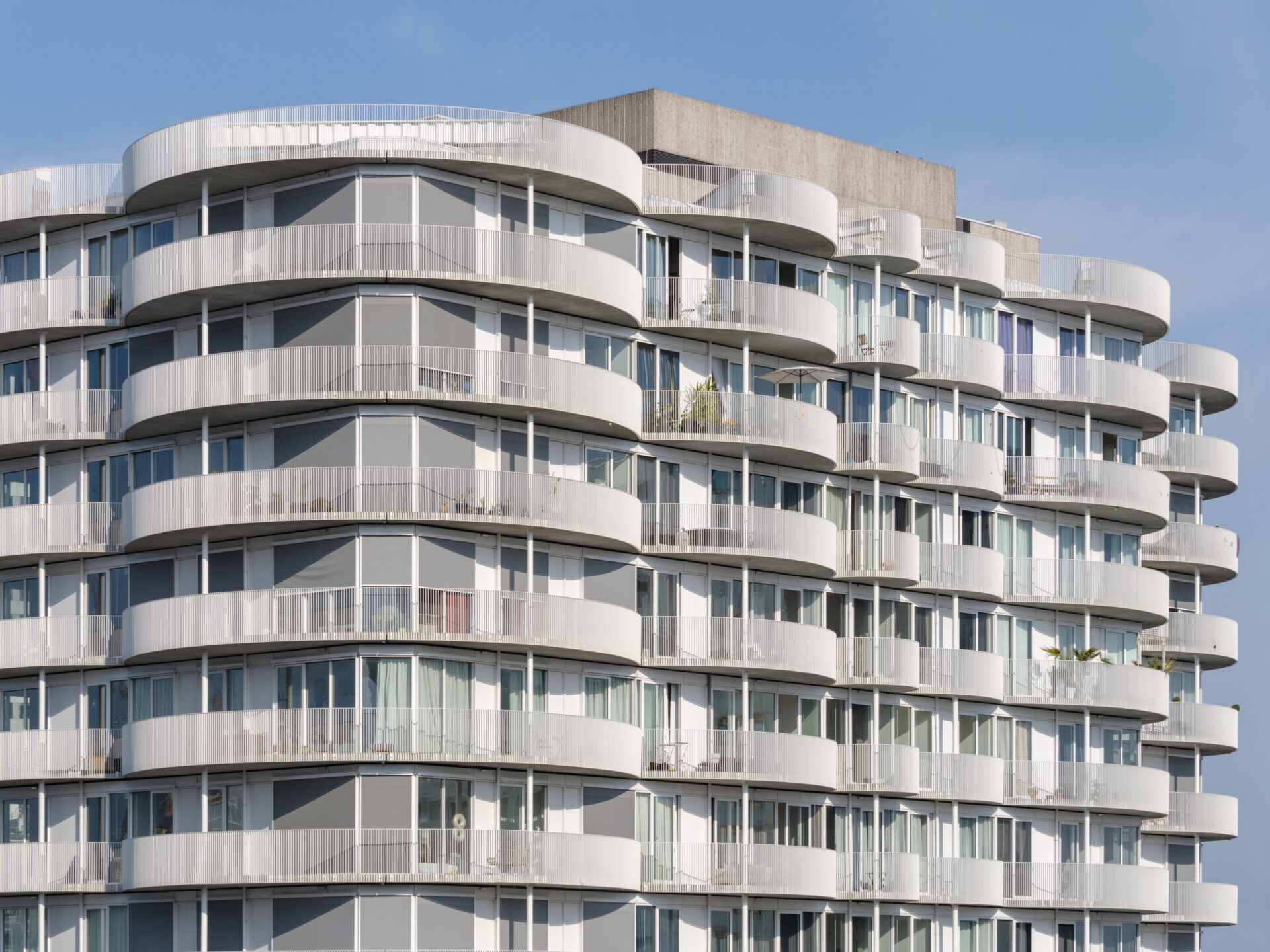
In the end, however, WDJArchitecten retained the shell and refitted the building to contain 103 apartments. The tower features striking undulating white balconies. Shops in the plinth line the Lijnbaan.
Terug naar kaart
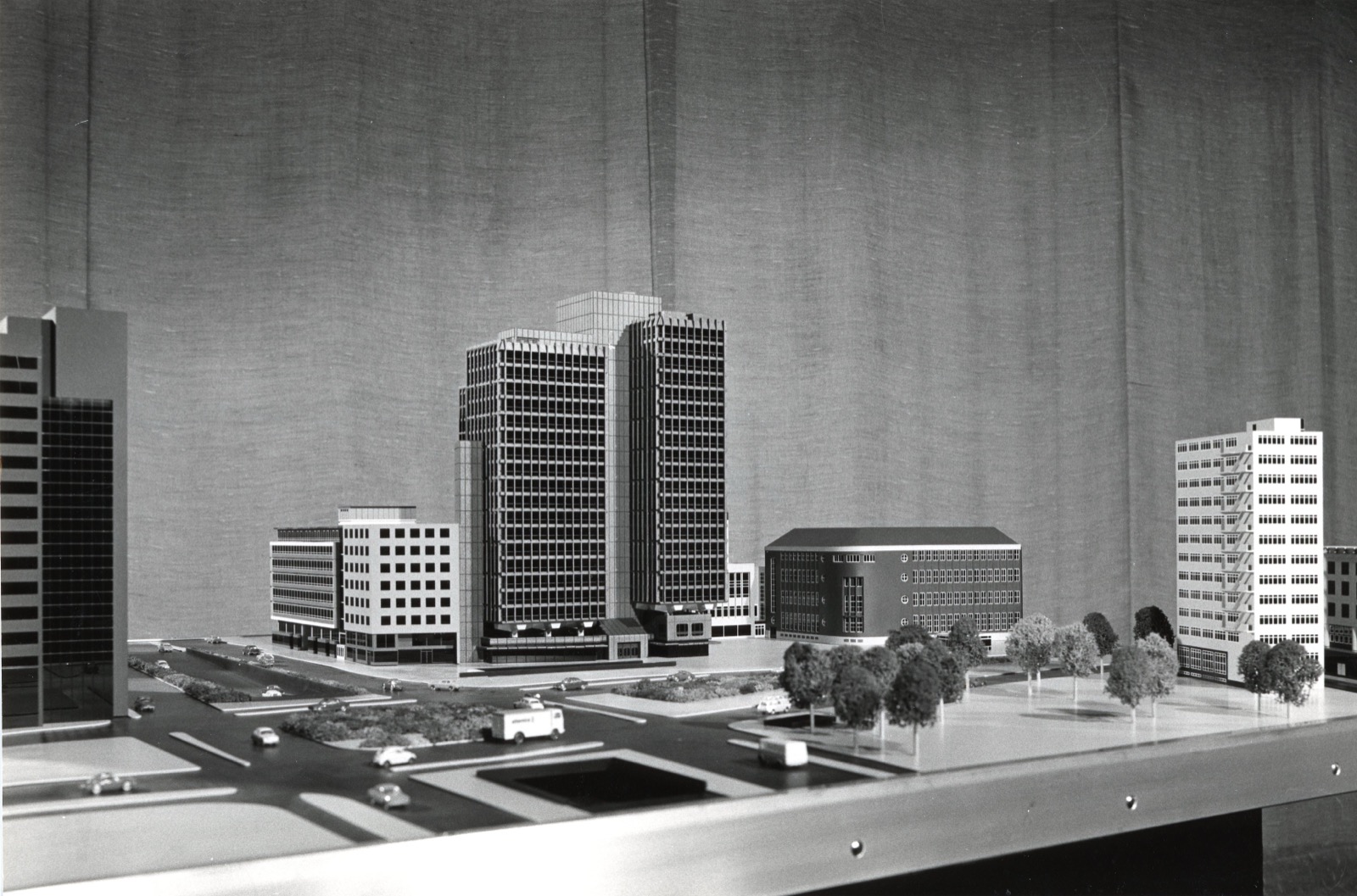
De ‘Gigant in Aubergine’ werd in 1972 ontworpen door Groosman Partners op het terrein waar het Rotterdamsch nieuwsblad was gehuisvest. Groosman Partners onderzocht in opdracht van een Engelse projectontwikkelaar (Northborough Investments Nederland B.V.) de mogelijkheden van behoud van het oude gebouw door uitbreiding, sloop en diverse vormen van hoogbouw.
Het nieuwe college van B&W verzette zich tegen de hoge kantoorbebouwing in de binnenstad, dat zou de levendigheid daar niet ten goede komen. De compromis werd een levendige trottoirbebouwing van lage paviljoens rondom de Coolse Poort.
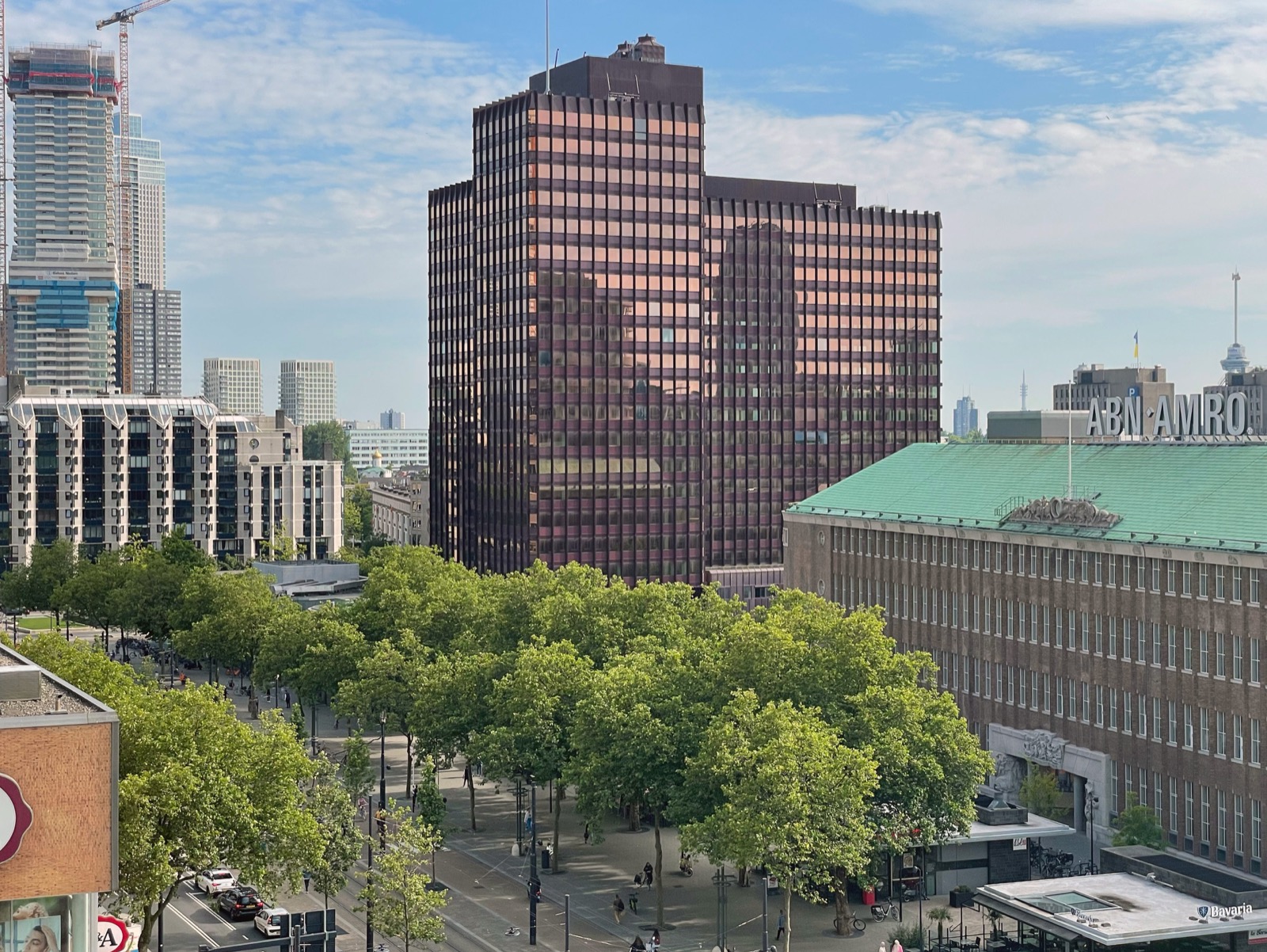
De toren zelf bestaat uit drie vleugels rondom een betonnen kern met de trappen en toiletten. Kenmerkend van de Coolse Poort is de markante auberginekleurige aluminium constructie met een purper gekleurde glassoort. De kleur is uitgekozen door de secretaresse van een latere opdrachtgever.
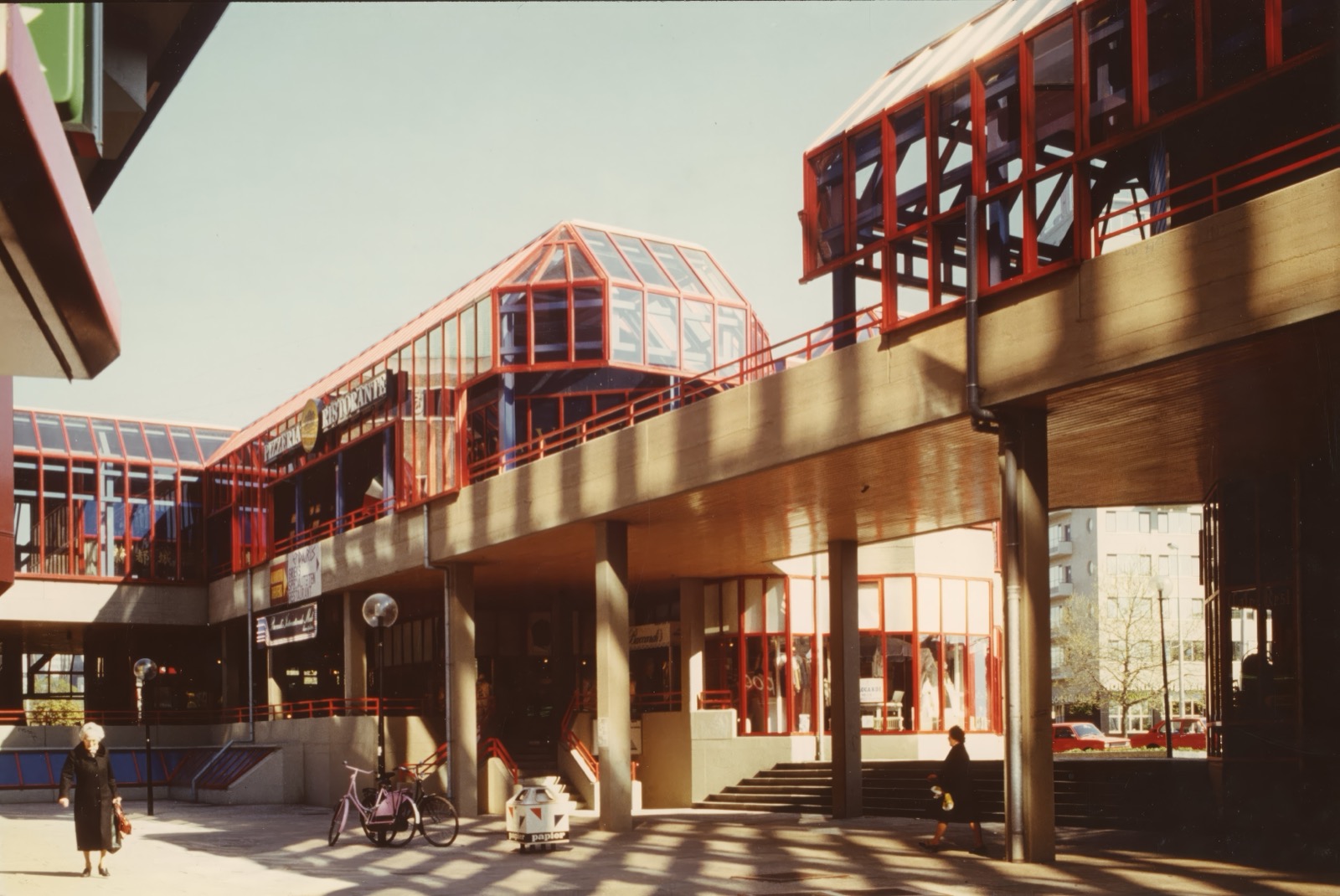
Mecanoo werkt momenteel aan een masterplan voor vernieuwing van de Coolse Poort en omgeving: Hart010. Naast kantoortoren voor flexibele werkplekken, komen er winkels, horeca en een hotel. In dit plan wordt ook het metrostation Beurs meegenomen. De naastgelegen kantoortoren maakt plaats voor een 200 meter hoge woontoren met gemixte functies.
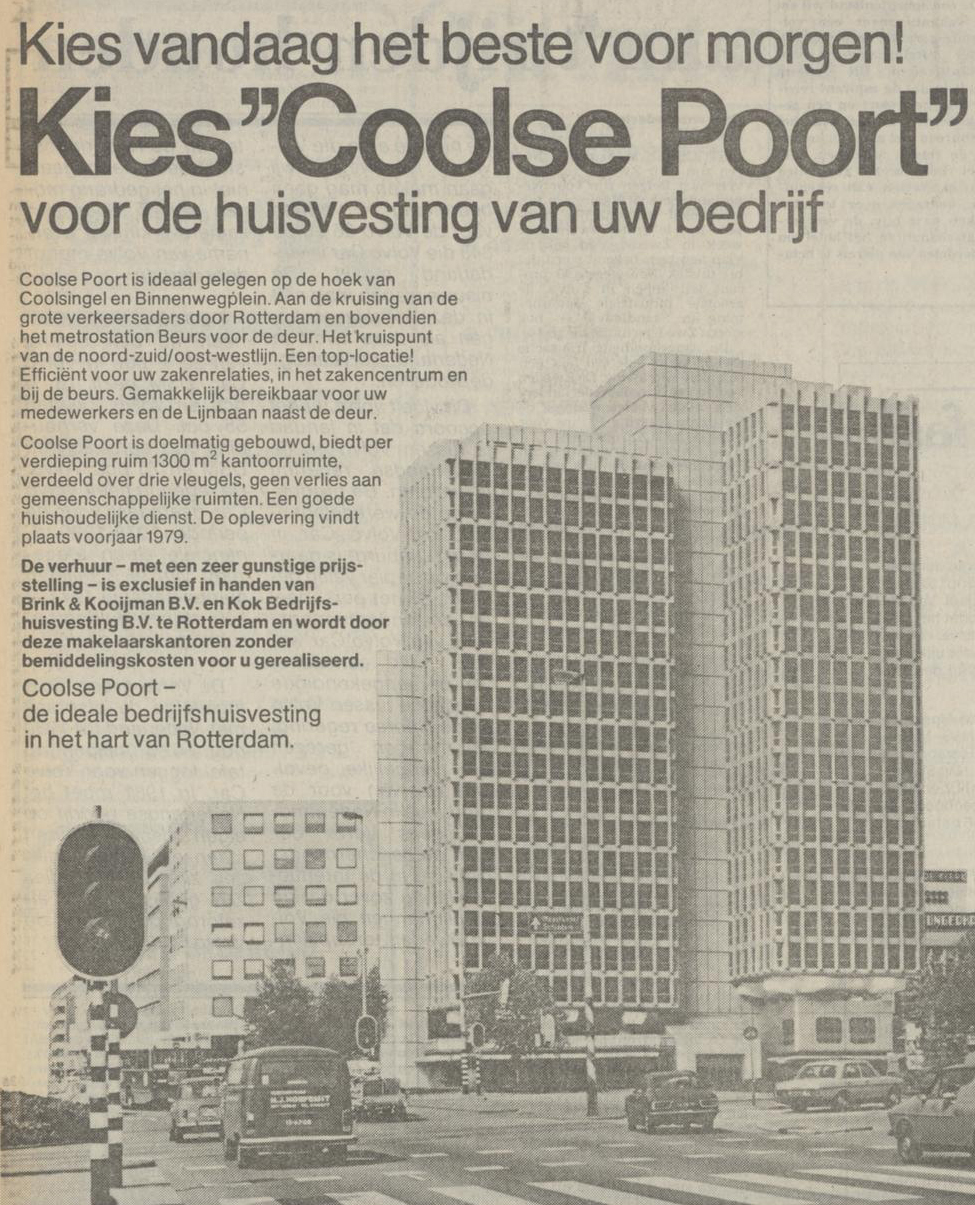
Voor de transformatie van de Coolse Poort is Groosman Architecten weer betrokken, onder andere bij de vernieuwing van de gevel. Inmiddels zijn de aubergine-kleurige ramen van deze ‘Rode Kroot’ vervangen voor helder spiegelglas. Op de bovenstaande foto zie je het gebouw nog in zijn oorspronkelijke jaren 70-look.
Terug naar kaart