
In the 1970s, gigantic office complexes began to appear in the city centre. In just a few years the Hofpoort, Rotterdam Building, AMRO tower and Coolse Poort rose up. The cityscape was dominated by office complexes with striking façades in dark-red, dark-brown and gravel concrete.
Rotterdam City Center, 1986
Hofpoort, Stadsarchief Rotterdam
These buildings are currently the subject of great interest owing to their supposed ‘ugliness’ and their cultural value, and because many of these buildings form part of redevelopment.
A stroll along the Coolsingel reveals four striking examples of large-scale architecture of the 1970s. What were the original ideas behind them, and what is their reputation today?
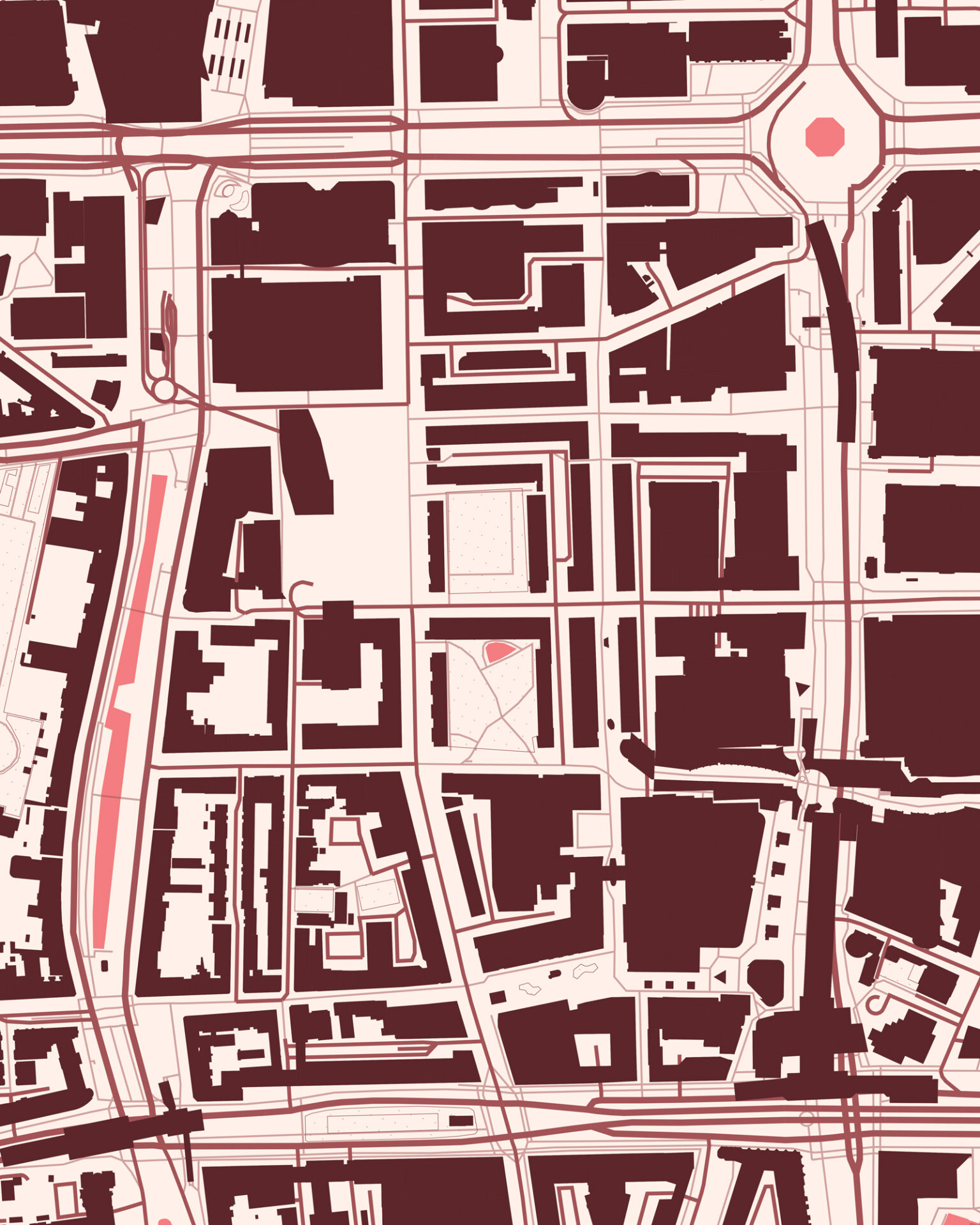
1
2
3
4
Architect: Zanstra de Clercq Zubli Lammertsma, 1973-1976
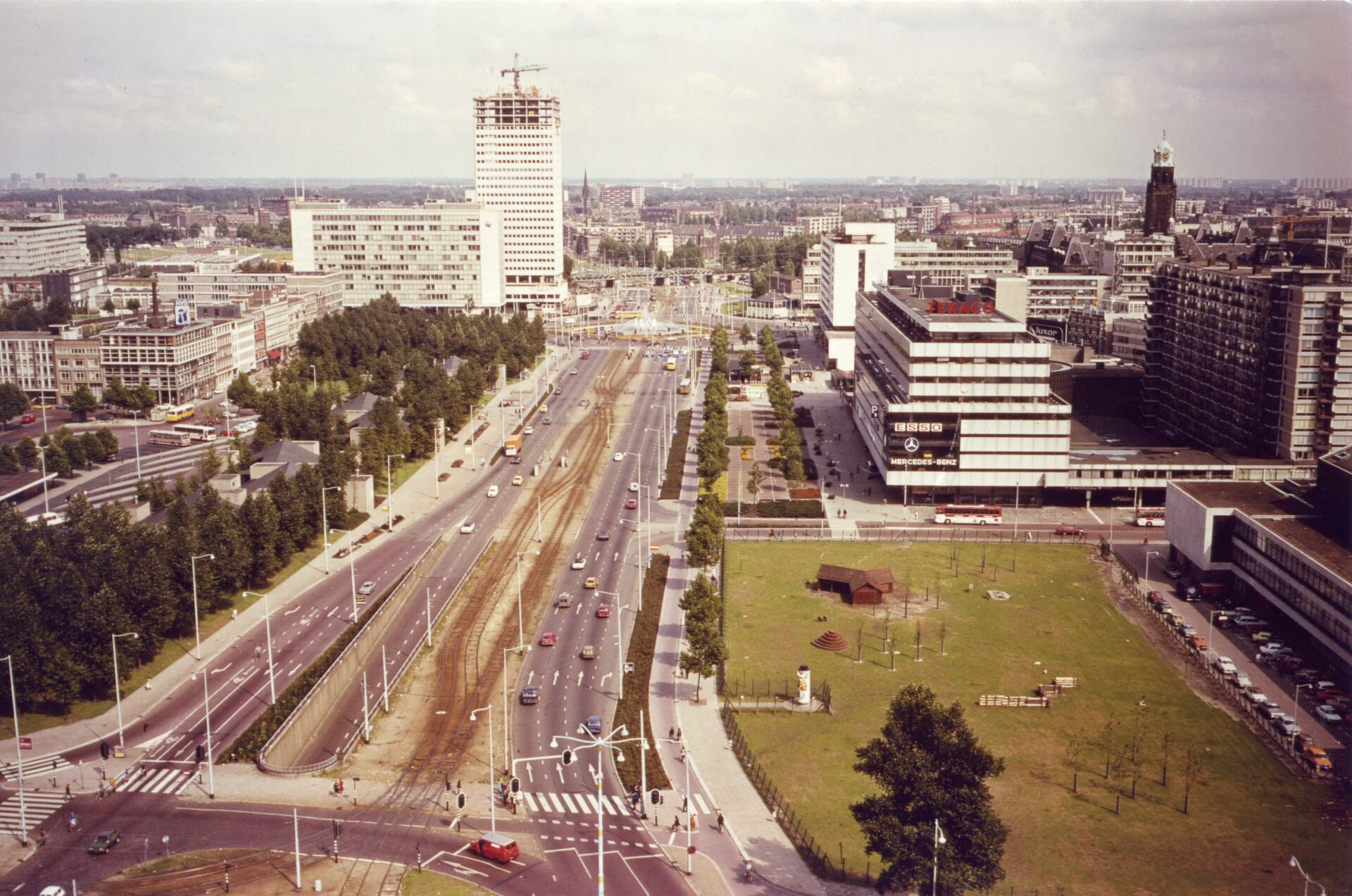
Dubbed “the last erection of big business” by critics upon completion, the Hofpoort is one of Rotterdam’s earliest high-rise corporate office towers and a controversial work of Brutalist architecture. Originally commissioned as Shell Building II, it sits beside the earlier Shell Building of 1960 by Kees Abspoel. At 95 meters, with 26 floors of office space, the structure rests on a 300-space fortress-like parking garage. Its façade of recessed windows and concrete prefab panels reflect the severe, functionalist style.
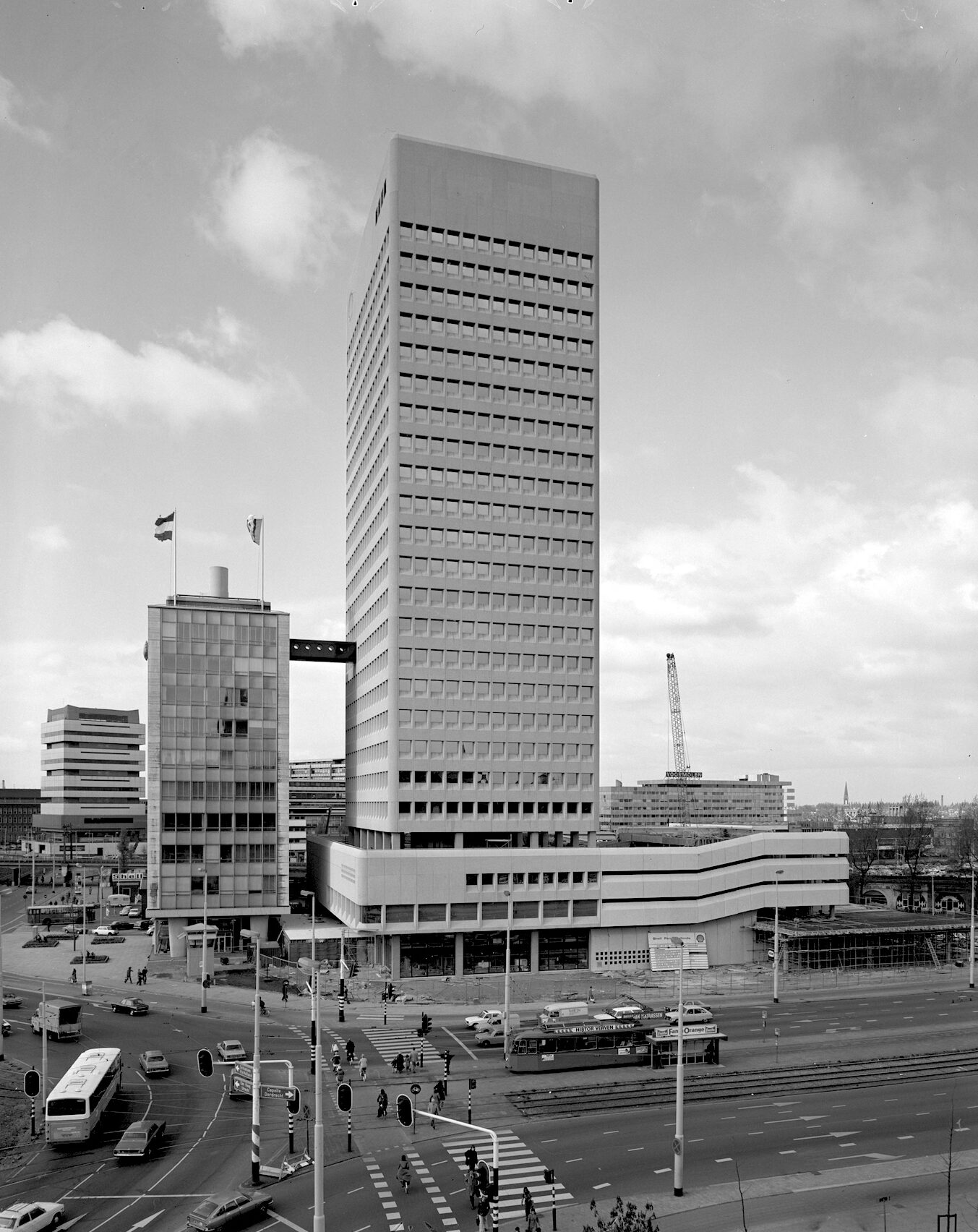
Though unloved for years after Shell’s departure in the 1990s, the Brutalist Hofpoort is now experiencing architectural reappraisal, for example during events like the Day of Architecture and ZigZagCity. Its renovation houses offices, with most of the rest co-working SPACES.
Back to map
Architect: Kraaijvanger Architects, 1972-1976, 2020-2021
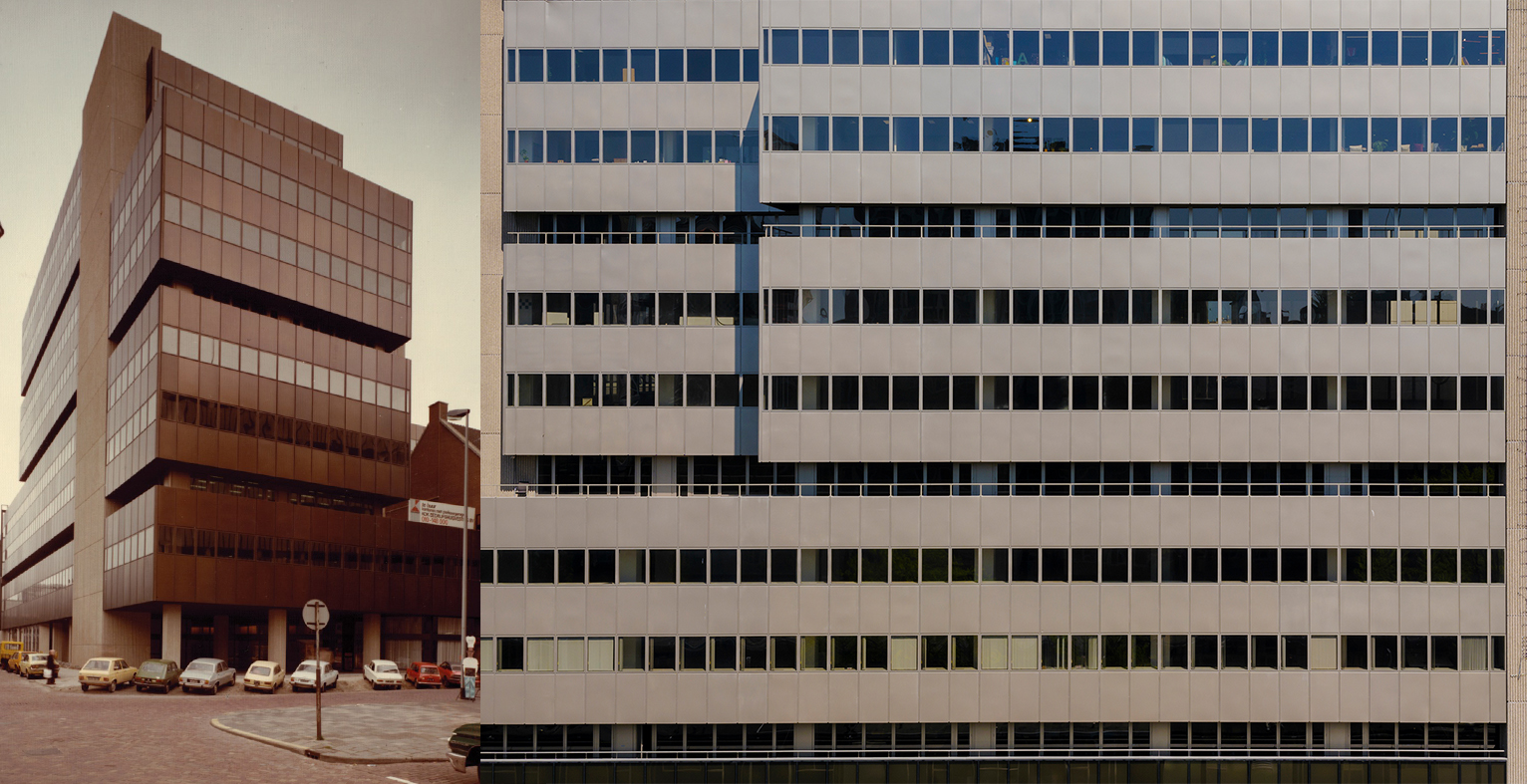
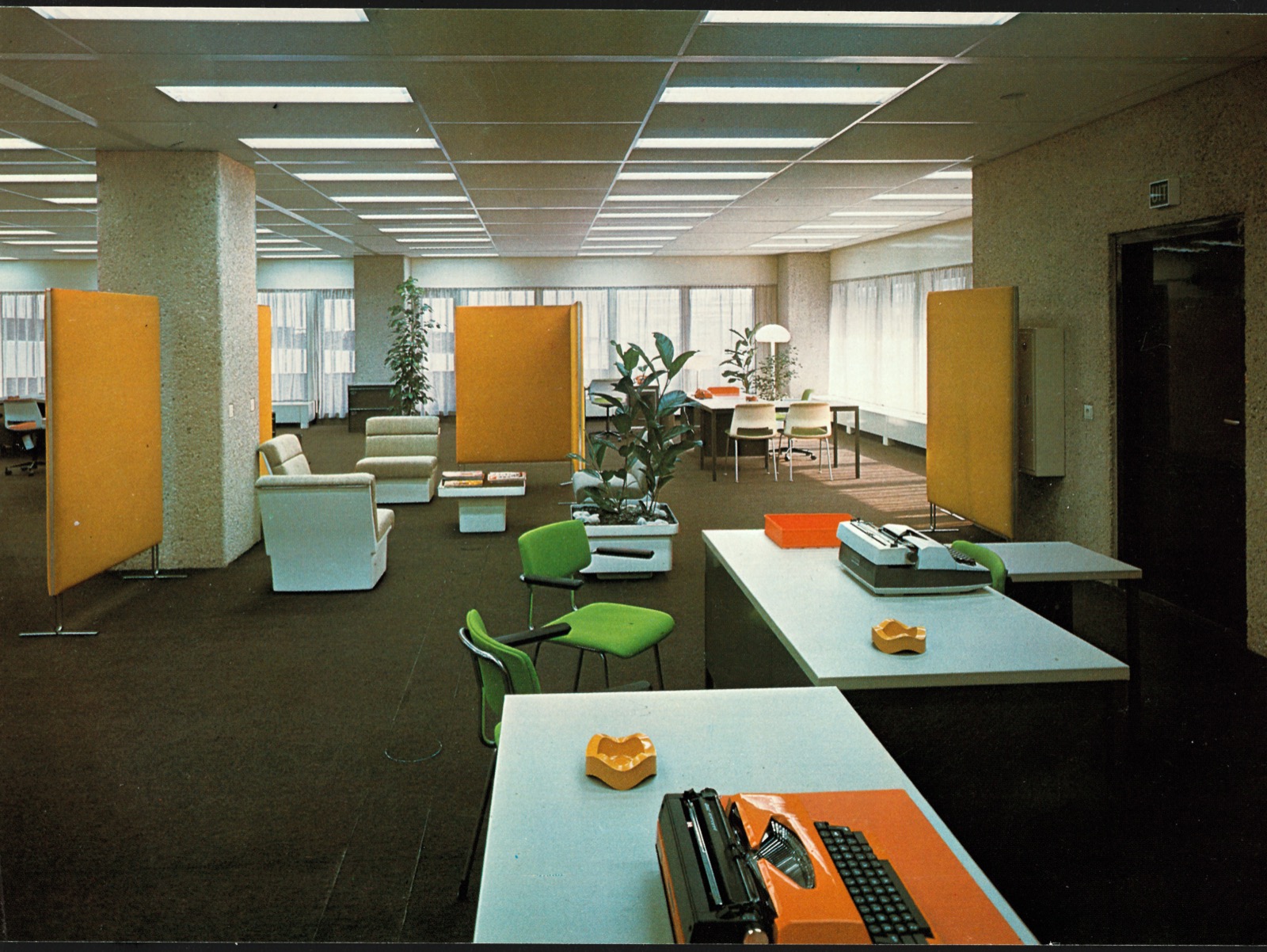
This office colossus was build in 1972 on the site of the previously demolished Sint Lucia Convent. The Rotterdam Building had no fewer than 22,000 m2 of lettable floor space and a spacious car park for 335 cars. Building volumes of various heights are staggered around a central core, and height variations create multiple terraces and loggias. The Rotterdam Building contains office space that is let to tenants. It was Kraaijvanger’s first building with a flexible floor plan.
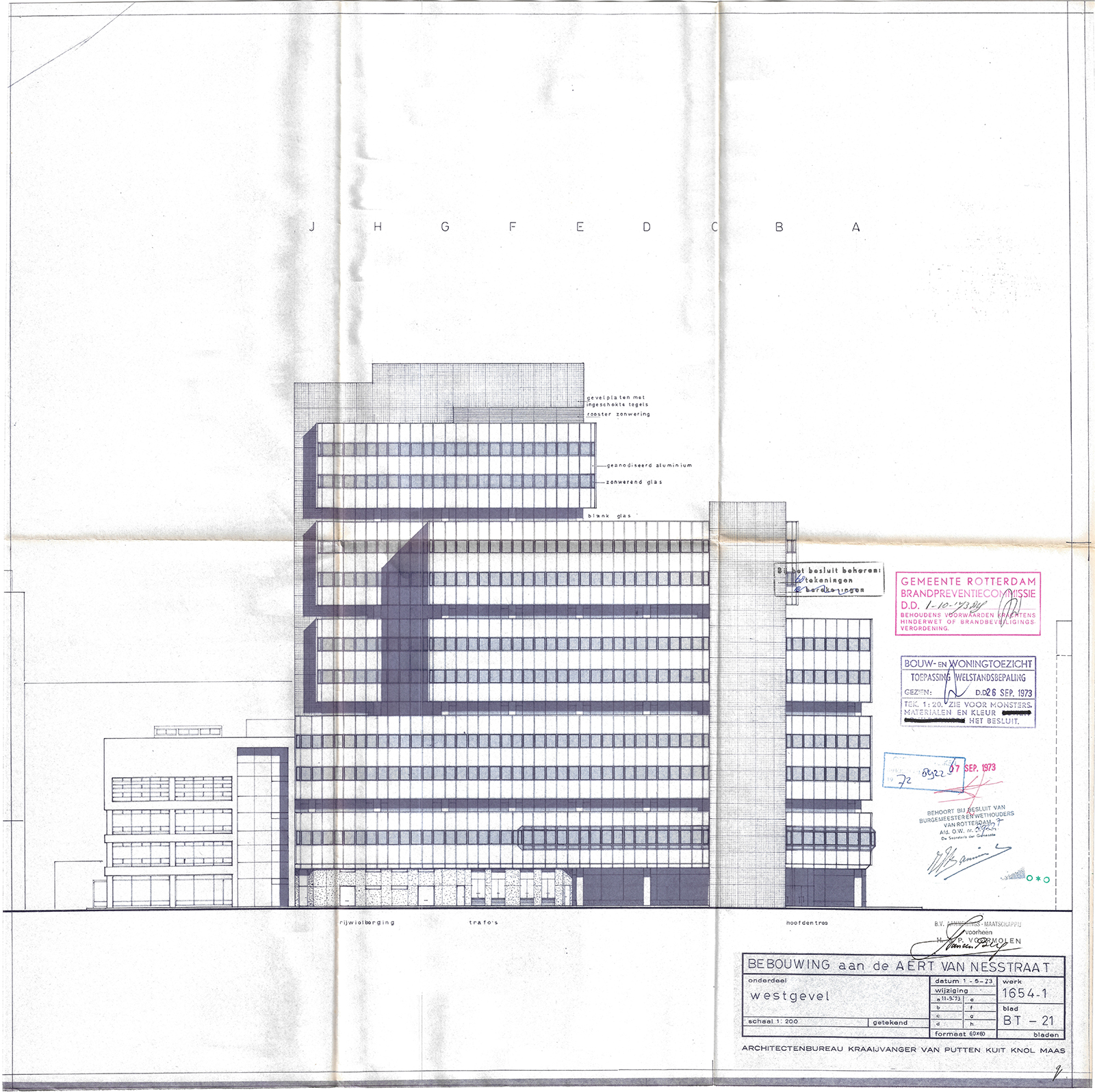
Rotterdam Building has undergone a transformation, again by Kraaijvanger Architects, to improve its rental potential and to make it future-proof. This strong articulation of the building is emphasized by sleek bronze-coloured façade panels. Another intervention was the upgrade the plinth in order to draw the public life of the city indoors.
Back to map
Kraaijvanger Architects with A.J.B. Van de Graaf, 1973-1976
OMA with WDJArchitecten, 2008-2020
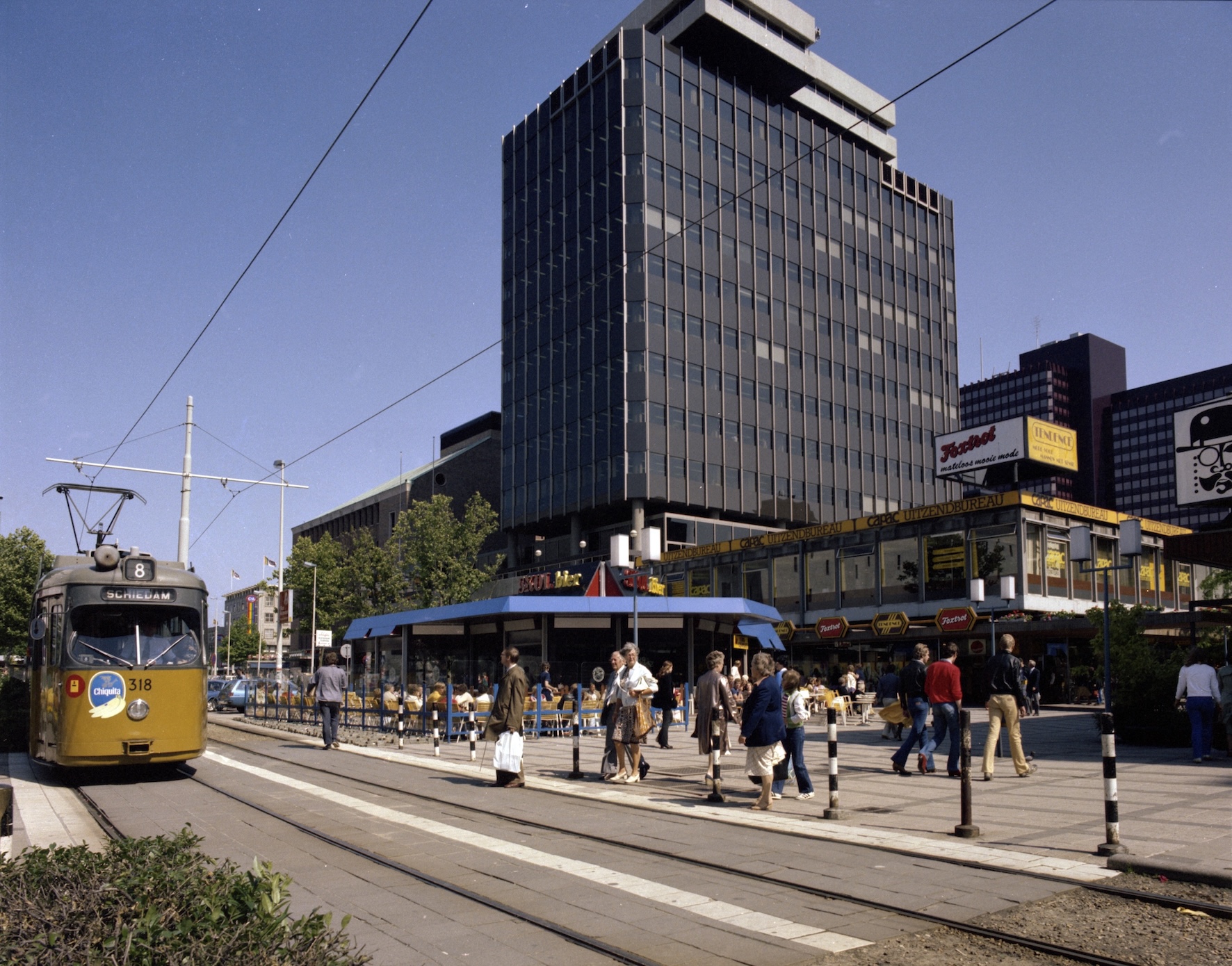
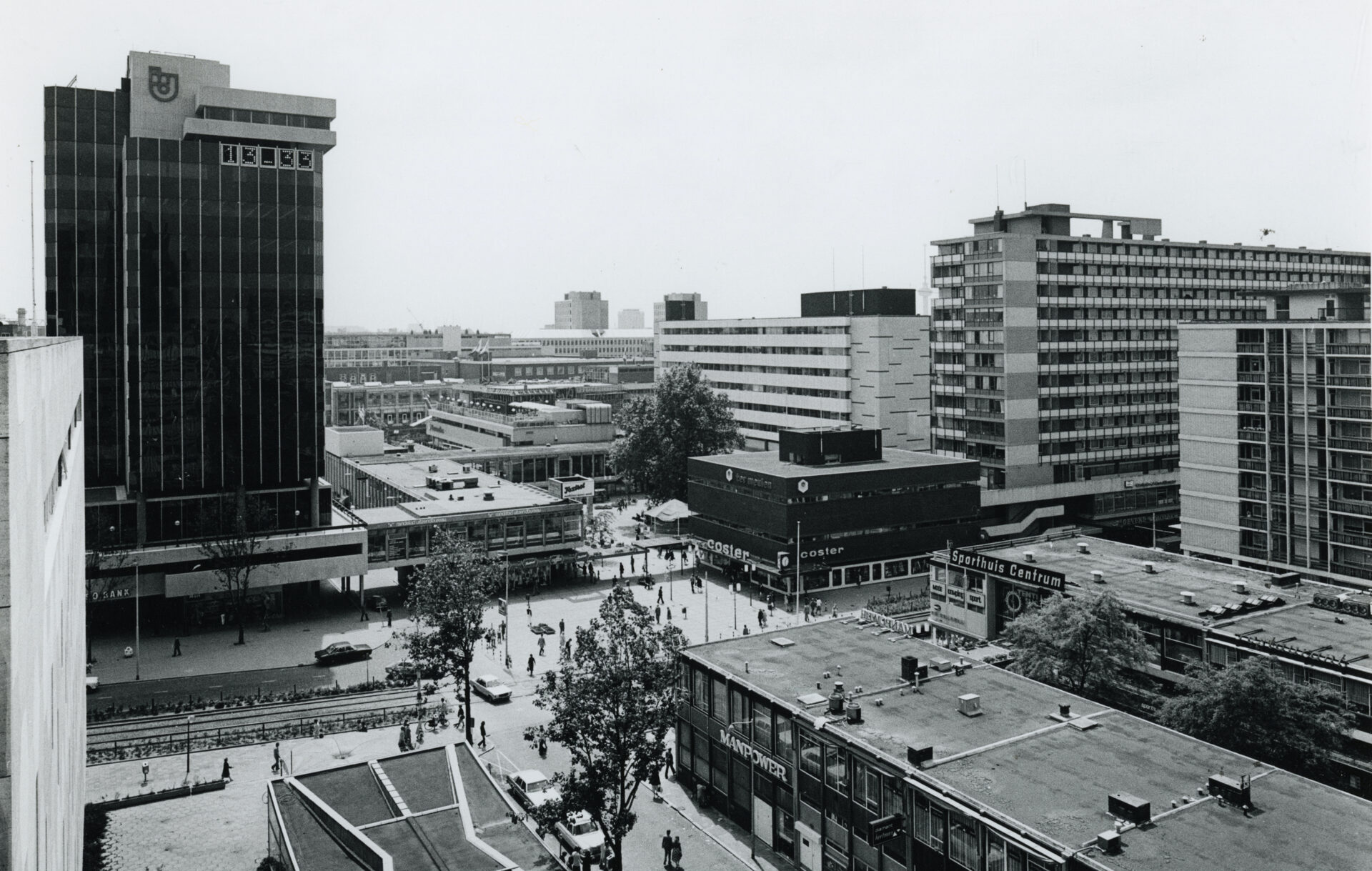
The original tower had to align with the existing bank building designed by H.F. Mertens (1948) and the recently extended Lijnbaan (1966). The solution was found in two staggered low-rise volumes. Placed on the low-rise volume was an 11-storey tower wrapped in concrete and brown glass that was sustainable and reflective. The two L-shaped wings were arranged around a concrete core. In the tower more than 1500 employees could work.
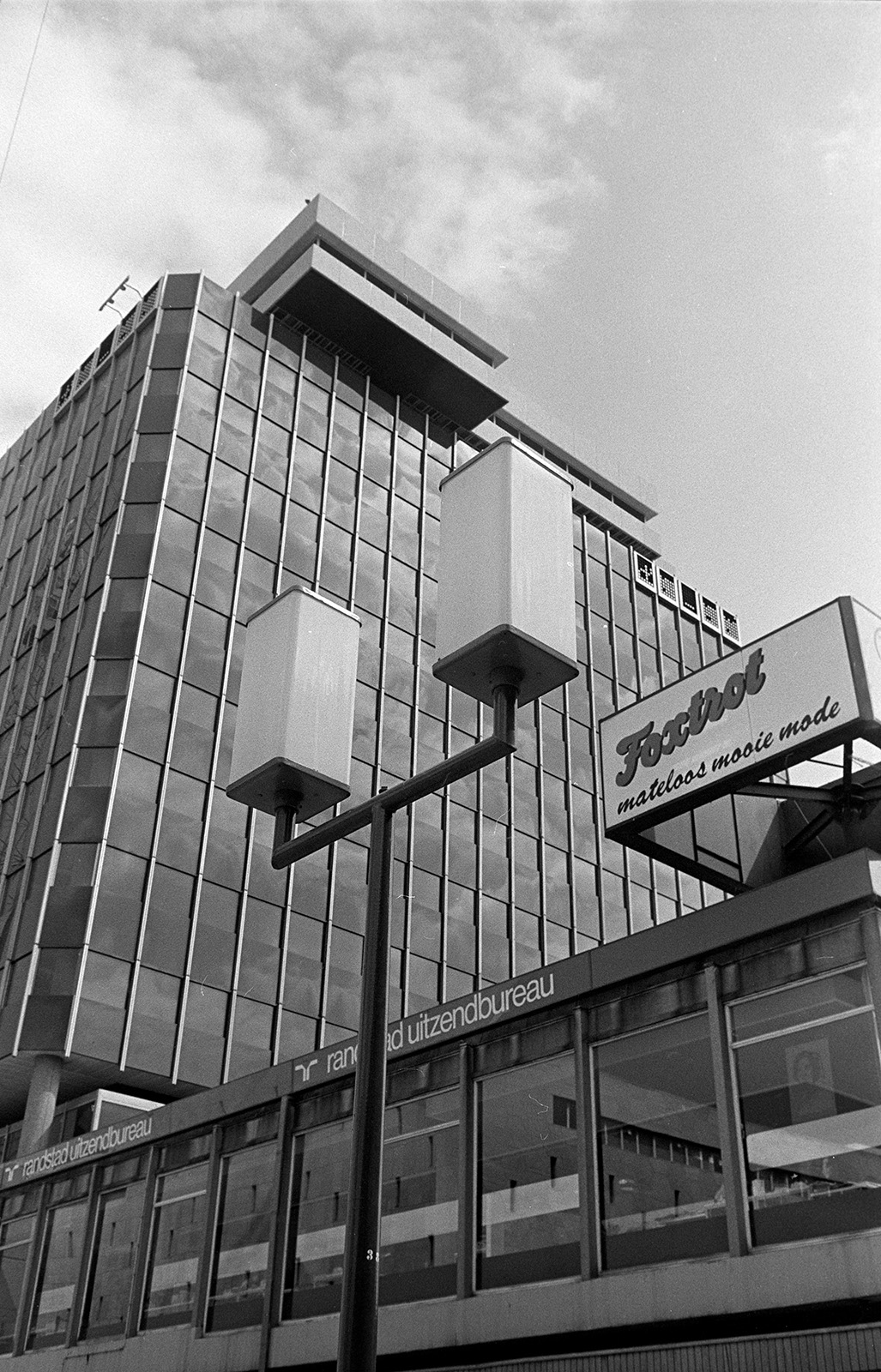
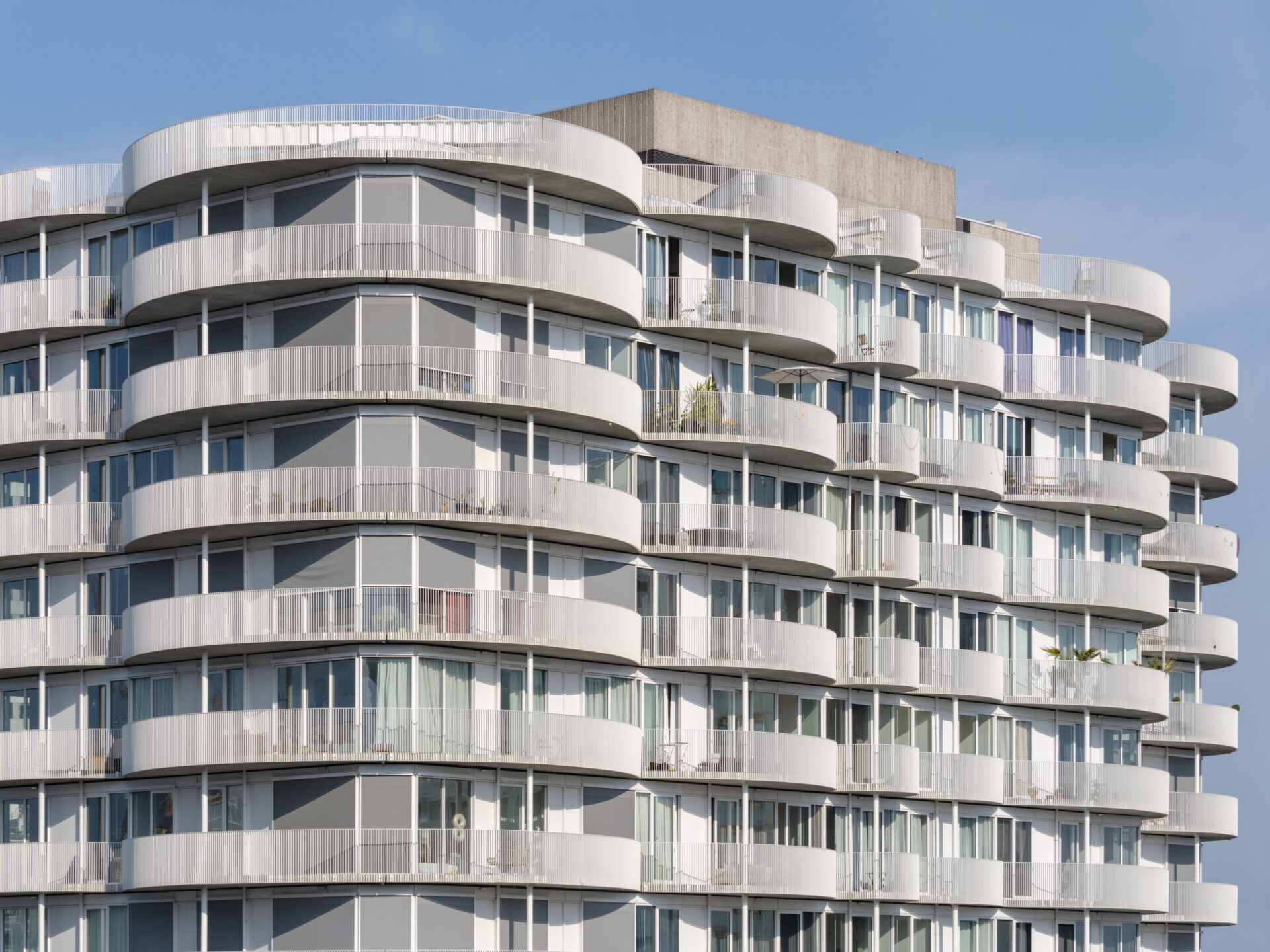
Despite the careful integration into the surrounding context, it was decided in 2008 that the tower was of no notable architectural merit. It was initially planned to demolish the tower entirely, to make way for a multifunctional building designed by OMA. In the end, they retained the shell and refitted the building to contain 103 apartments. The tower features now striking undulating white balconies. Shops in the plinth line the Lijnbaan.
Back to map
Architect: Groosman Partners, 1972-1979, 2017-2025
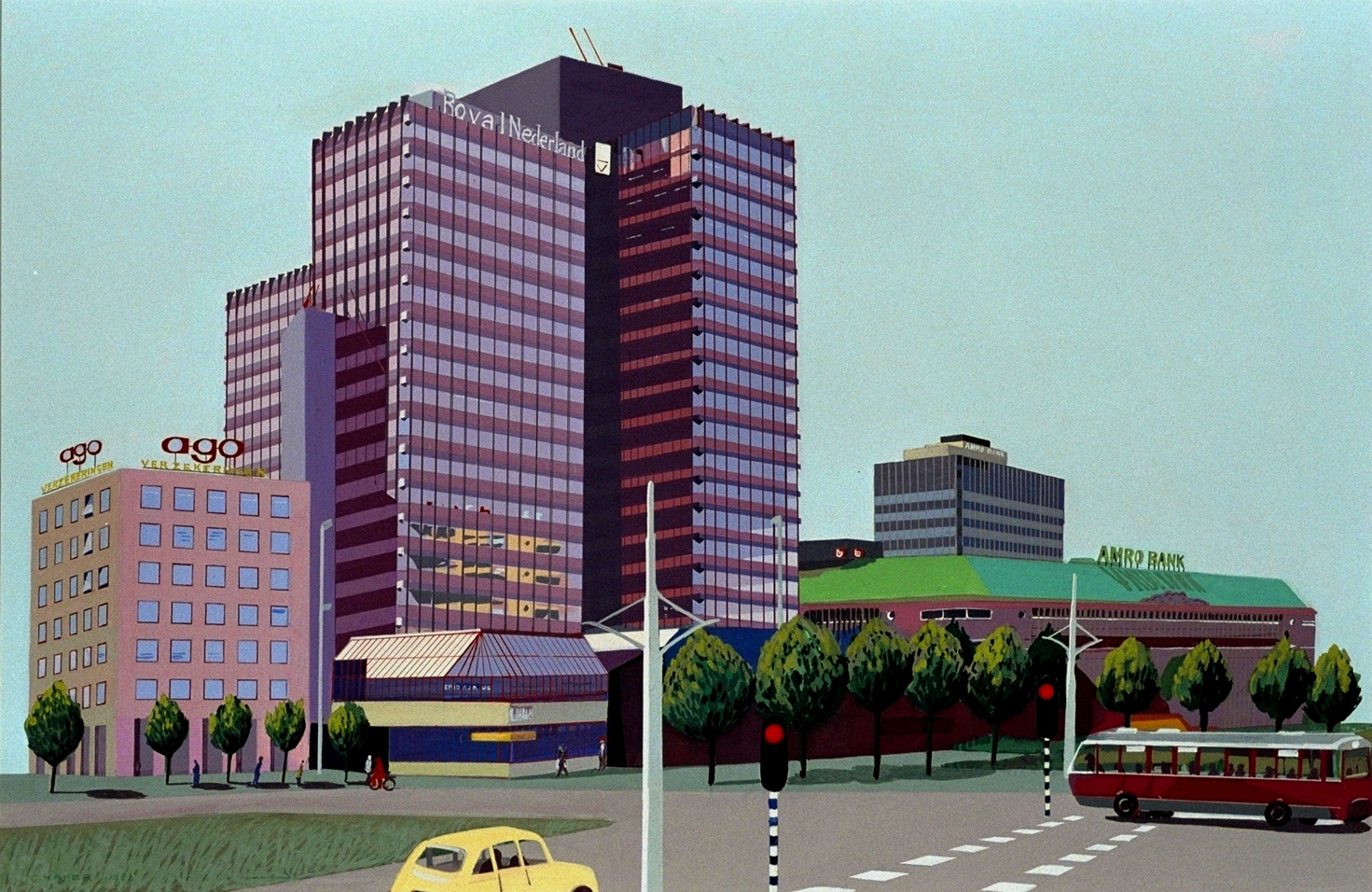
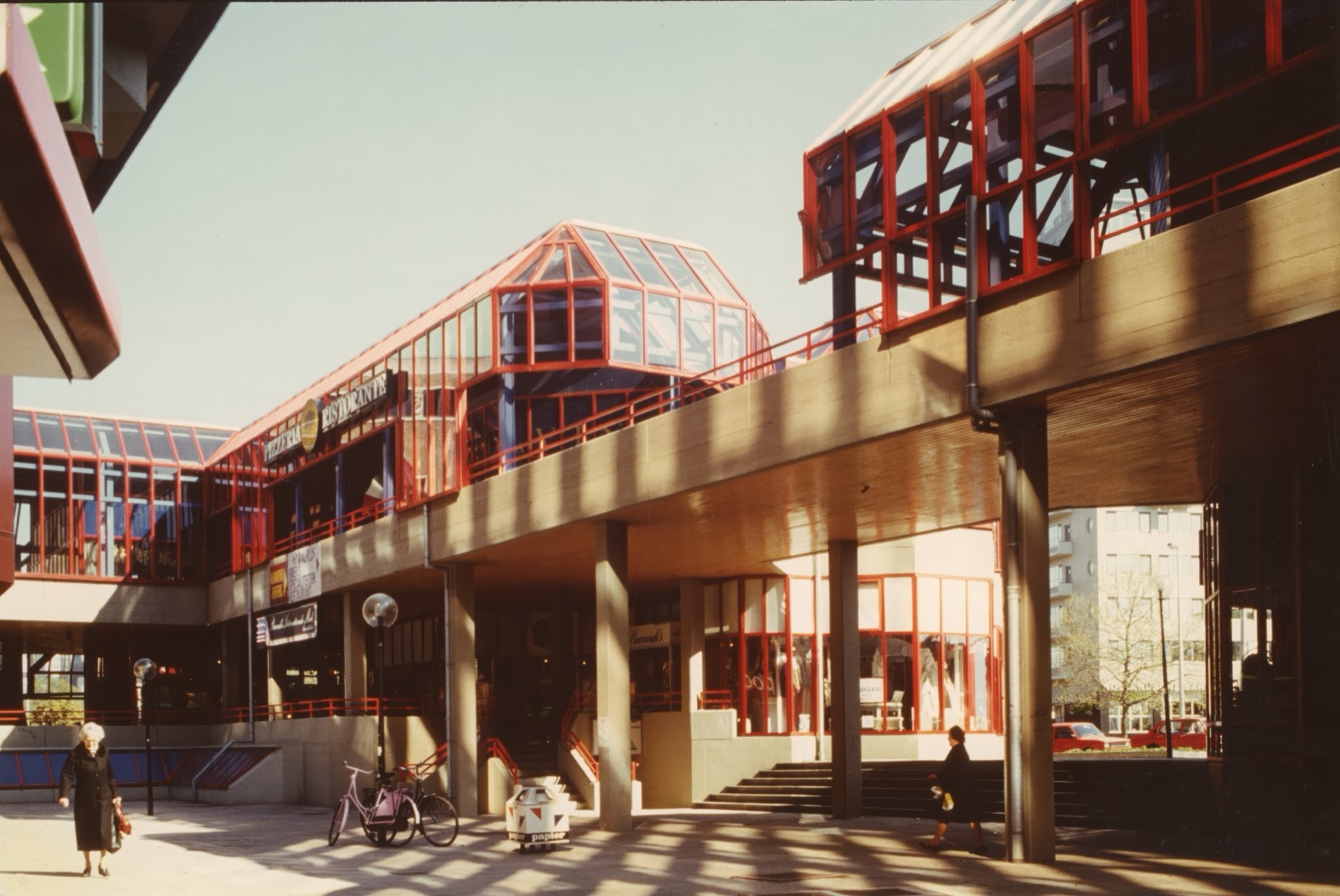
The ‘Aubergine Giant’ was designed in 1972 by Rob van Erk (Groosman Partners) on a site previously occupied by the Rotterdamsch Nieuwsblad. The new city council opposed the high level of office development in the city centre, which threatened to adversely affect the vitality of the area. A compromise involved creating low-rise pavilions along the sidewalks, that are replaced in the 1990s.
The tower itself consists of three wings grouped around a concrete core. A feature of the Coolse Poort is the striking aubergine-coloured aluminium construction with purple-tinted glass.
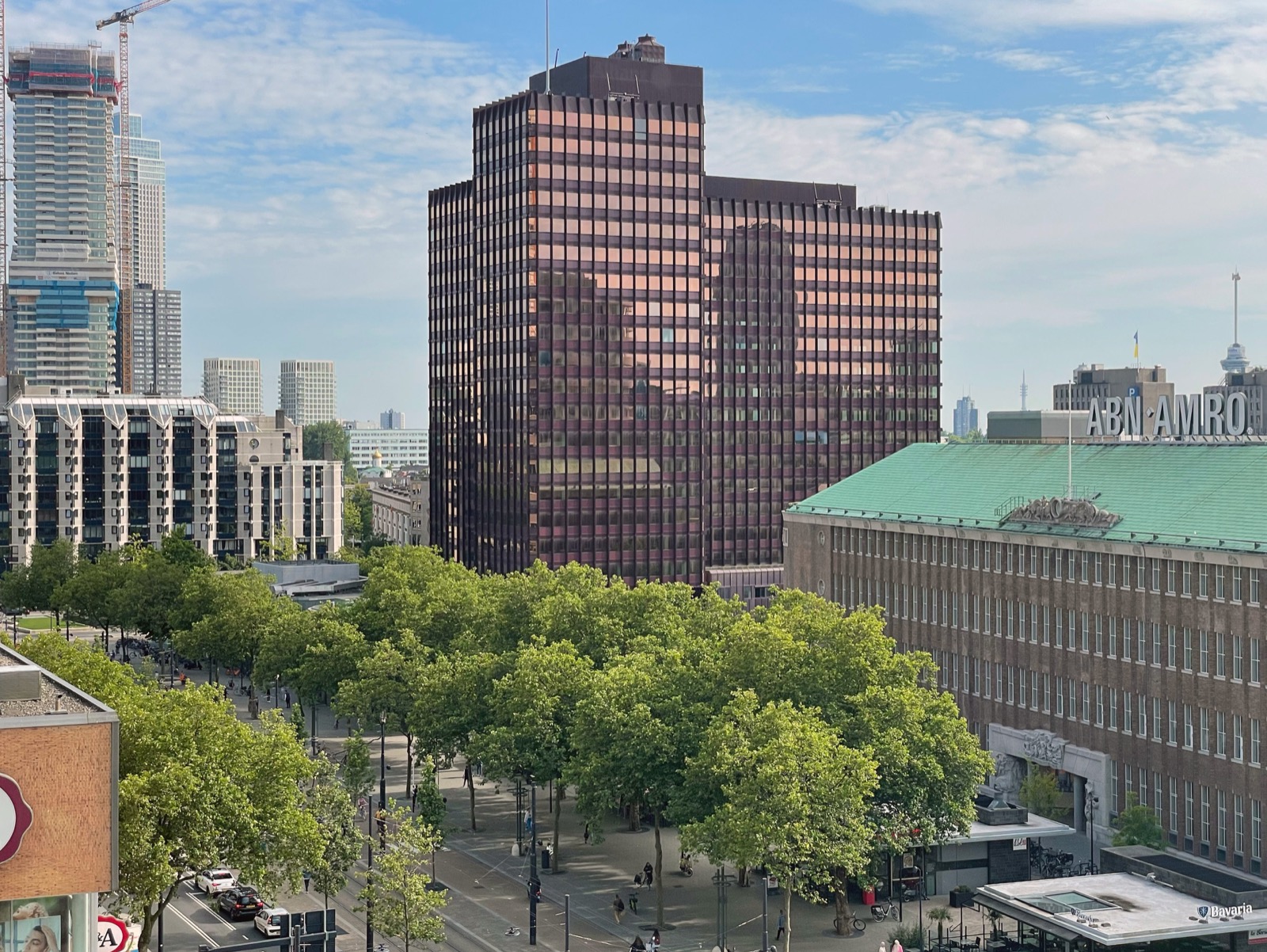
For the recent transformation, GROOSMAN is again involved. The plinth has been refurbished and the offices made climate-proof. In addition, the coloured windows have been replaced with clear mirrored glass, from floor to ceiling.
Back to map