
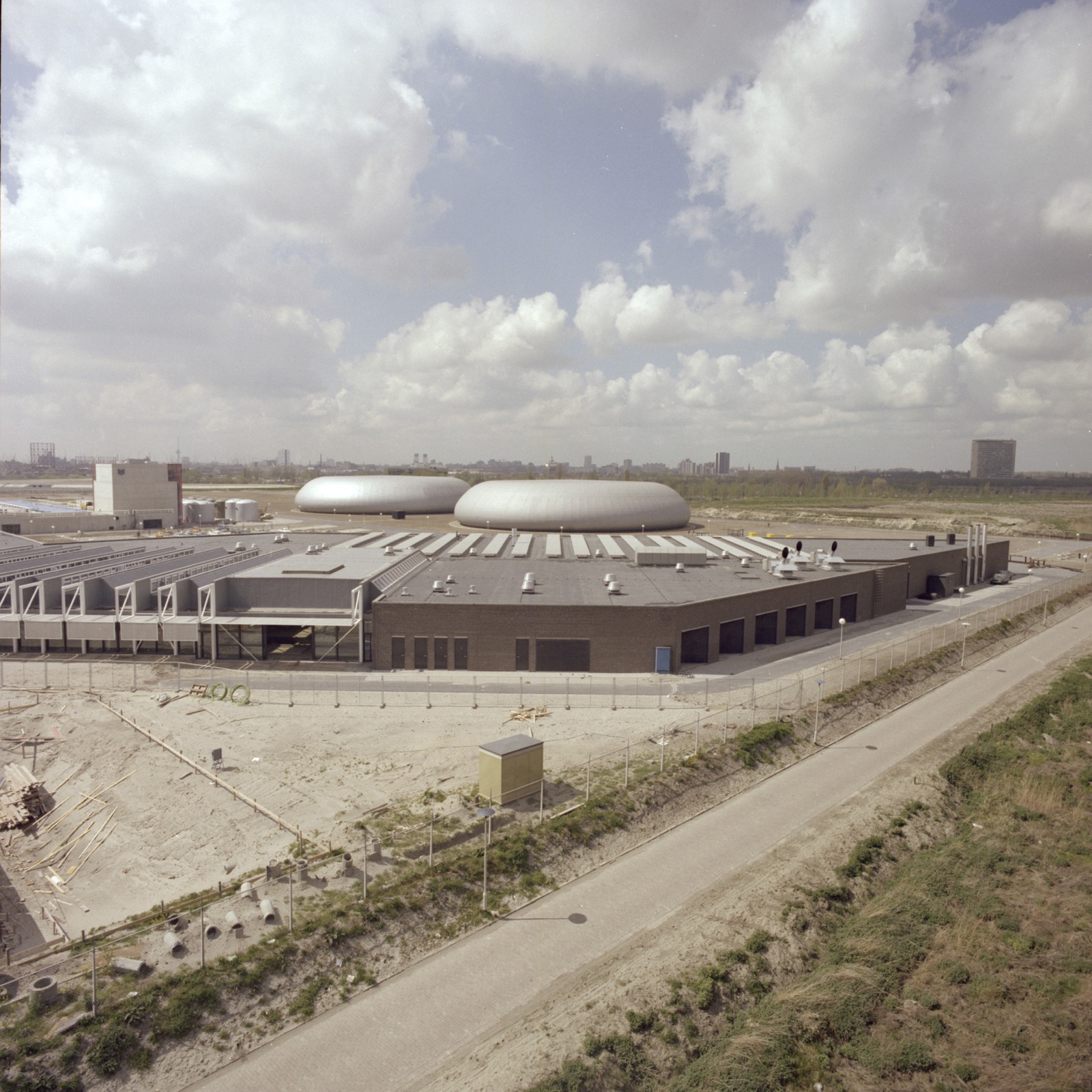
Aanleg nieuwe wegen, 1985, Stadsarchief Rotterdam
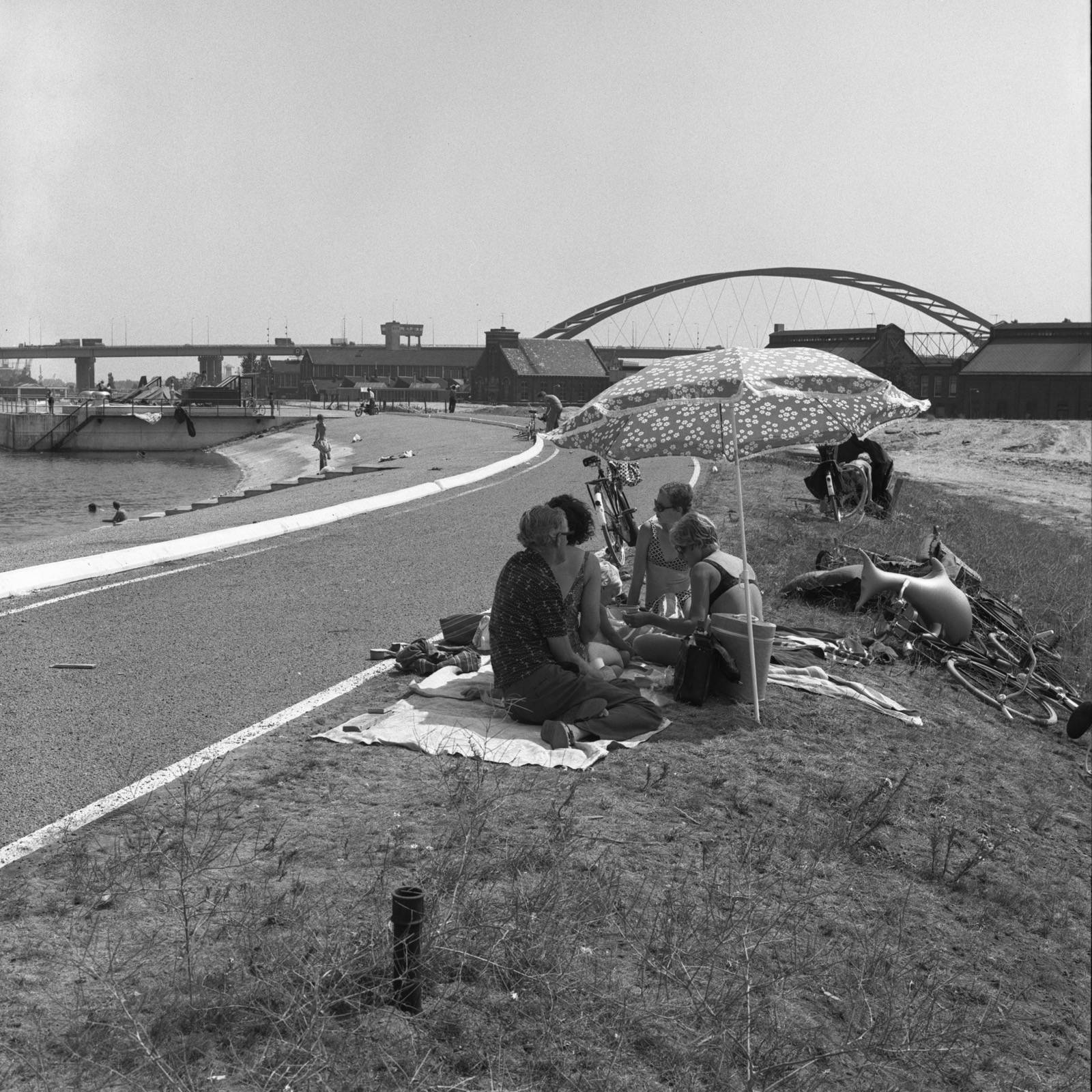
Recreation on the Schaardijk, A. Groeneveld, 1976, Stadsarchief Rotterdam
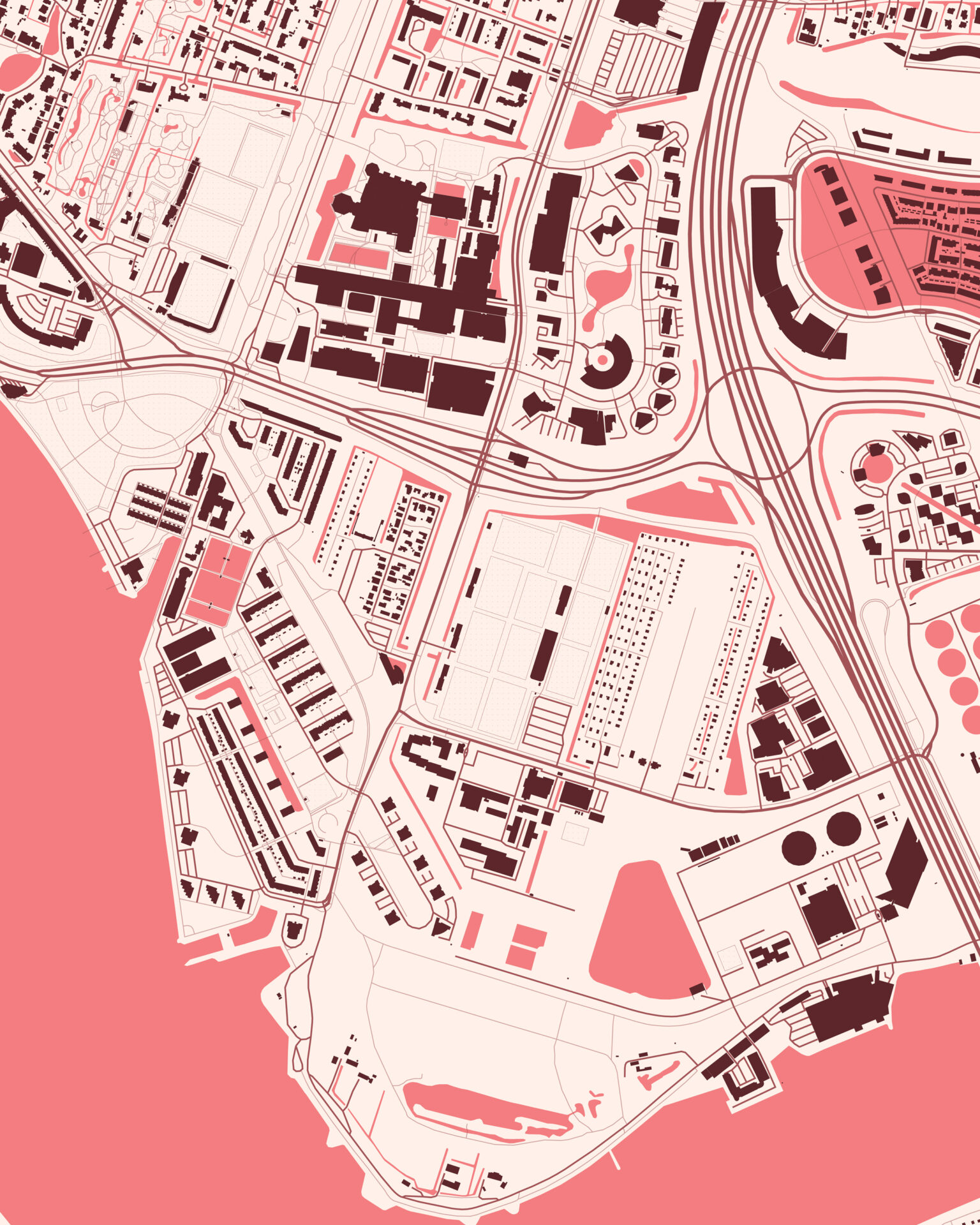
Discover the rich history of De Esch with a walk through parks and nature, past industrial heritage sites and eco-friendly homes. Along the way, you’ll experience the diversity of the landscape and the wide variety of approaches to architecture, culture and leisure. From the first city park ‘Oude Plantage’ to the contemporary city beach ‘Costa del Nieuwe Maas’. The cooperative live-work community Utopia, home to architects, artists and designers, has left a lasting mark on the neighbourhood, where the water tower and filter buildings of the former water supply have been seamlessly integrated.
1
2
3
4
5
6
7
8
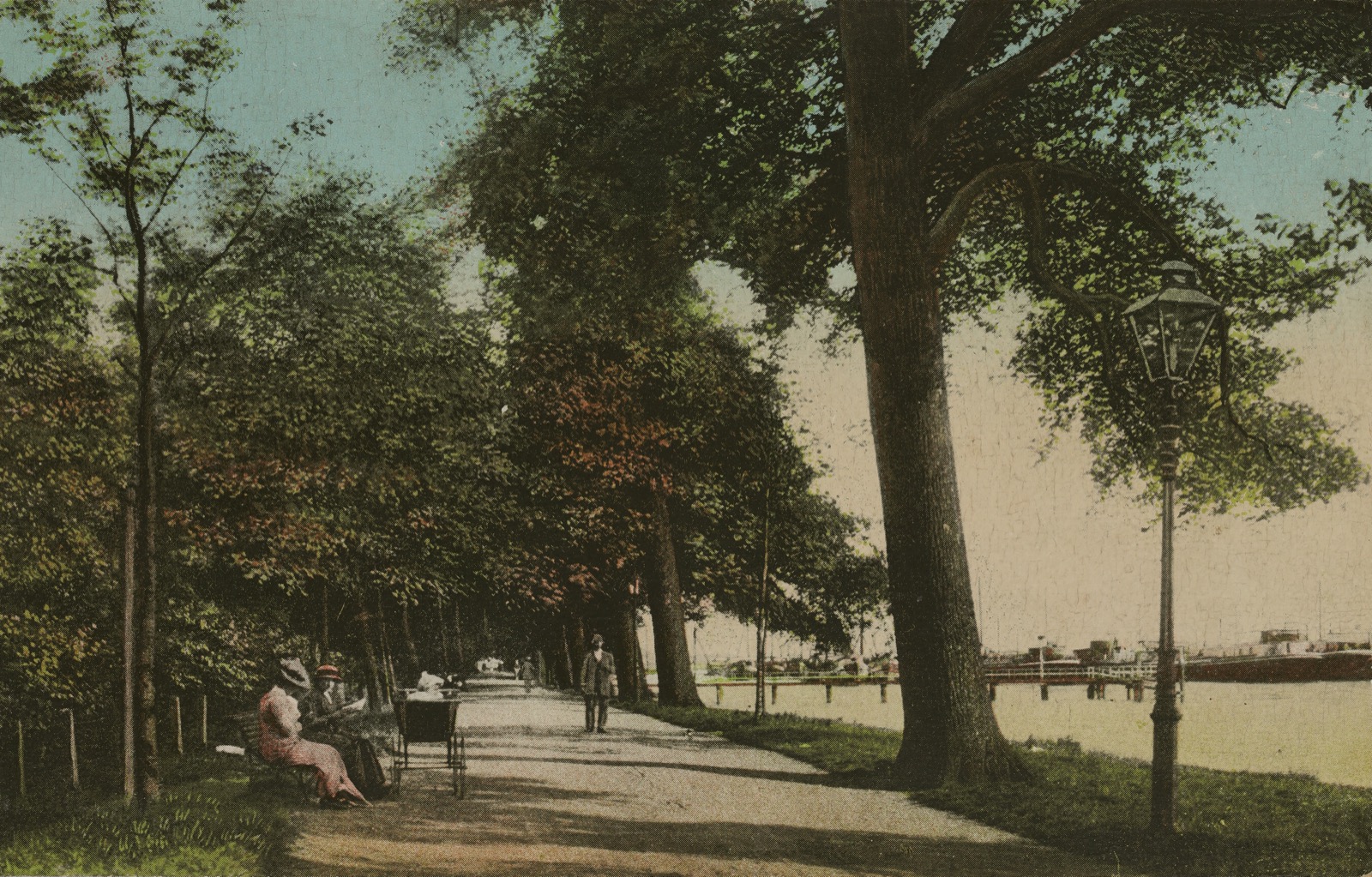
One of the earliest urban interventions in the reclaimed polder and dyke landscape dates back to 1769: the creation of the Oude Plantage. With the establishment of Rotterdam’s very first public park, the city council seized the opportunity to offer a civic ‘promenade’ – a place for leisure and for cultivating a sense of urban identity. The strip of land between the river and the Honingerdijk was literally and figuratively straightened out through the creation of a ‘plantation’: a geometric composition of trees, hedges and lawns.
Back to map
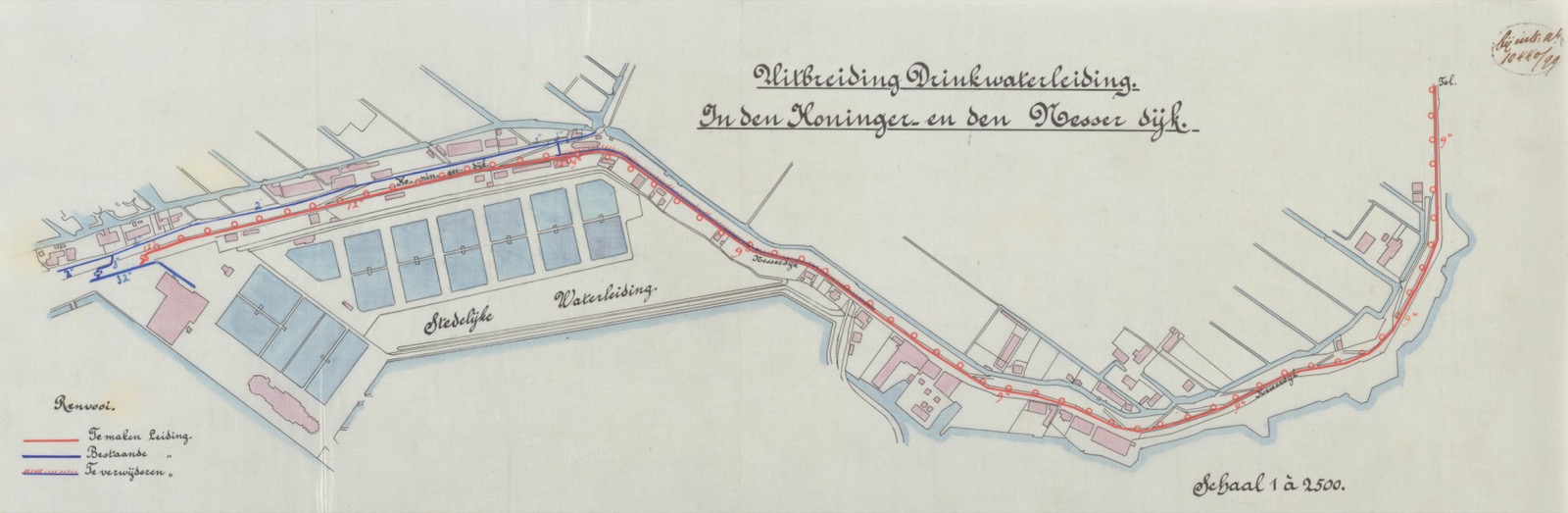
Alongside Rotterdam’s oldest park, De Esch also became home to the city’s very first drinking water facility. Architect C.B. van der Tak began work in 1871 on a water tower in a remarkable blend of neo-Romanesque, neo-Renaissance and Moorish styles.
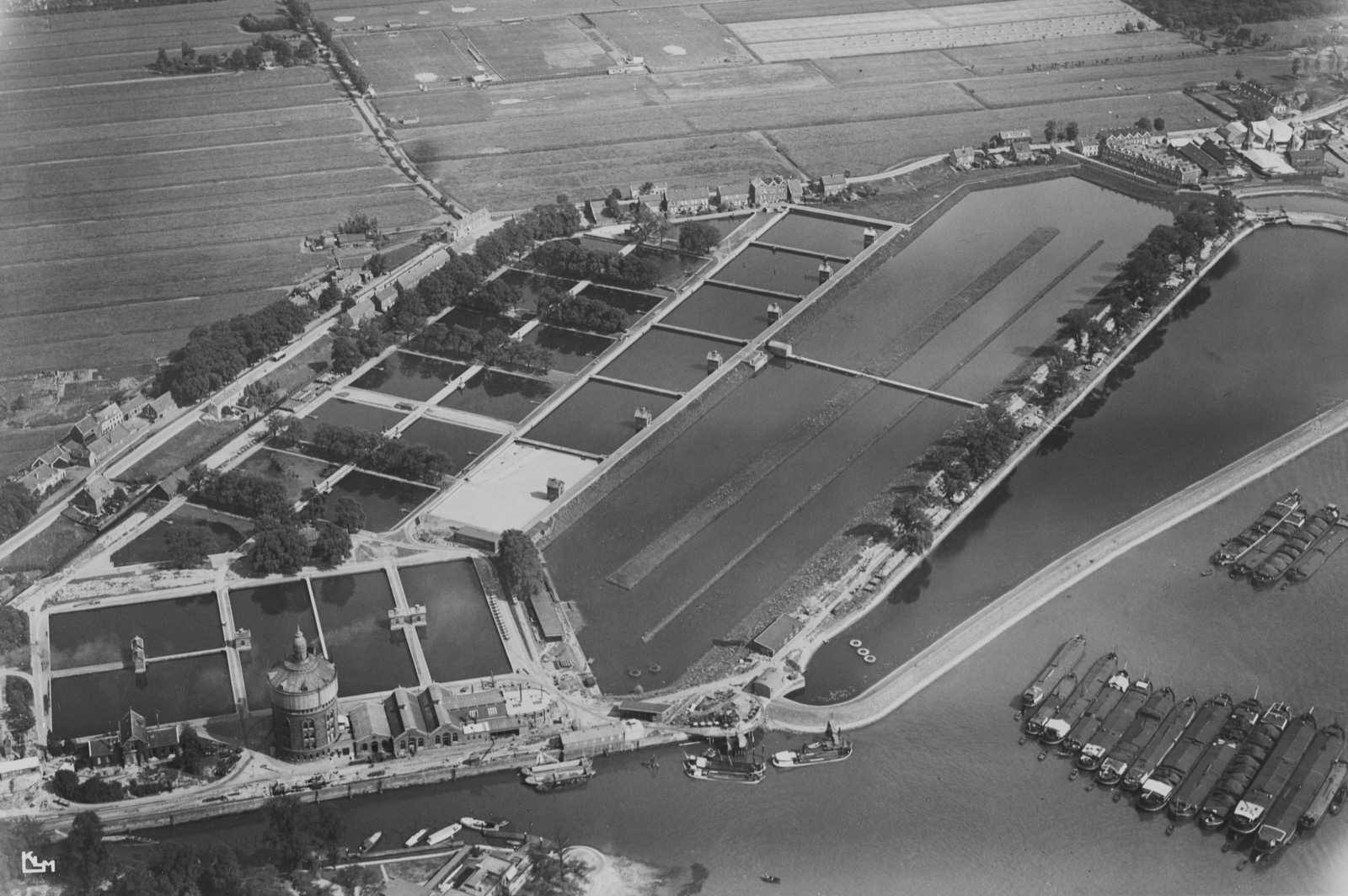
Together with a vast reservoir capable of holding a million litres, a boiler house, pumping station and two large settling basins, the site served for many years to purify the polluted river water of the Maas. Some 150 years later, the so-called DWL waterworks still stand as a reminder of De Esch’s layered history and of the enduring transformation of the Rotterdam delta.
Back to map
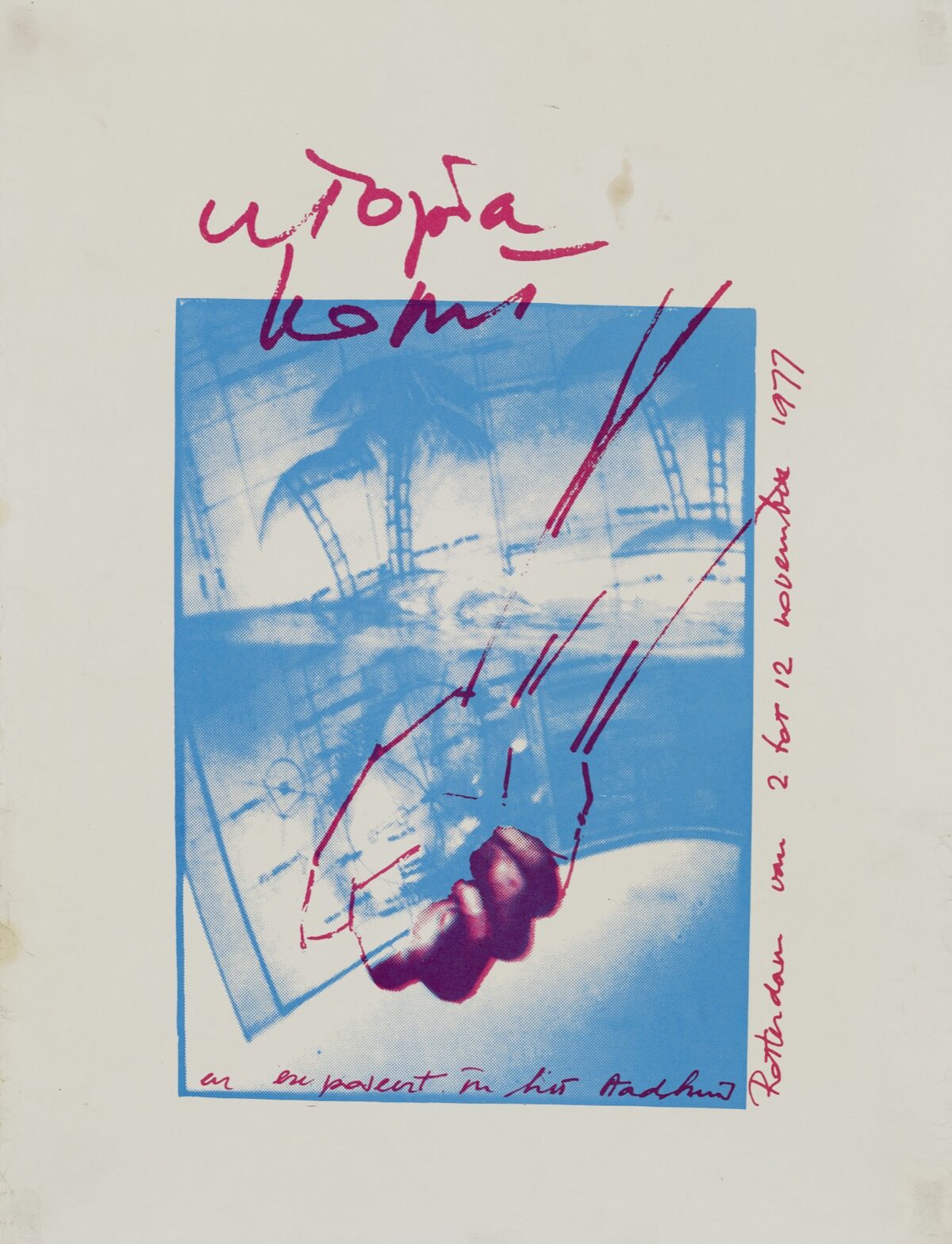
In 1977, the waterworks complex in De Esch closed its doors and was soon transformed into the cooperative live–work community Utopia, home to architects, artists, technicians, photographers and designers. Out of this meeting of disciplines, Utopia left a lasting cultural imprint on De Esch and on Rotterdam as a whole.
.
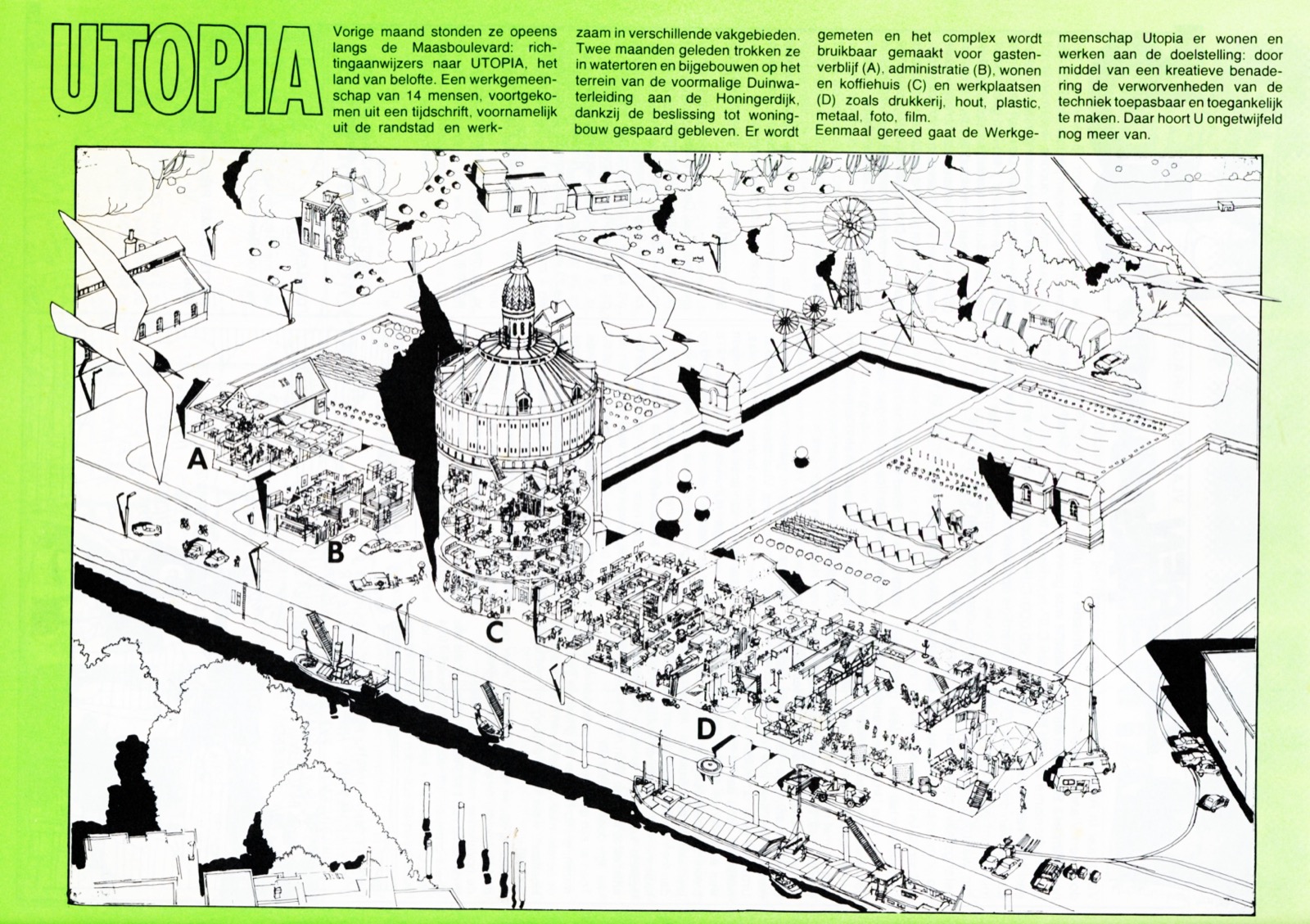
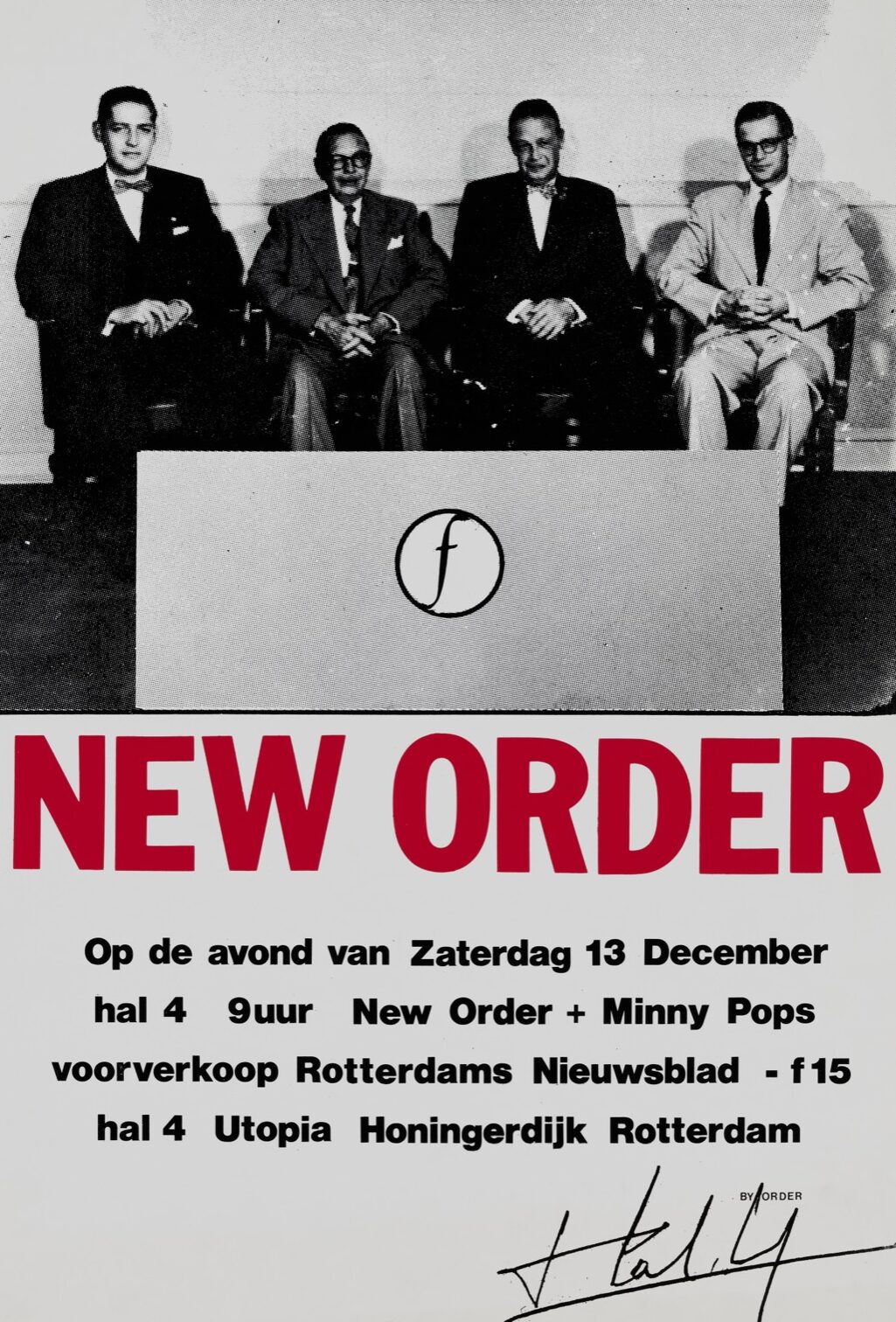
The water tower was converted into apartments, while the ground floor opened to the public as a café and restaurant. The adjacent workshops became a print shop, wood workshop and studios. Hall 4 turned into a stage for theatre and concerts, hosting international acts such as The Cure, New Order, The Birthday Party and Nina Simone.
Back to map
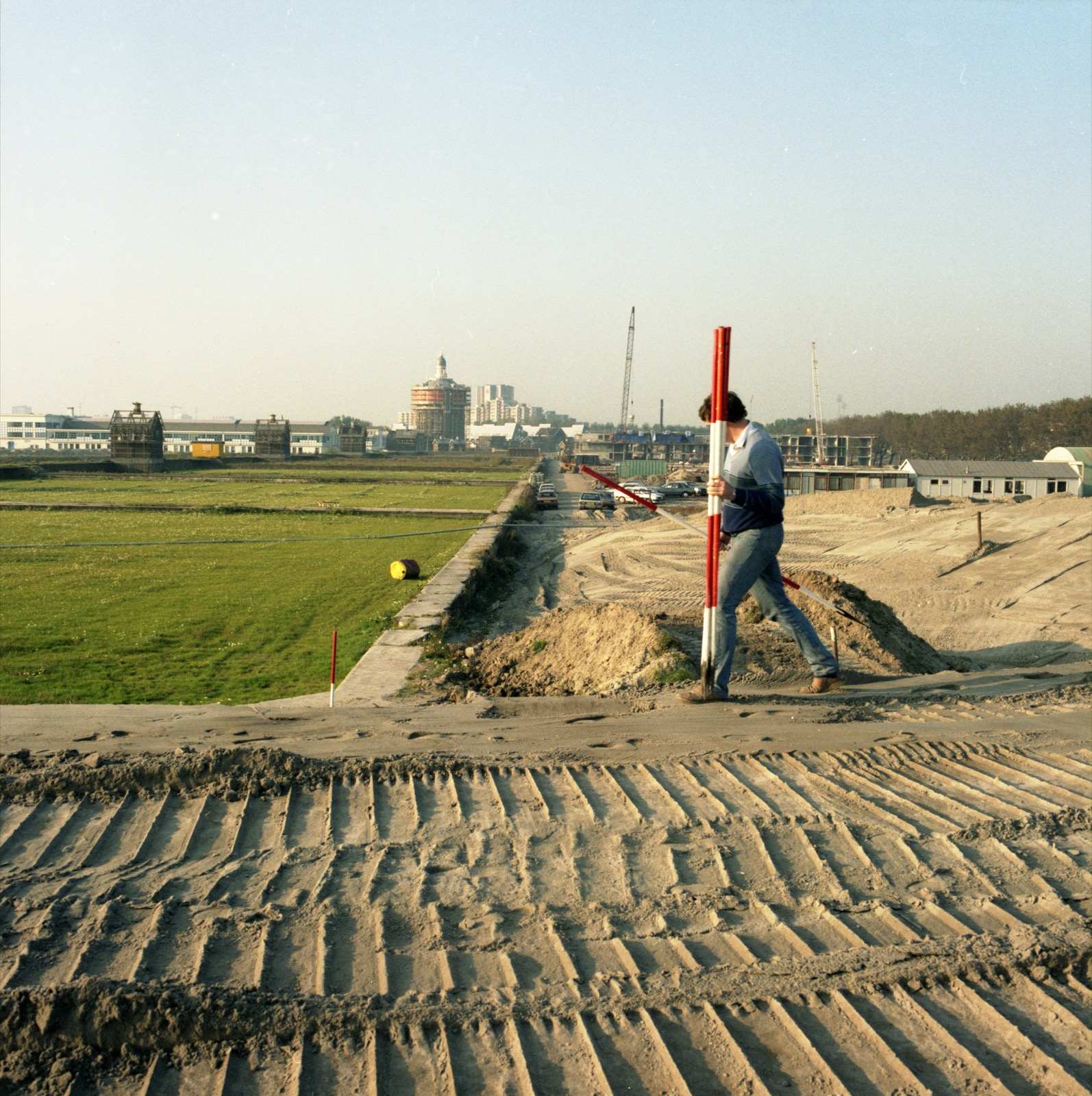
In 1979, urban designer Elizabeth Poot was commissioned to transform the former waterworks site into a residential neighbourhood, while preserving its industrial heritage. The new street layout follows the pattern of the old filter basins, and monumental buildings were woven into the design. This urban plan drawn up decades ago still sets an example for preservation of urban heritage – defining the character of De Esch today.
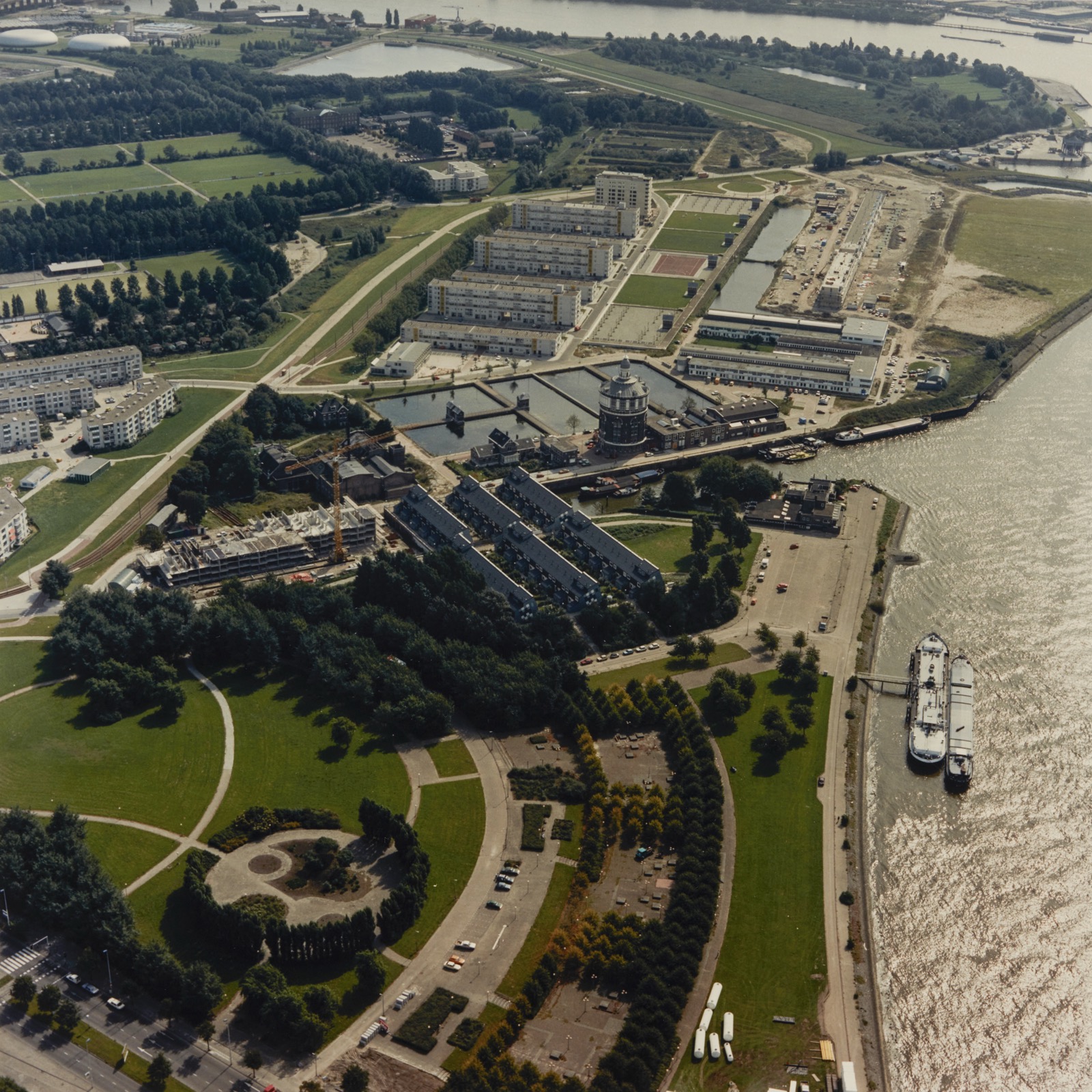
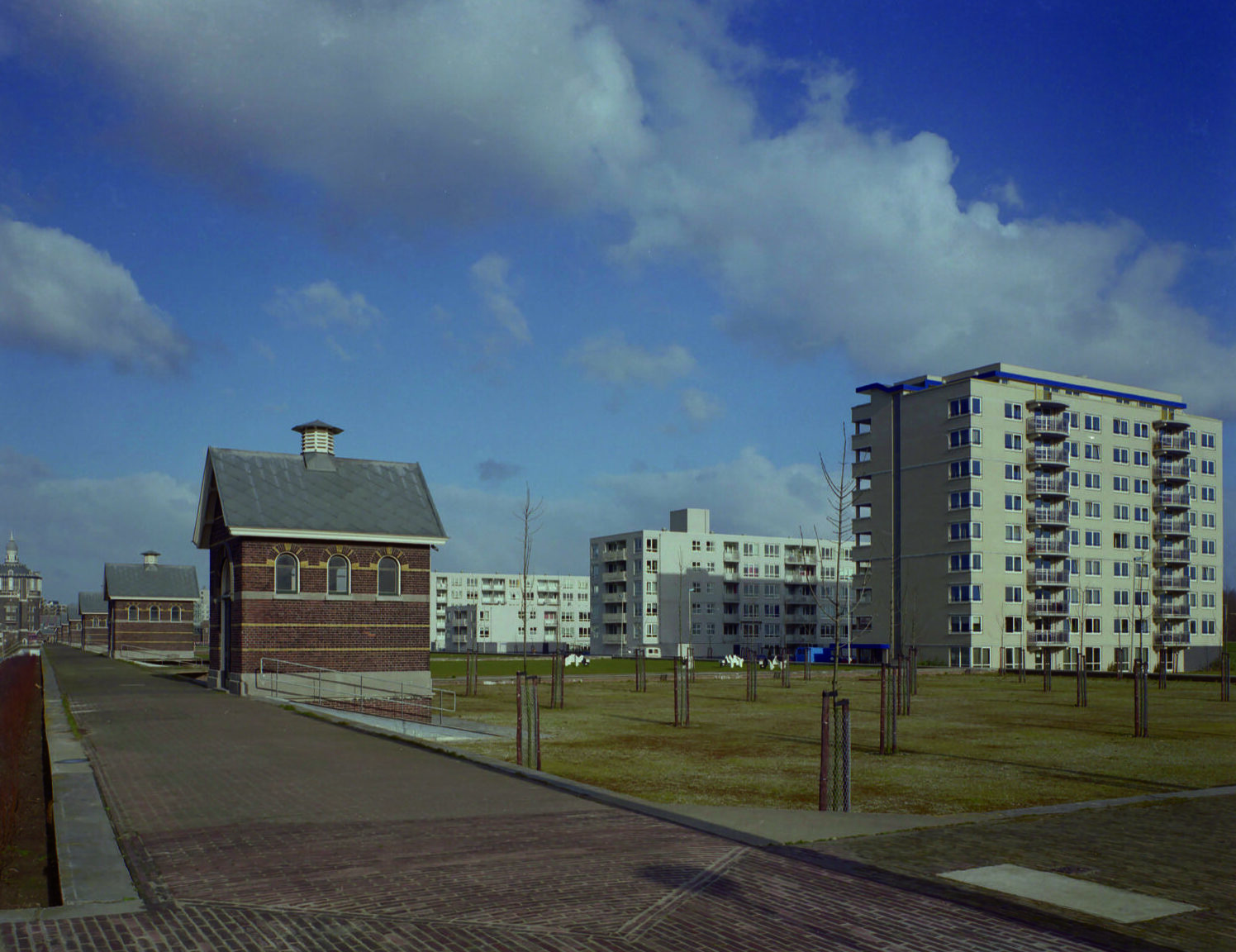
The two industrial filter buildings by architect Ad van der Steur have been transformed into housing. On top of the former clean water reservoirs stand the Zonnewoningen by Jacob van Ringen – energy-efficient timber-frame houses fitted with large solar panels. These solar dwellings rest on the concrete columns of the old reservoirs, making each home unique in shape and size. The brick filter tanks with their distinctive control houses were reimagined as the main public space for the neighbourhood.
Back to map
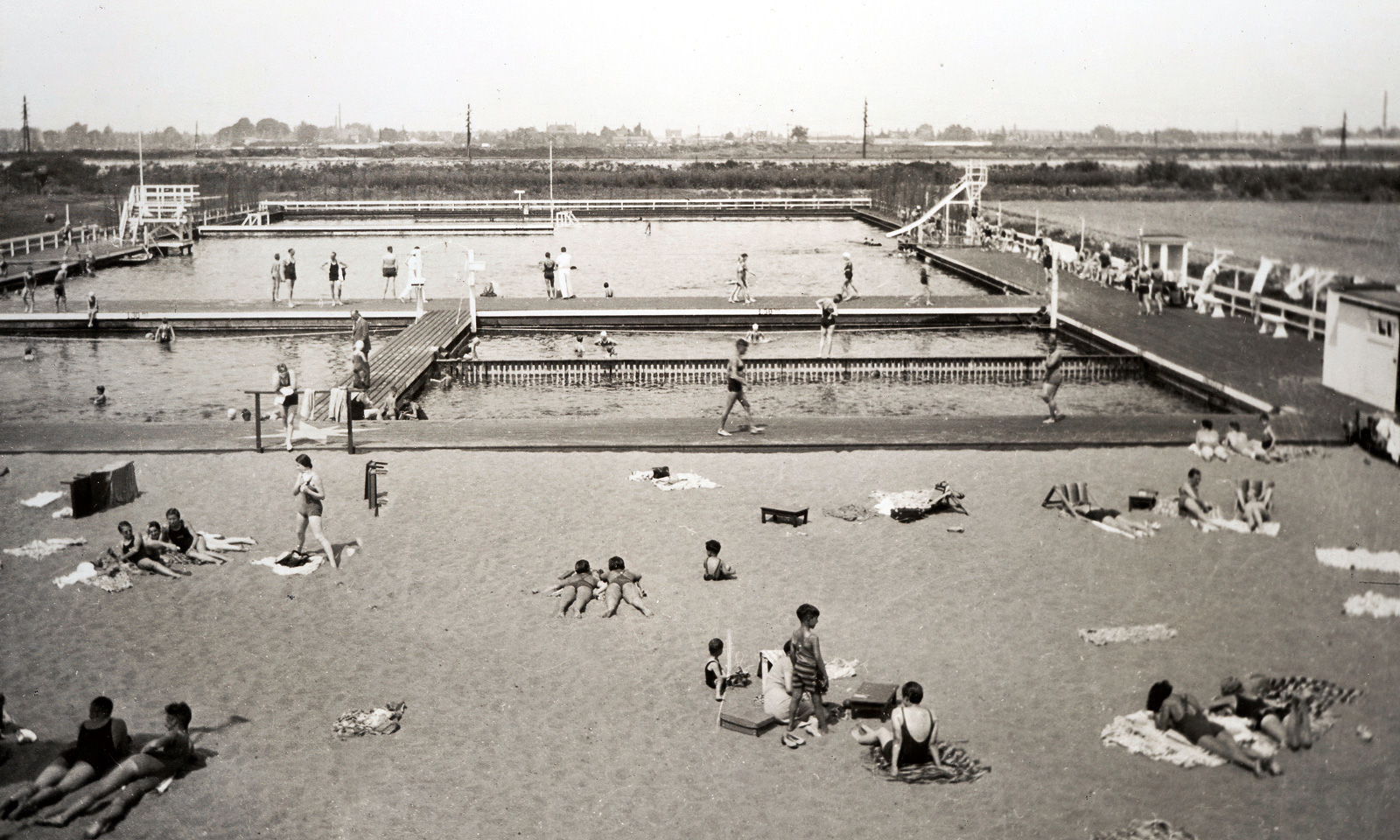
De Esch is an area full of surprises. In the summer of 1931, the Kralingen Swimming Pool Association opened a large outdoor complex with two natural pools and a heated basin. Yet this asset remained the preserve of a select club of about seven hundred well-placed Rotterdammers. Next door, in 1939, the allotment park VTV Nut en Genoegen -’Use and Delight’- was founded, a modest complex of thirty-two plots and a simple clubhouse.
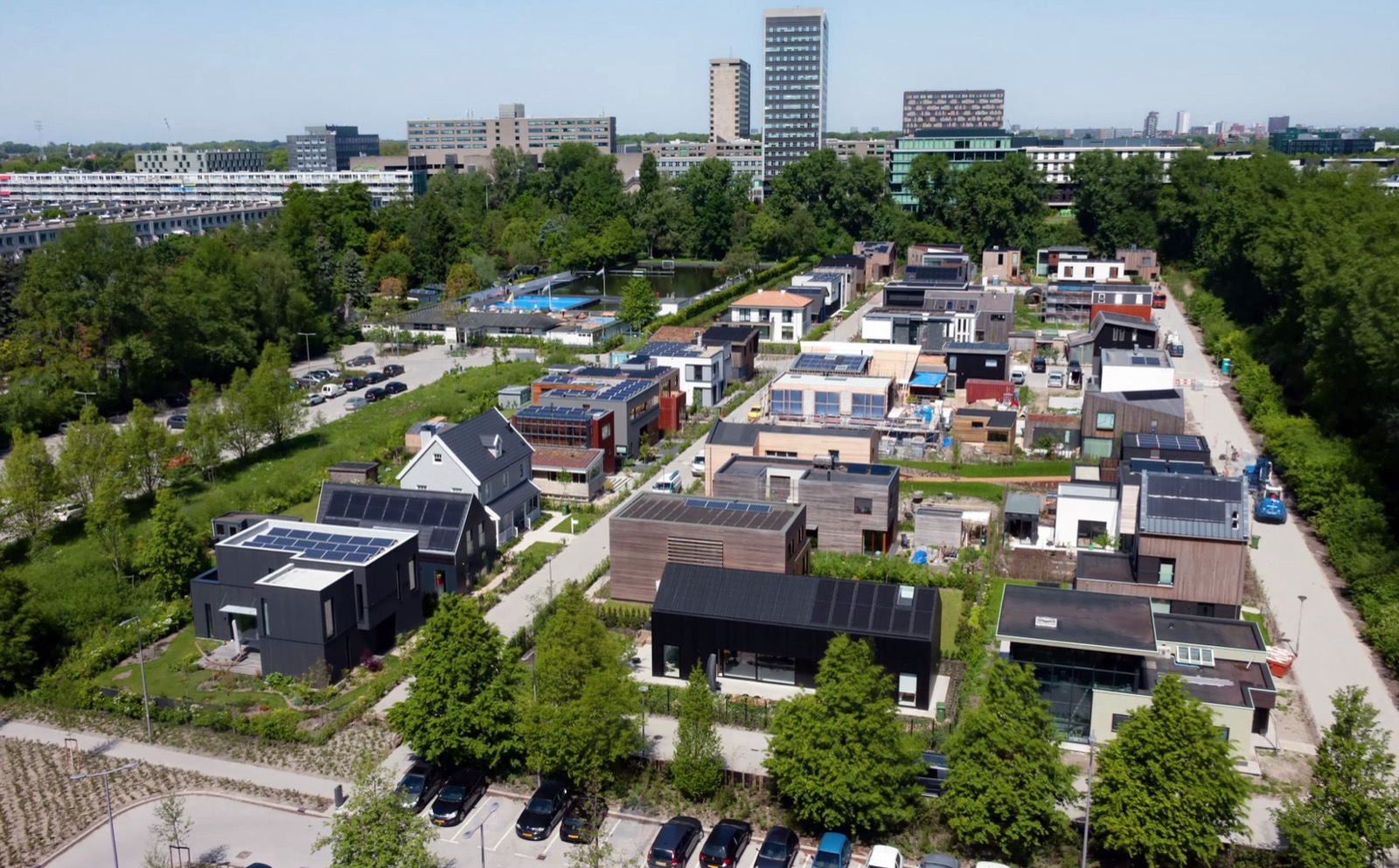
Around the corner, the Leonidas eco-district was established in 2018. On land once used by a hockey club, 46 sustainable self-built homes now stand. Constructed mostly with natural materials and energy-neutral, the neighbourhood resembles a ‘miniature Belgium’ – a jumble of straw-bale, steel-frame and timber houses, each with its own distinctive character.
Back to map
De Esch became, in the early 1940s, the chosen site for a base of the Royal Netherlands Marine Corps: the Van Ghent Barracks. After the barracks at Oostplein were destroyed in the bombing of Rotterdam, a new concrete frame was poured here, although war soon halted construction. The marines returned in 1946 to the new barracks.
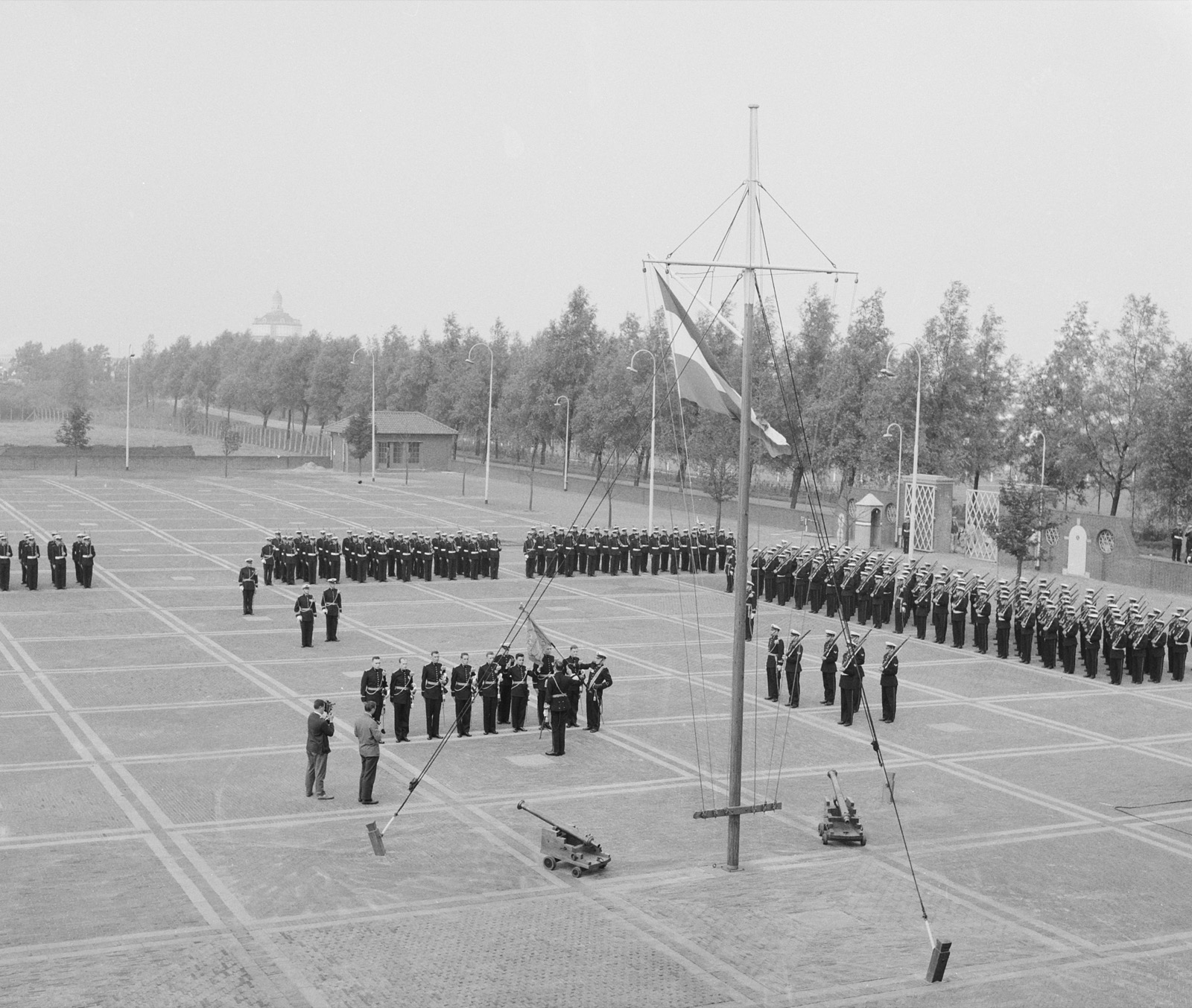
Historically the corps is closely tied to the city – from suppressing the De Vletter riots in 1868, to defending the Maas bridges in 1940, to the clearance of Perron Nul – ‘Platform Zero’ – in 1992, then an outreach point for drug users at Central Station. Over the decades the training barracks expanded with buildings from the 1970s and 1990s.
Back to map
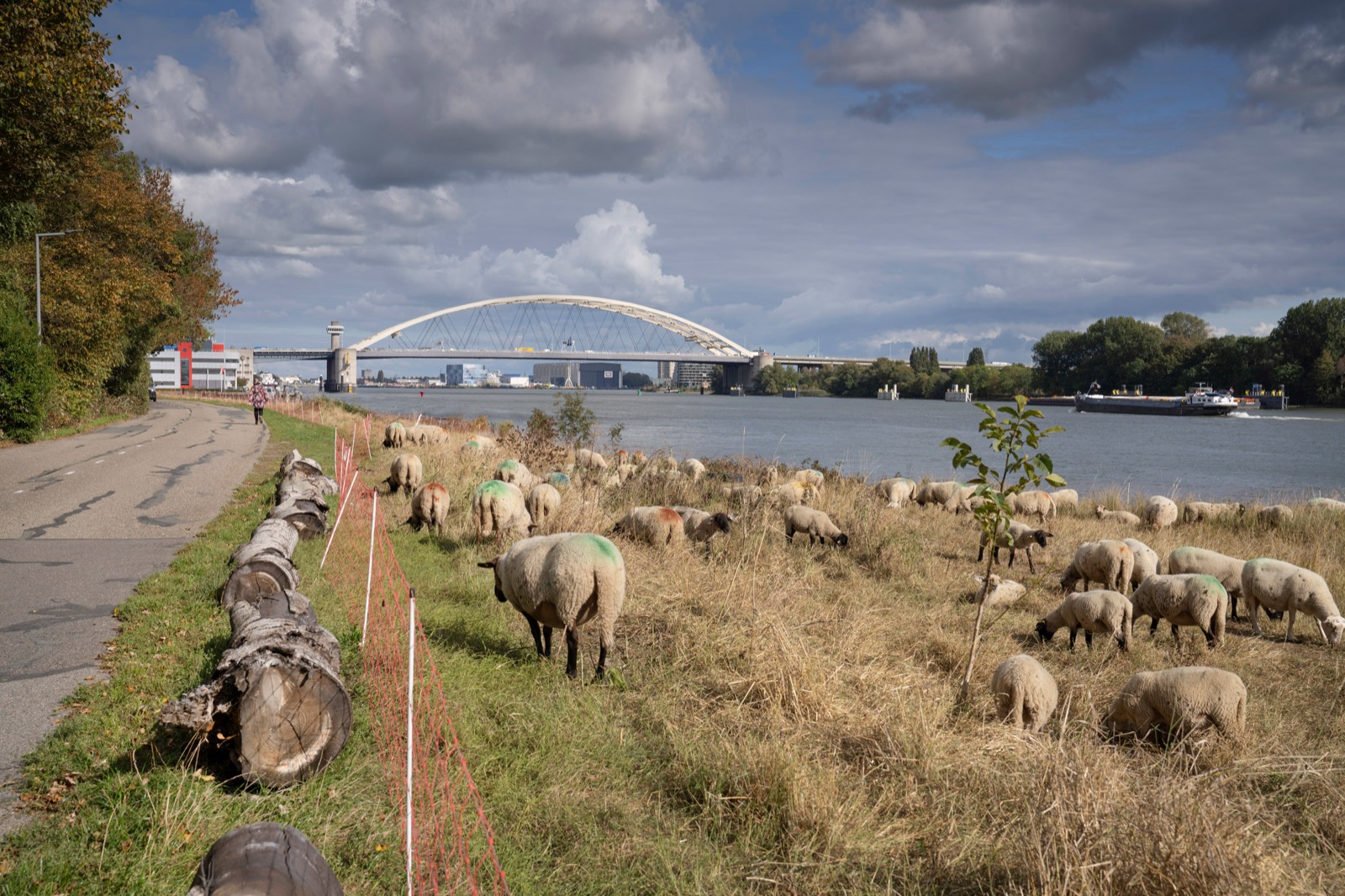
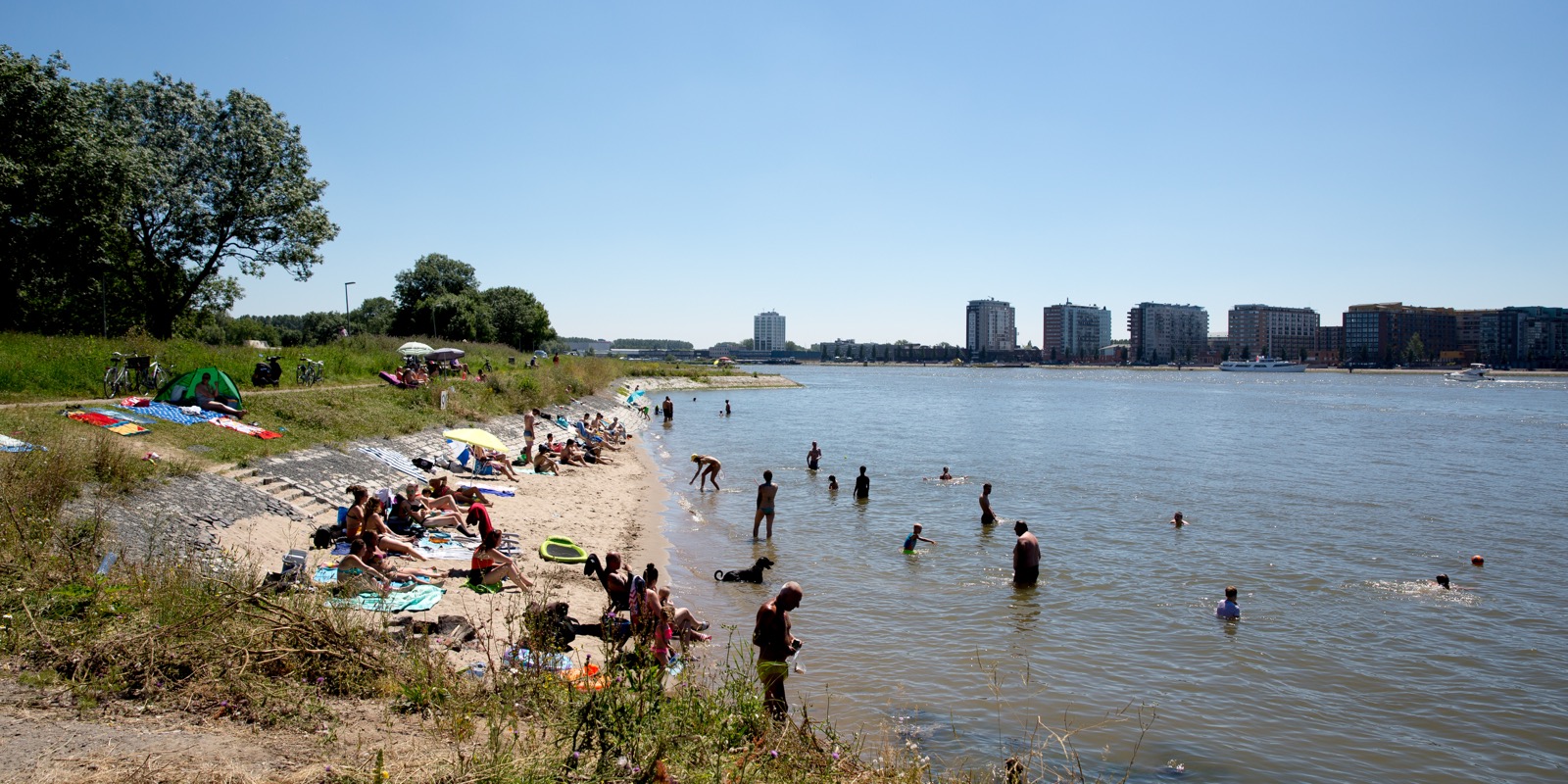
In the bend of the Nieuwe Maas lies a crescent of untamed green: the De Esch nature reserve. A mossy wetland of willows, maples and other leaning forest giants is home to nightingales, kingfishers, tawny owls and beavers. Small though it is, this patch of wilderness is cherished by all who live in De Esch. At the lively city beach – Costa del Nieuwe Maas – you won’t notice any of the announced changes on summer days, with the sheep and sunbathers.
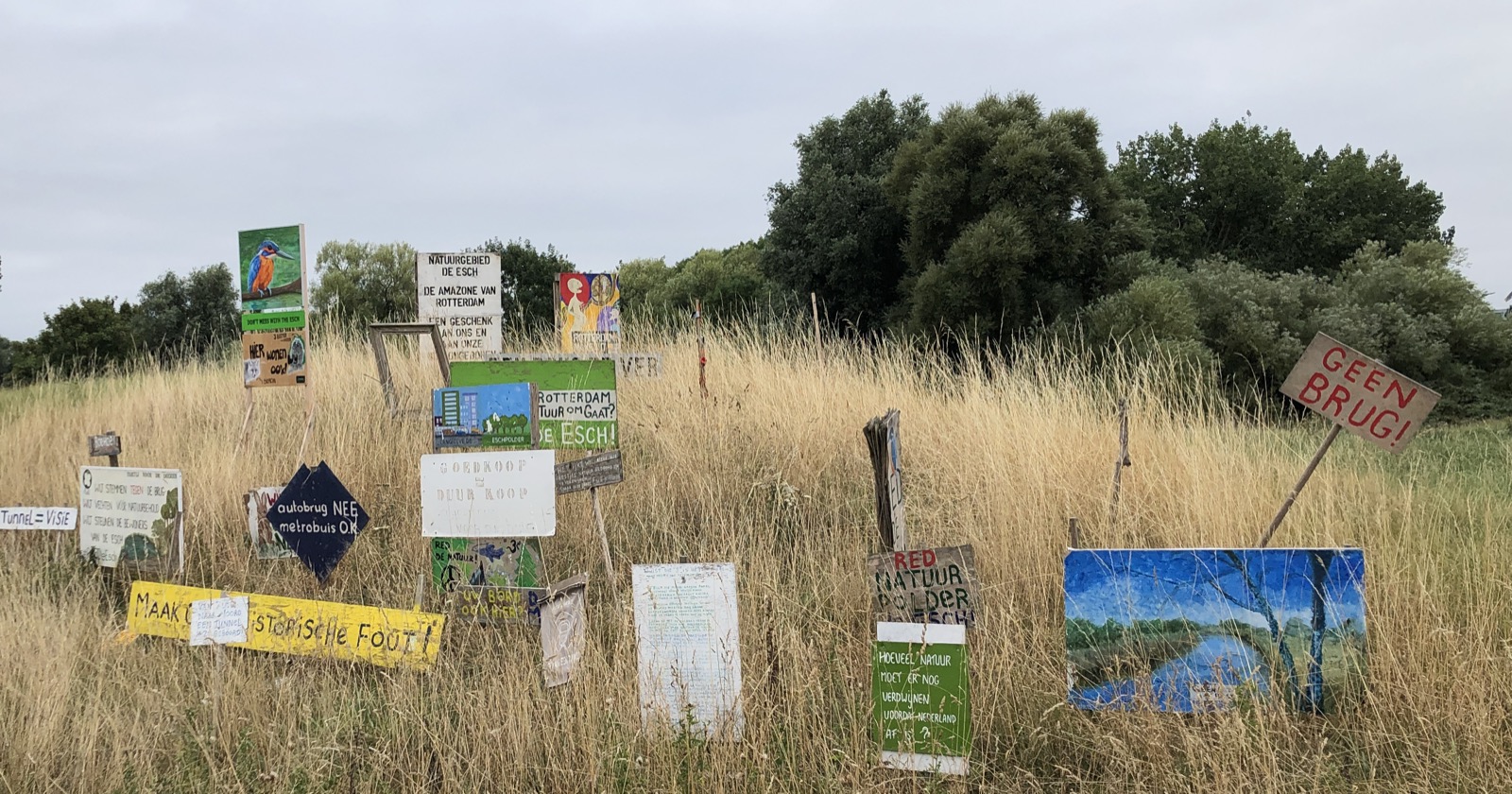
Just around the corner, however, it’s a different story, with the impressive hill of protest signs at the edge of the nature reserve: ’Is this how Rotterdam treats its nature?’ and ‘De Esch nature reserve – the Amazon of Rotterdam – a gift to us and to generations yet unborn’. Through banners, theatre and chains of people, residents are fighting to save the reserve from the construction of the third city bridge, a project that threatens to cut into the old polder and damage the fragile landscape.
Back to map
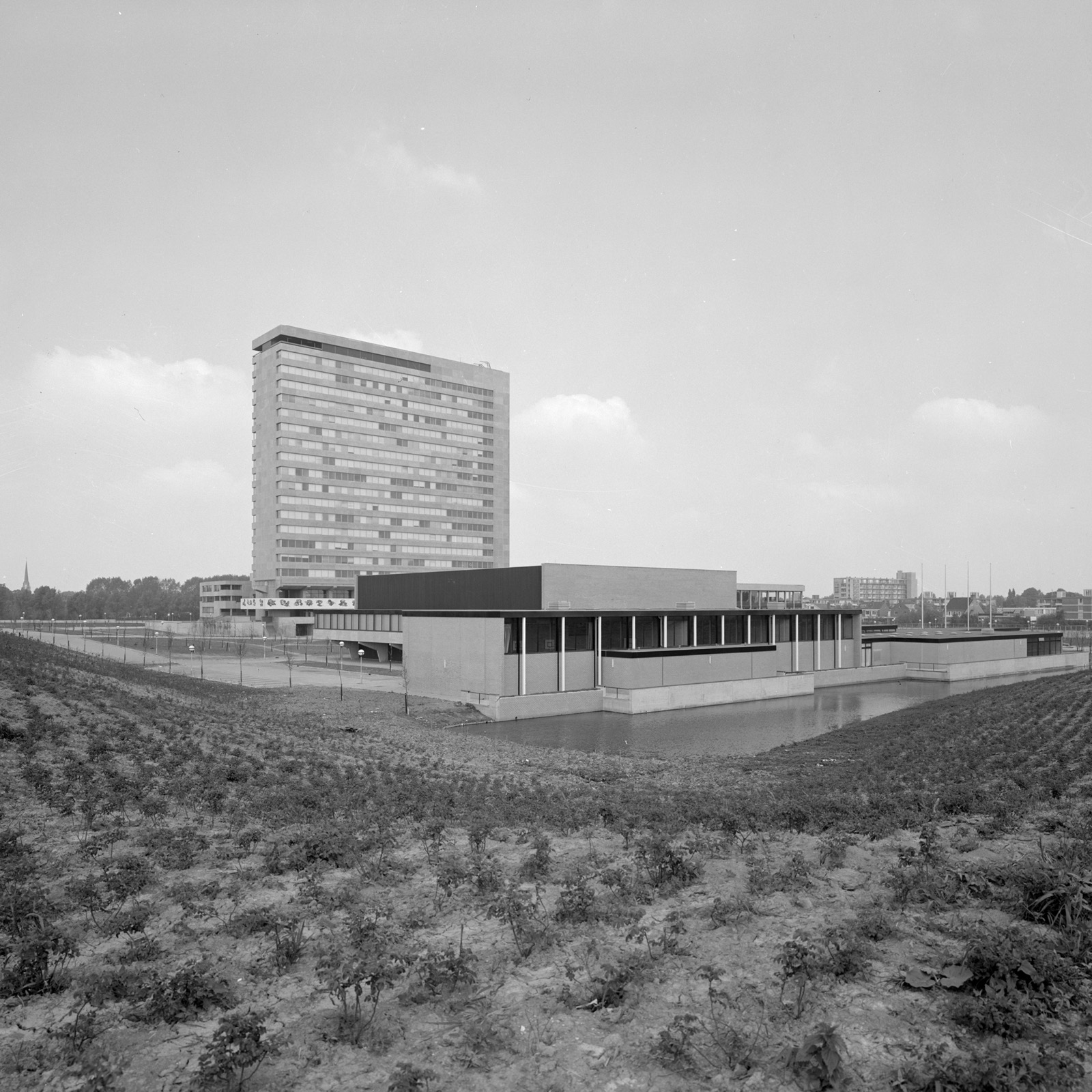
In the 1960s, the landscape around De Esch underwent a sweeping transformation – shaped entirely by the spirit of post-war progress and reconstruction. A booming economy demanded new infrastructure, along with space for knowledge and innovation. The first foundations of the Netherlands School of Economics, now the Erasmus University, were laid, while across the Nieuwe Maas the Van Brienenoord Bridge rose to carry the ever-increasing flow of traffic. And next to the driveway the new water purification was build, designed by Wim Quist.
With this drive for progress came the loss of the old. The village of Kralingeroord was demolished to make way for embankments following the catastrophic flood of 1953 and the construction of the Van Brienenoord Bridge. In this period, city residents without gardens were granted small plots in the new allotments of Kweeklust and Toepad.
Back to map