
Photographer Rob ’t Hart has built an impressive body of work over the past thirty years, working with both national and international architecture magazines and offices. His city, Rotterdam, appears again and again in his work. For the ZigZagCity festival in 2014, he photographed the Laurenskwartier using both his professional camera and his iPhone.
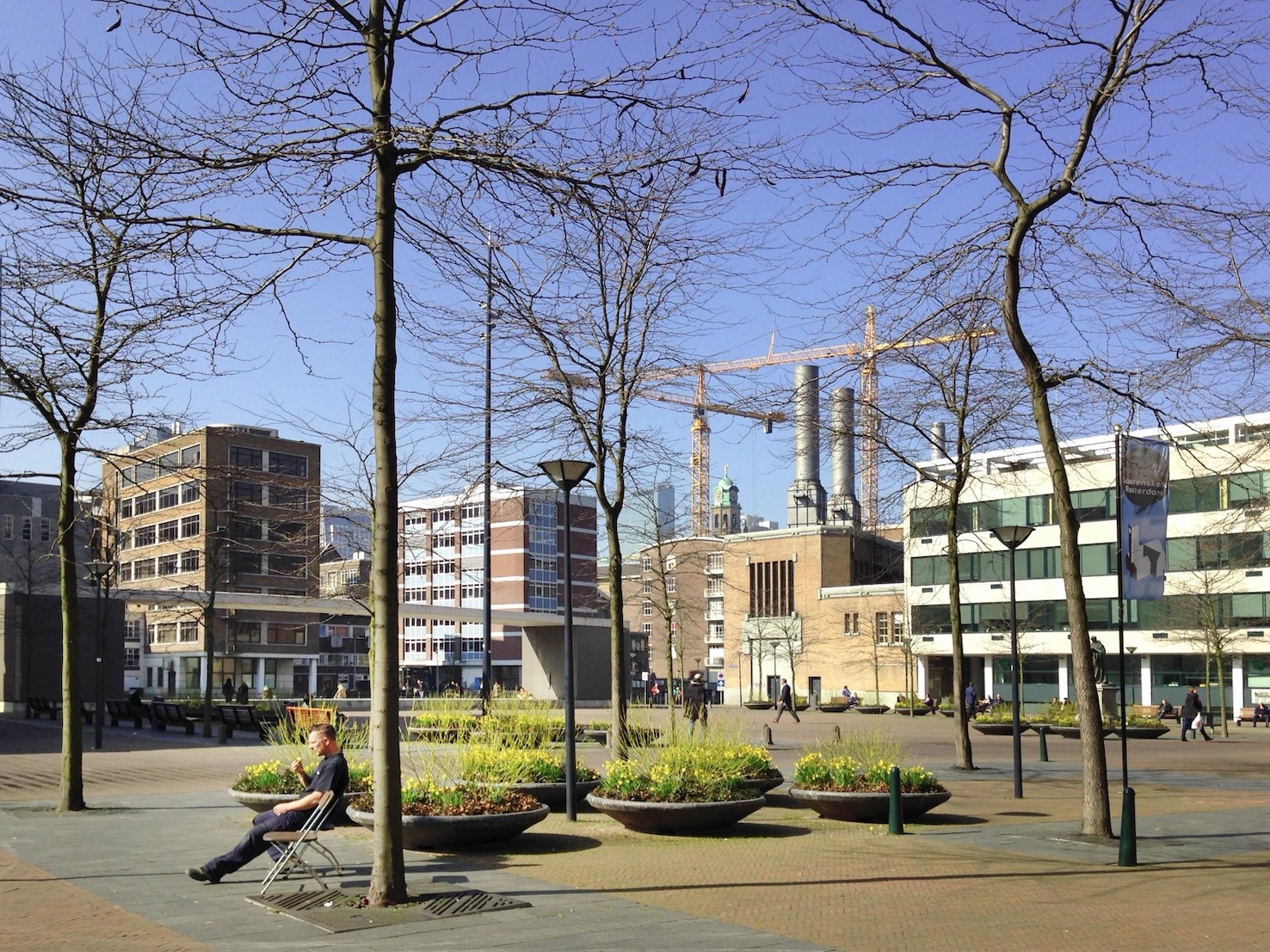
Rotterdam is too stubborn for carefully staged cosiness. The post-war architecture, perceived as harsh, has proven difficult to soften over the past forty years – something that becomes particularly visible in the Laurenskwartier, a compact open-air museum of shifting urban ambitions.
My mother worked at the PTT telephone building on the Botersloot in the 1950s, where she would take a walk each day during her breaks along the Zijl, Hang, Steiger and Kolk. In the early 1970s, now a housewife living in Schiebroek, she would walk me once a week from the Hofplein tram stop, via the Delftse Poort to the Laurenskwartier.
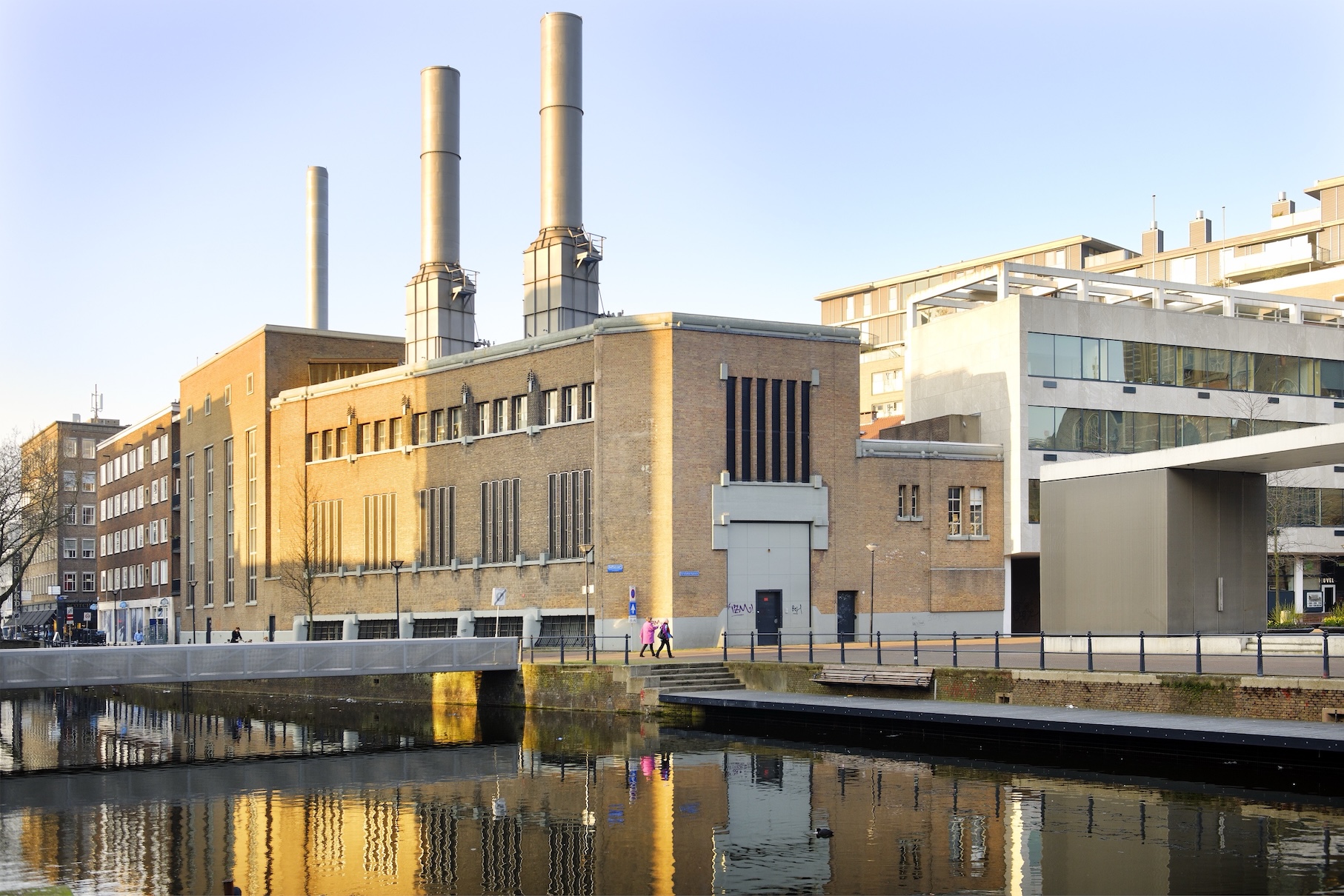
I remember these walks through the neighbourhood as a small boy: steaming white plumes in the freezing cold from the district heating plant along the Delftsevaart, a blowing vent at the police station, the never-ending restoration of the Laurenskerk, inward-looking office buildings, the Meent bridge with its pulleys, and above all the metropolitan sound of the elevated railway.
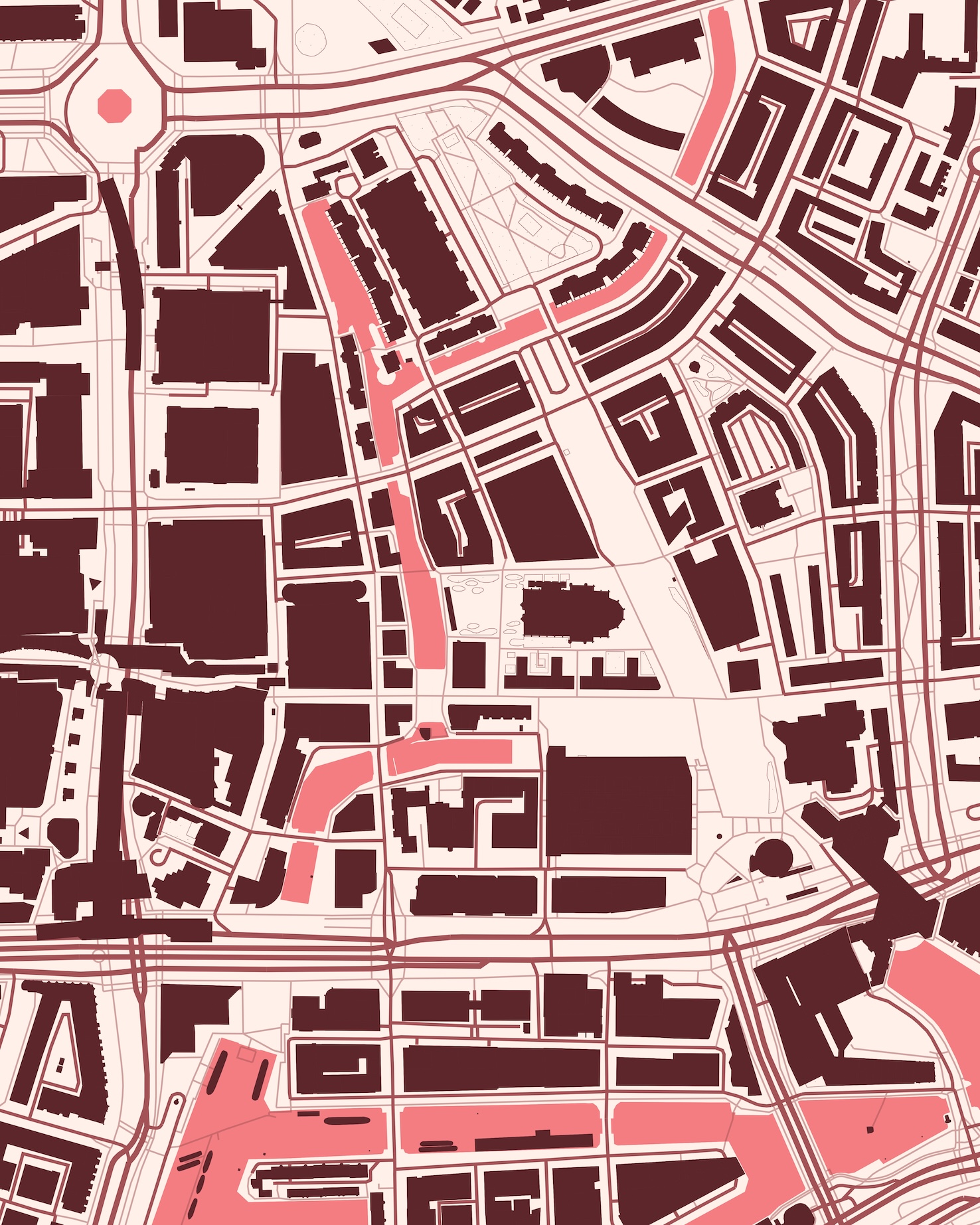
1
2
3
4
5
6
7
8
9
10
In 1966, Jan Schaper launched a scathing attach on the lifelessness of the post-war city centre in his film Stad Zonder Hart. It was not a city of people, but of infrastructure and office blocks, where hardly anyone lived and where, at five o’clock, people would head homes to the suburbs.
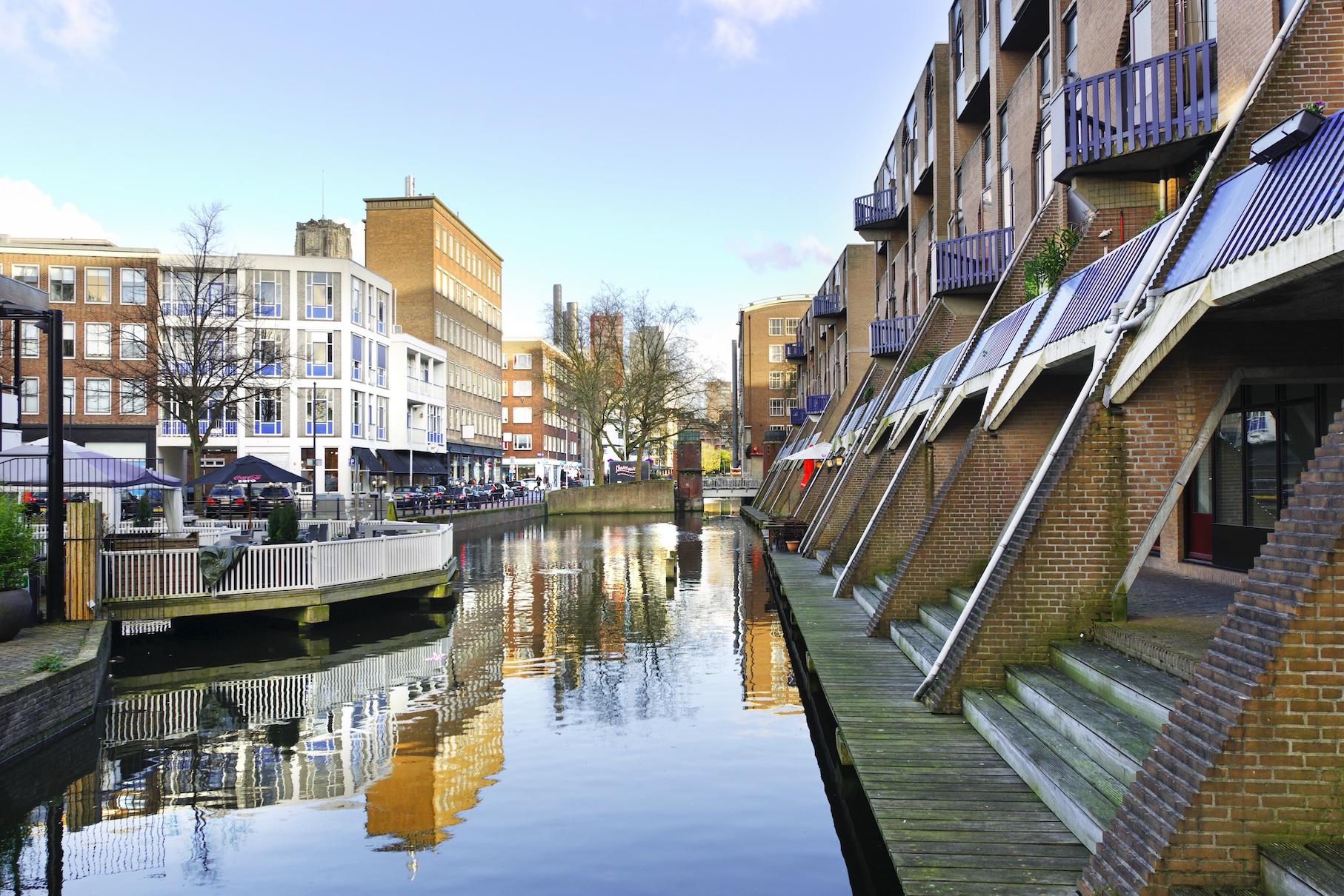
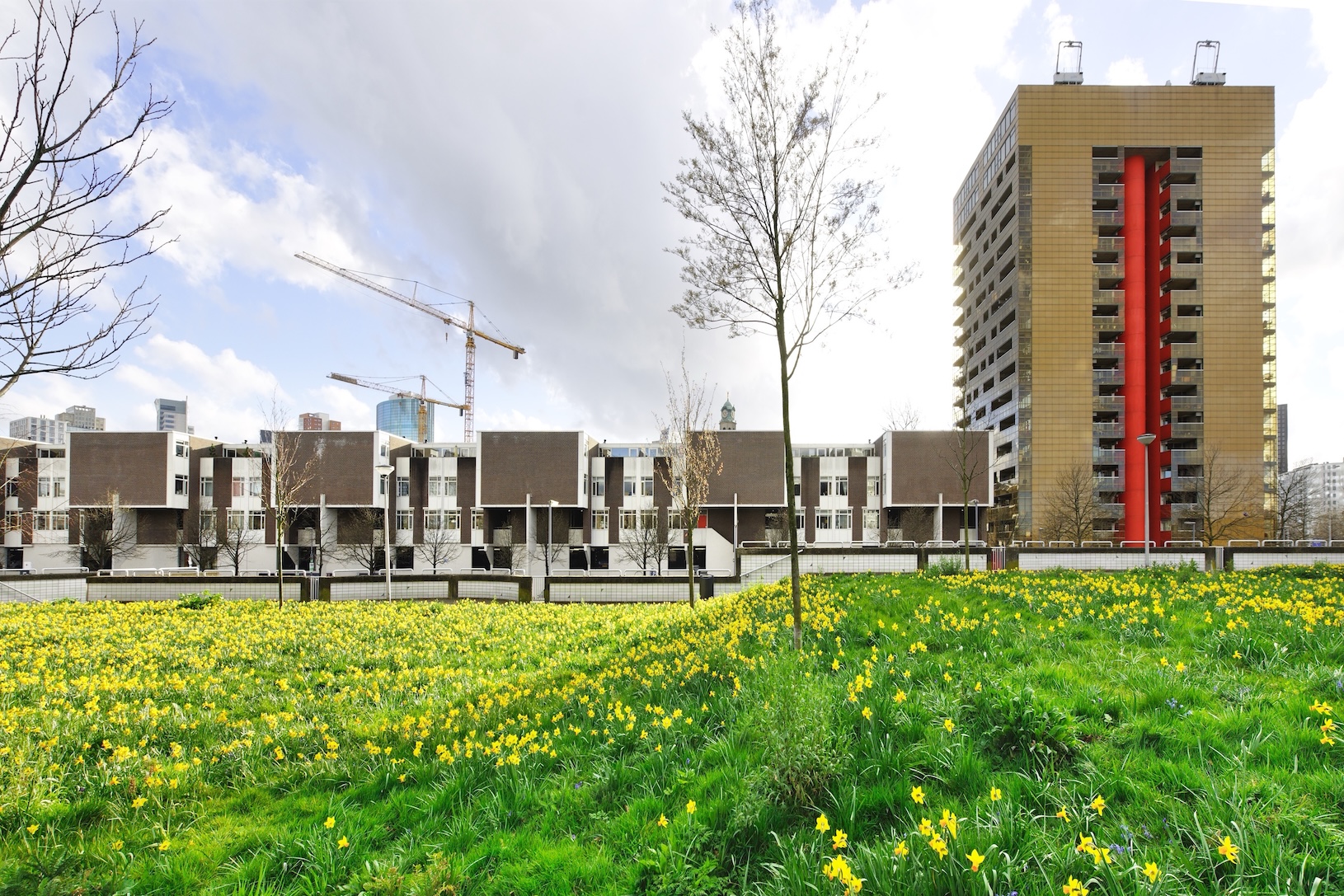
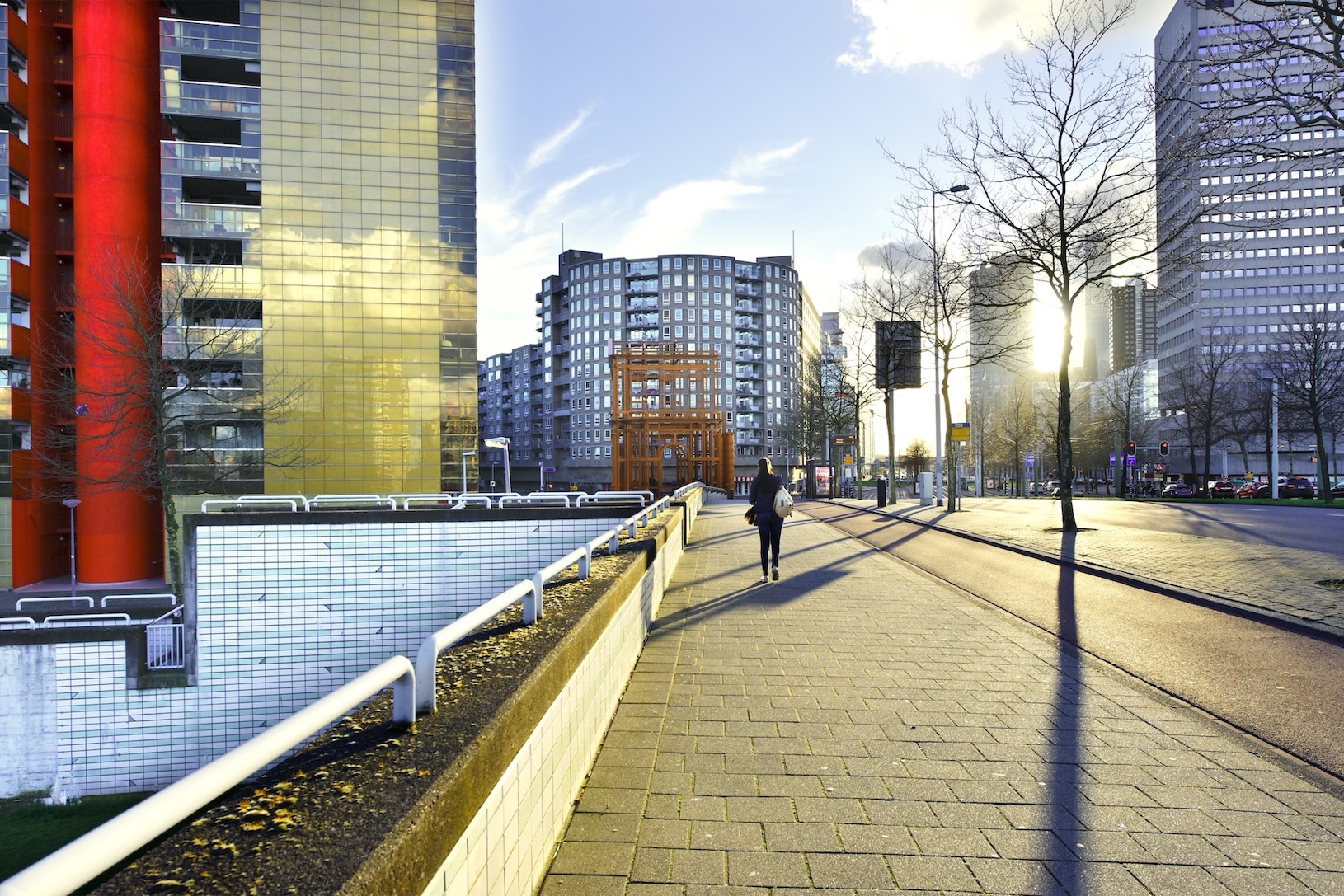
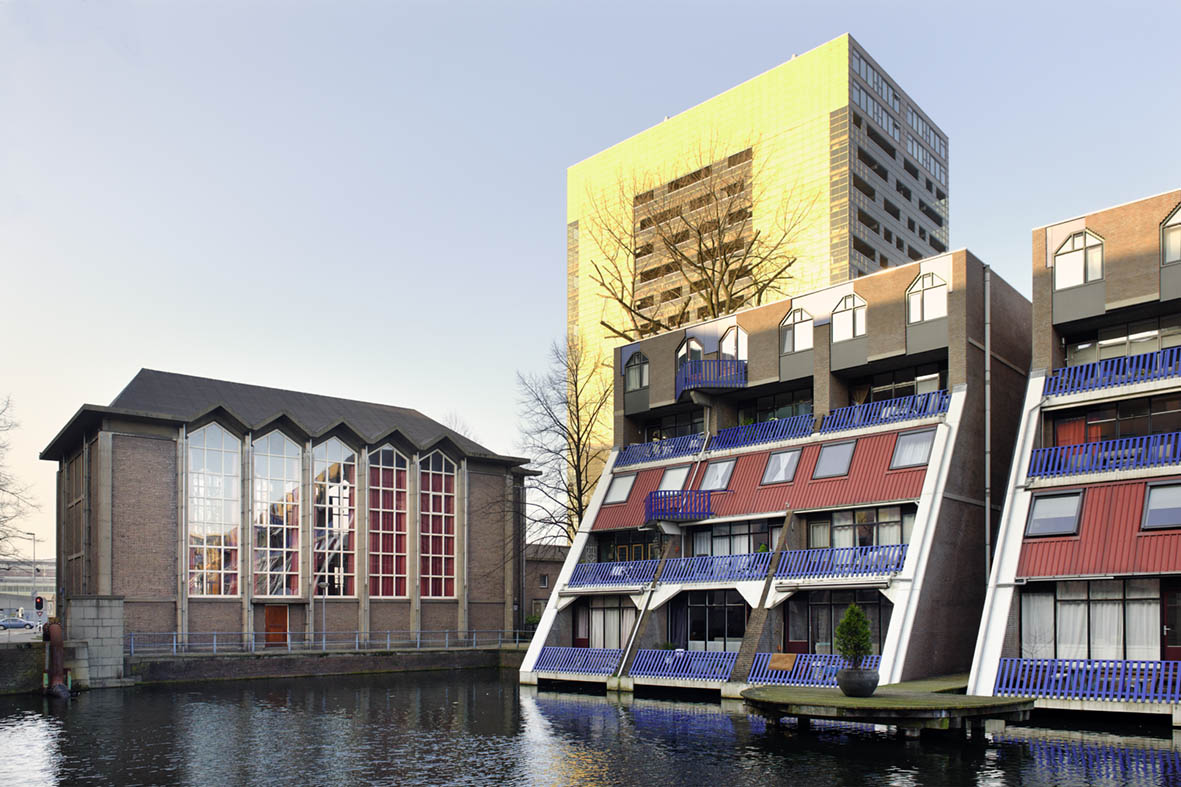
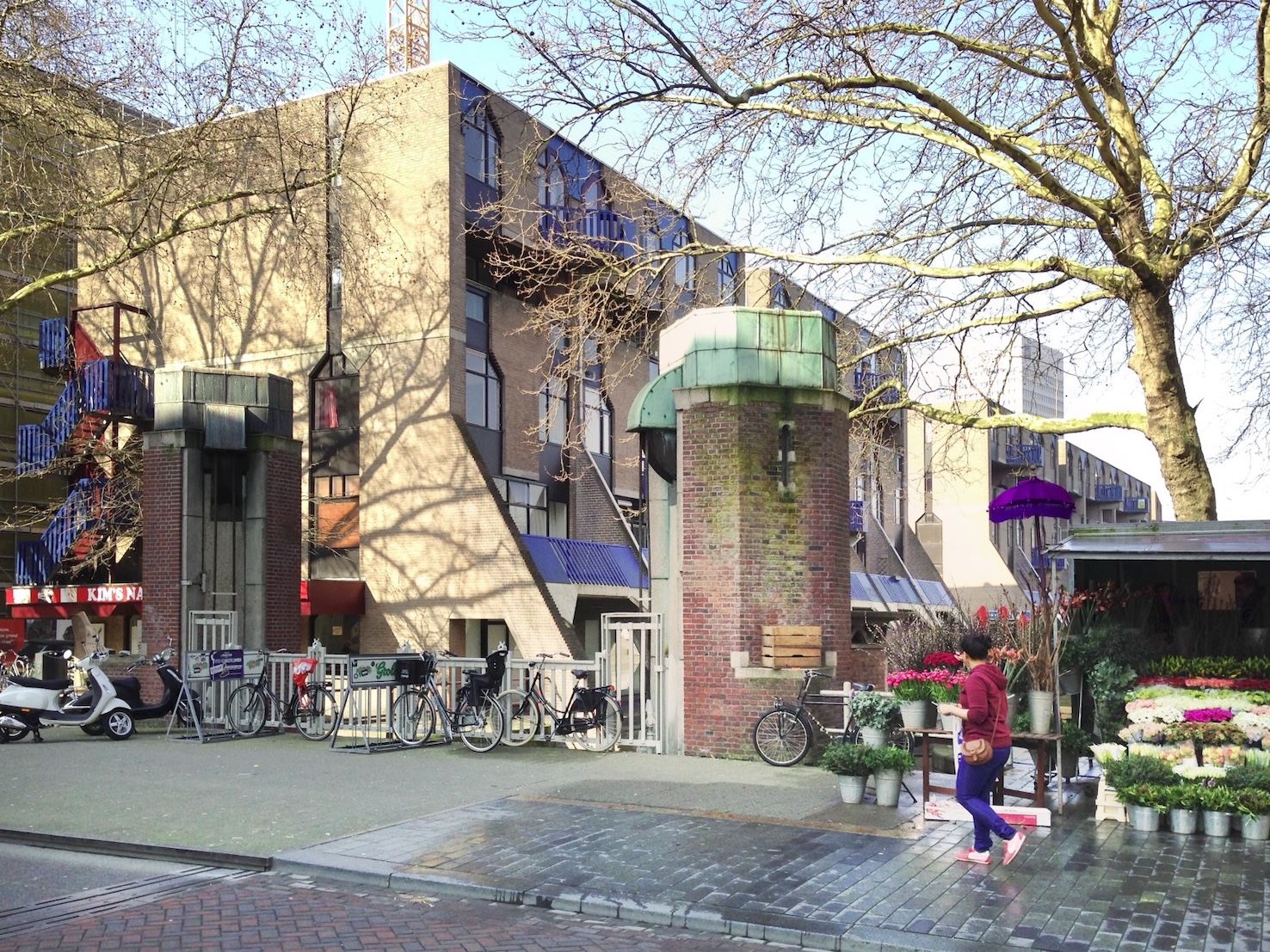
There was a growing need for the small scale, the feel of community, and for more people in the city. This formed the starting point for the 1970s flats designed by Jan Hoogstad and Aat van Tilburg at Jacobsplaats and Delftsevaart. These ambitions were unfortunately only partly realised: the Amsterdam-like shops in the arcades along the Delftsevaart never truly came to life.
Back to map
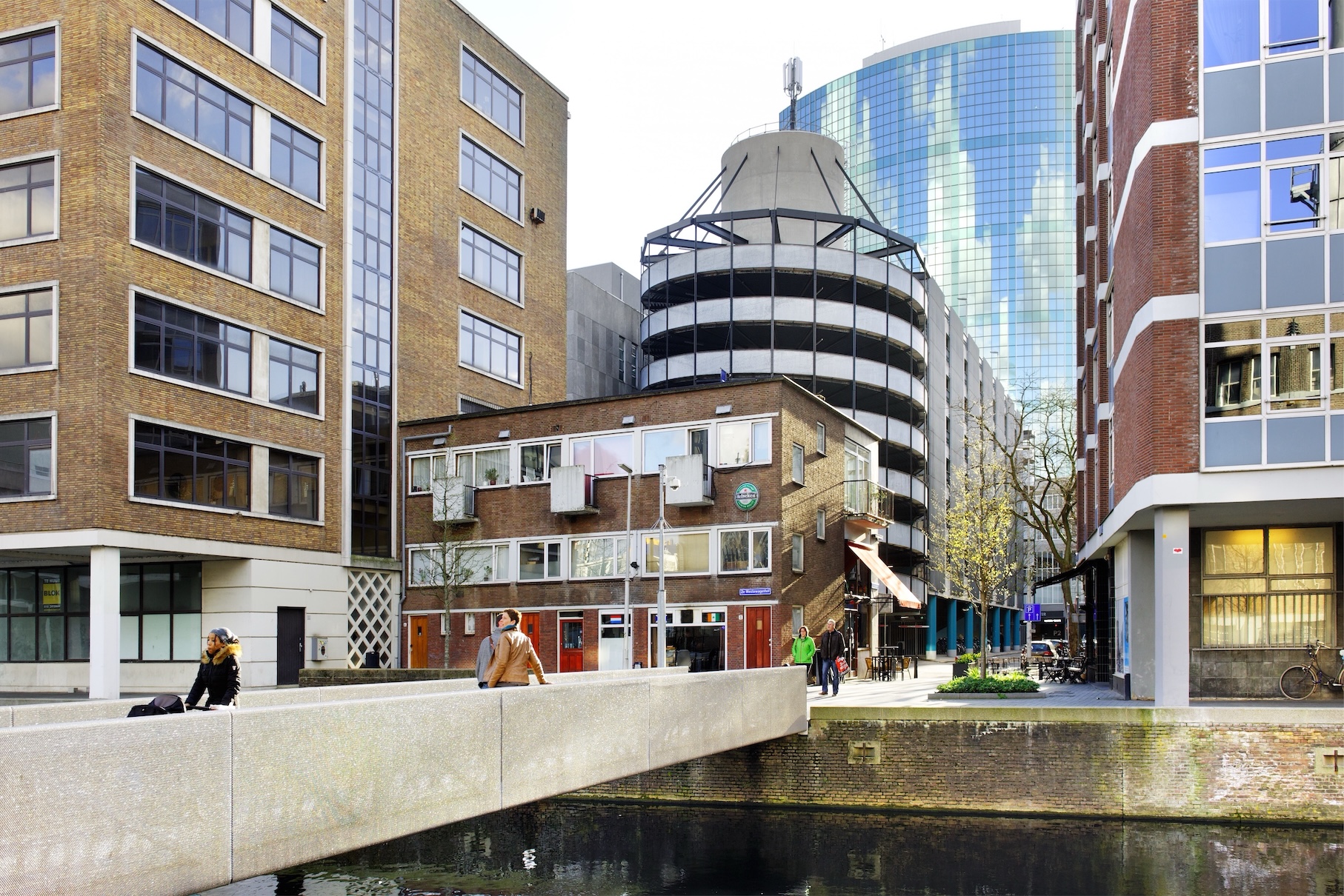
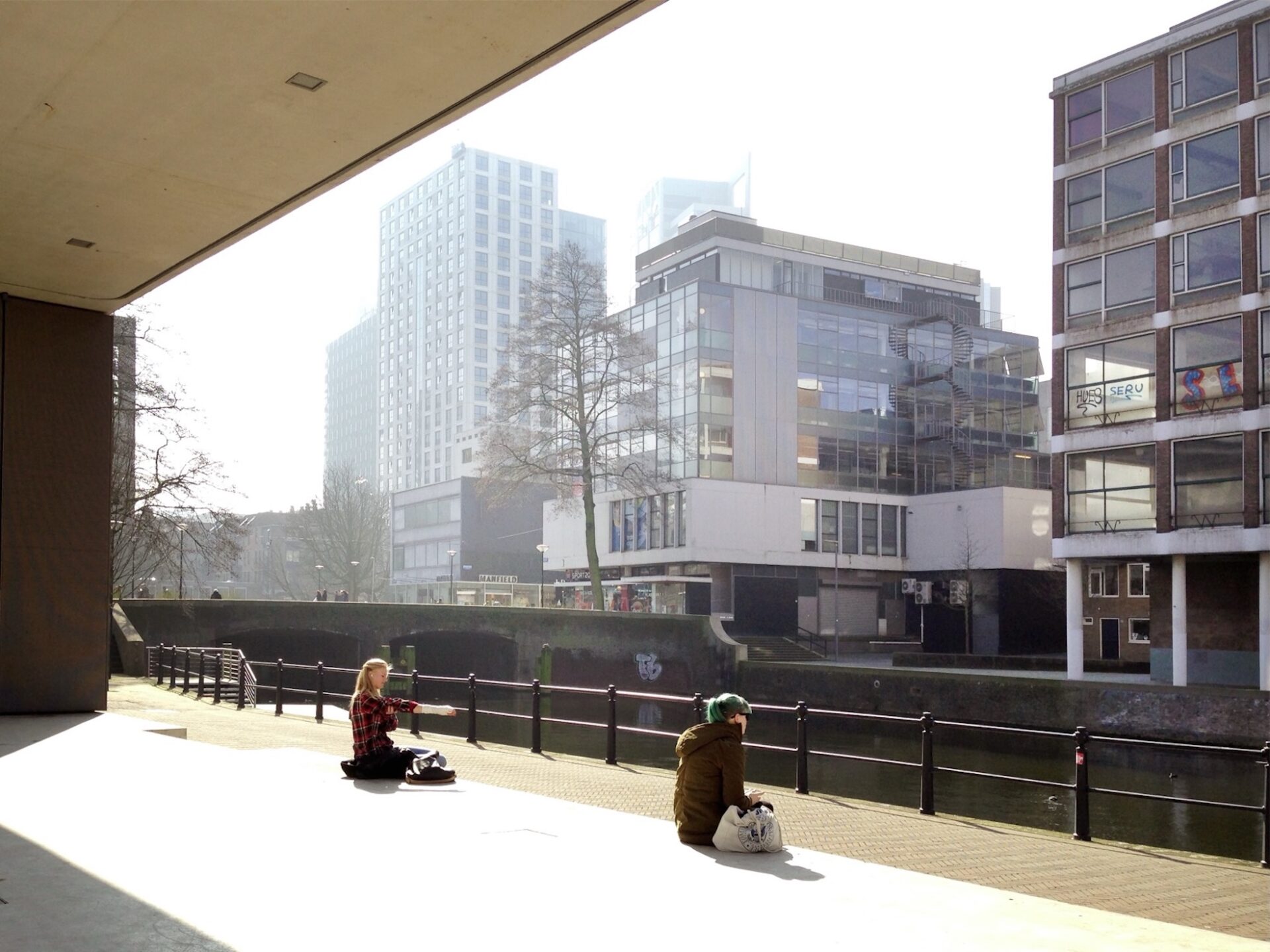
The office buildings along the Delftsevaart – the Westewagenstraat blocks – are due to be demolished in the coming years, as the developer deems renovation too expensive. The former HUF shoe store on the Hoogstraat, by Van den Broek and Bakema, has been beautifully restored, while the same firm’s department store Galeries Modernes, lost its display windows and island showcases during a renovation in the 1970s. The once-optimistic Radio Kontakt building now looks worn.
Back to map
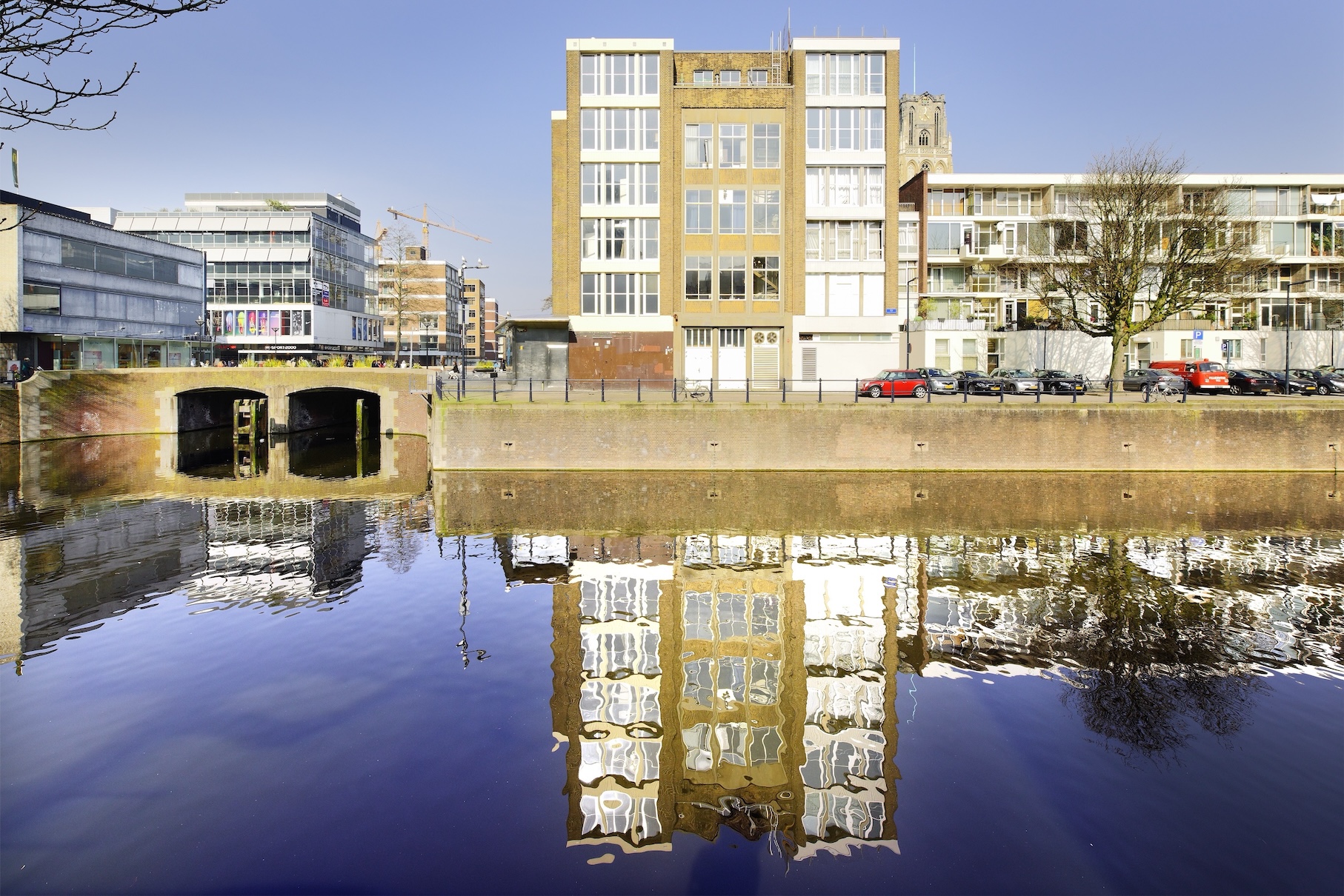
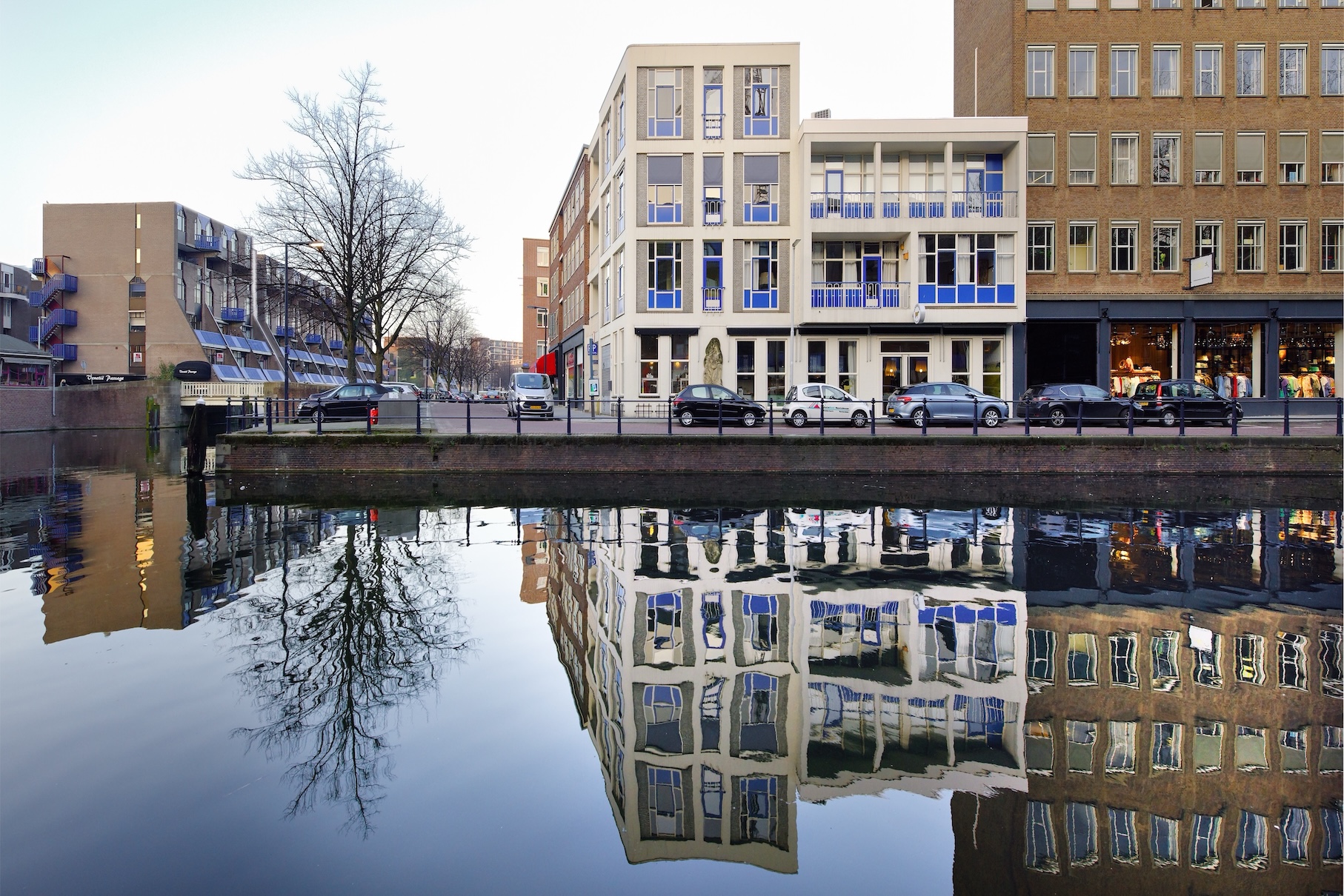
It is quiet when I walk along the Delftsevaart and the Hang in search of an interesting scene; shoppers don’t come here. The post-war buildings are reflected in the water, pondering an uncertain future.
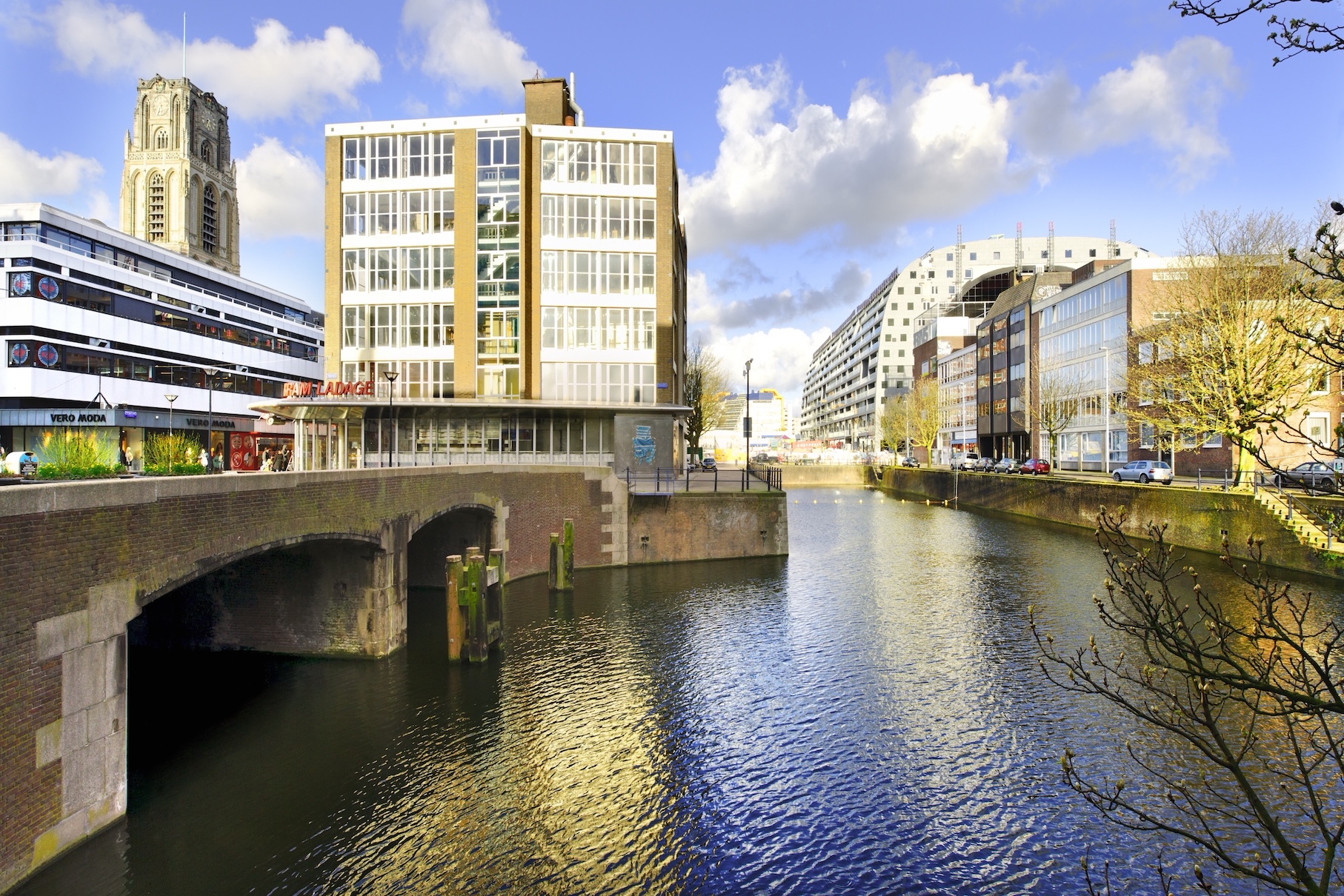
Back to map
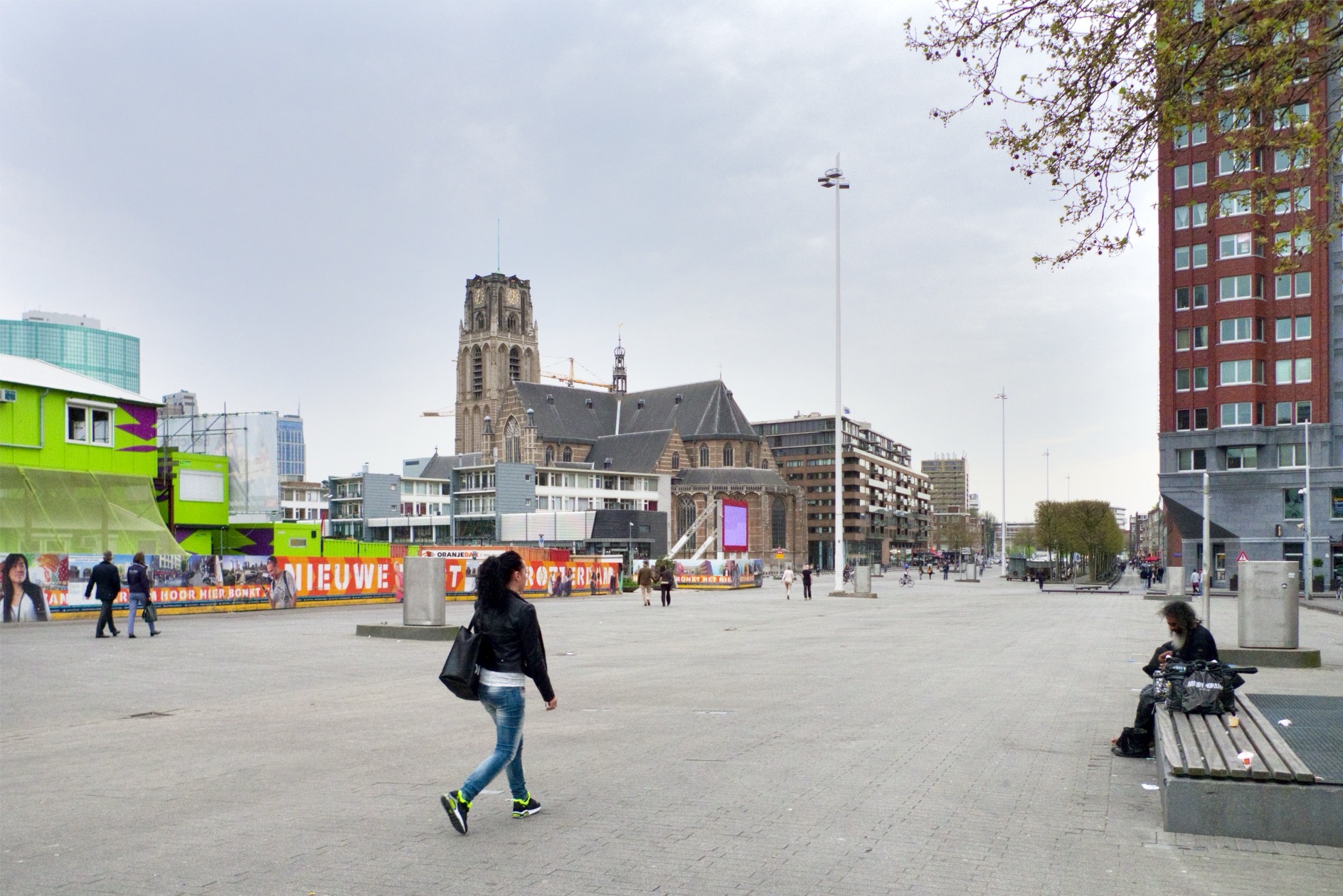
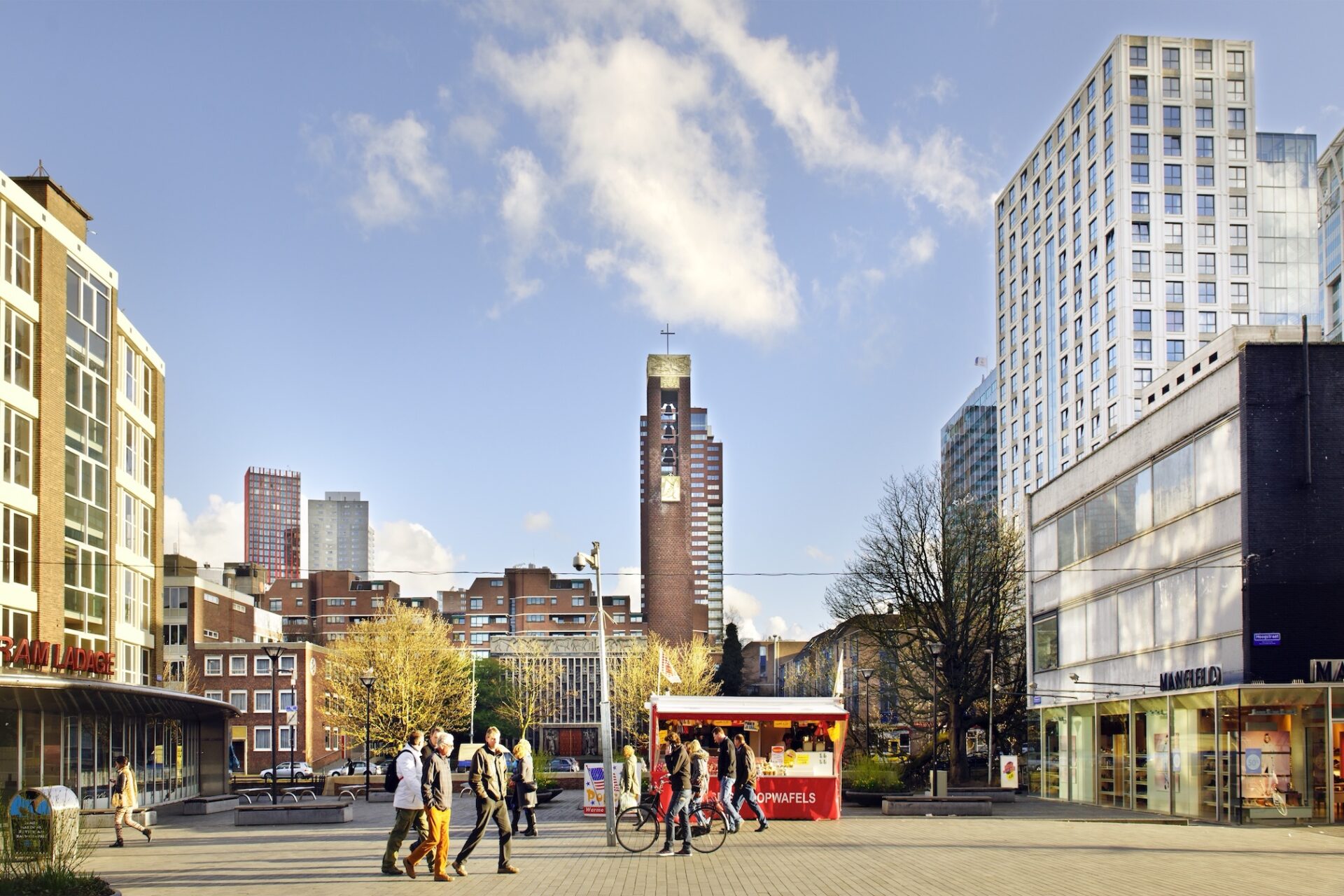
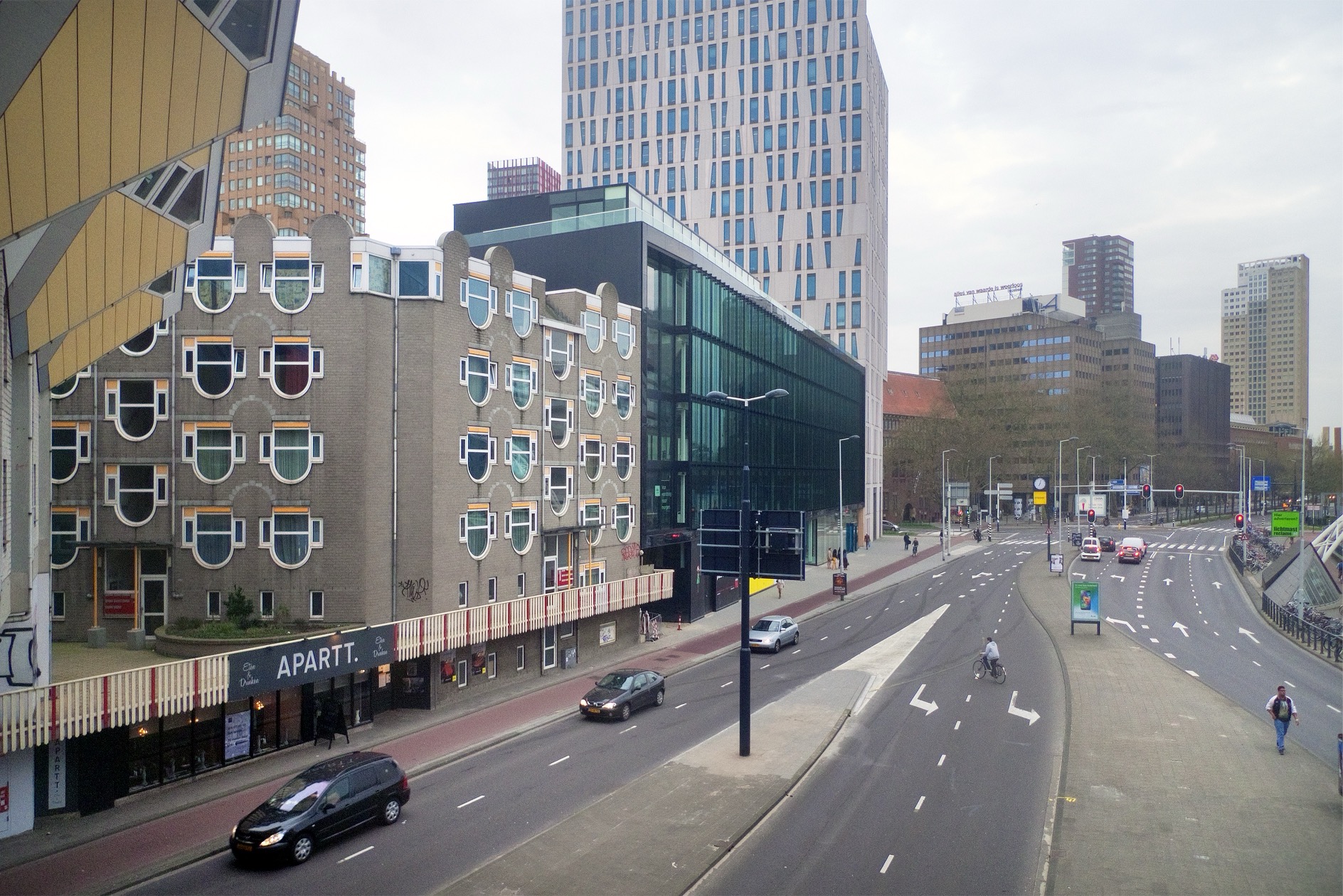
The demolition of the elevated railway in 1993 was a controversial development in the Laurenskwartier – where Rotterdam lost a piece of its urban character in exchange for yet another open space in the city centre. Fortunately, this space has been gradually filled in over the past decades, with many homes built around the Binnenrotte. The completion of the Markthal (MVRDV) will bring a major dose of energy to the area.
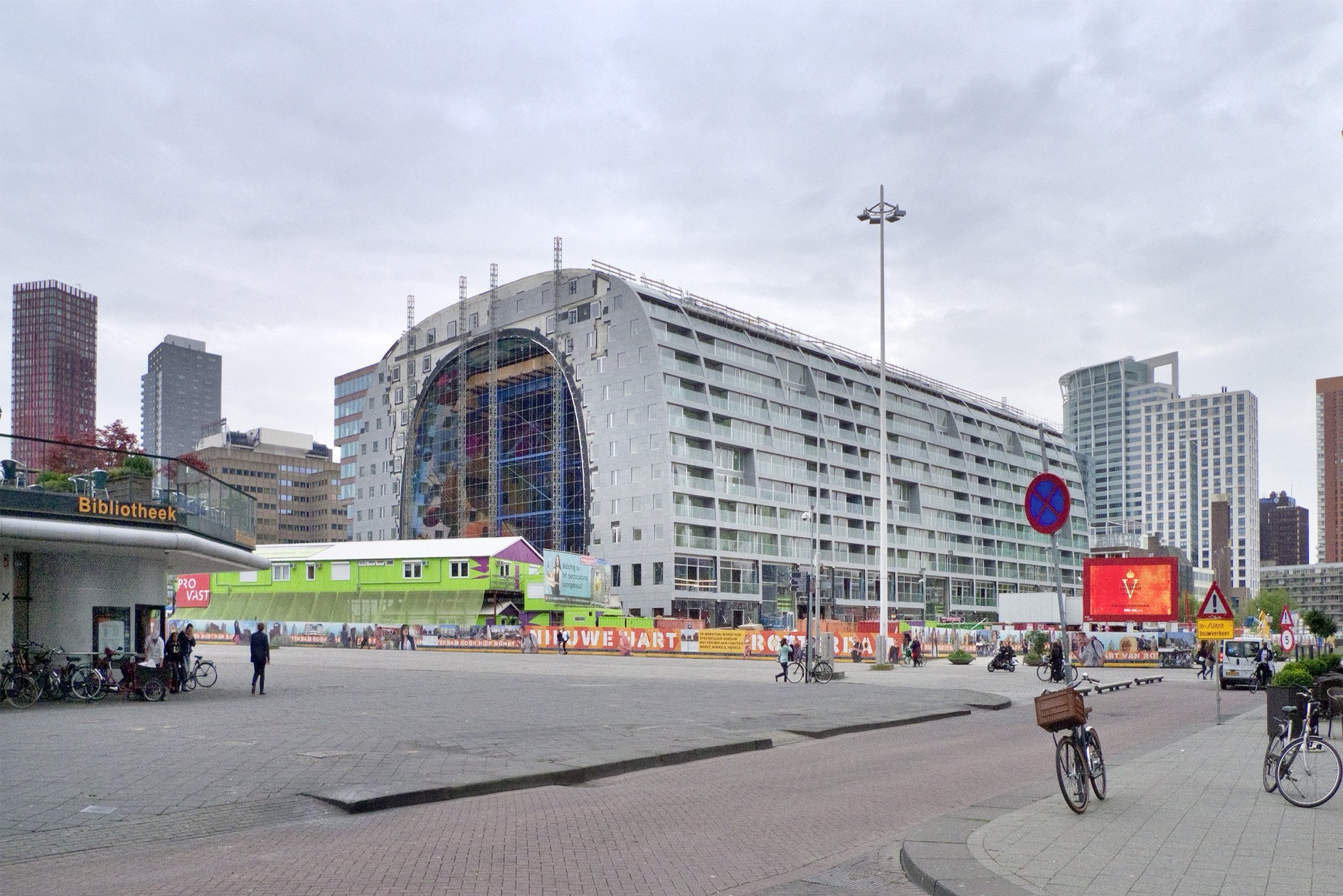
Back to map
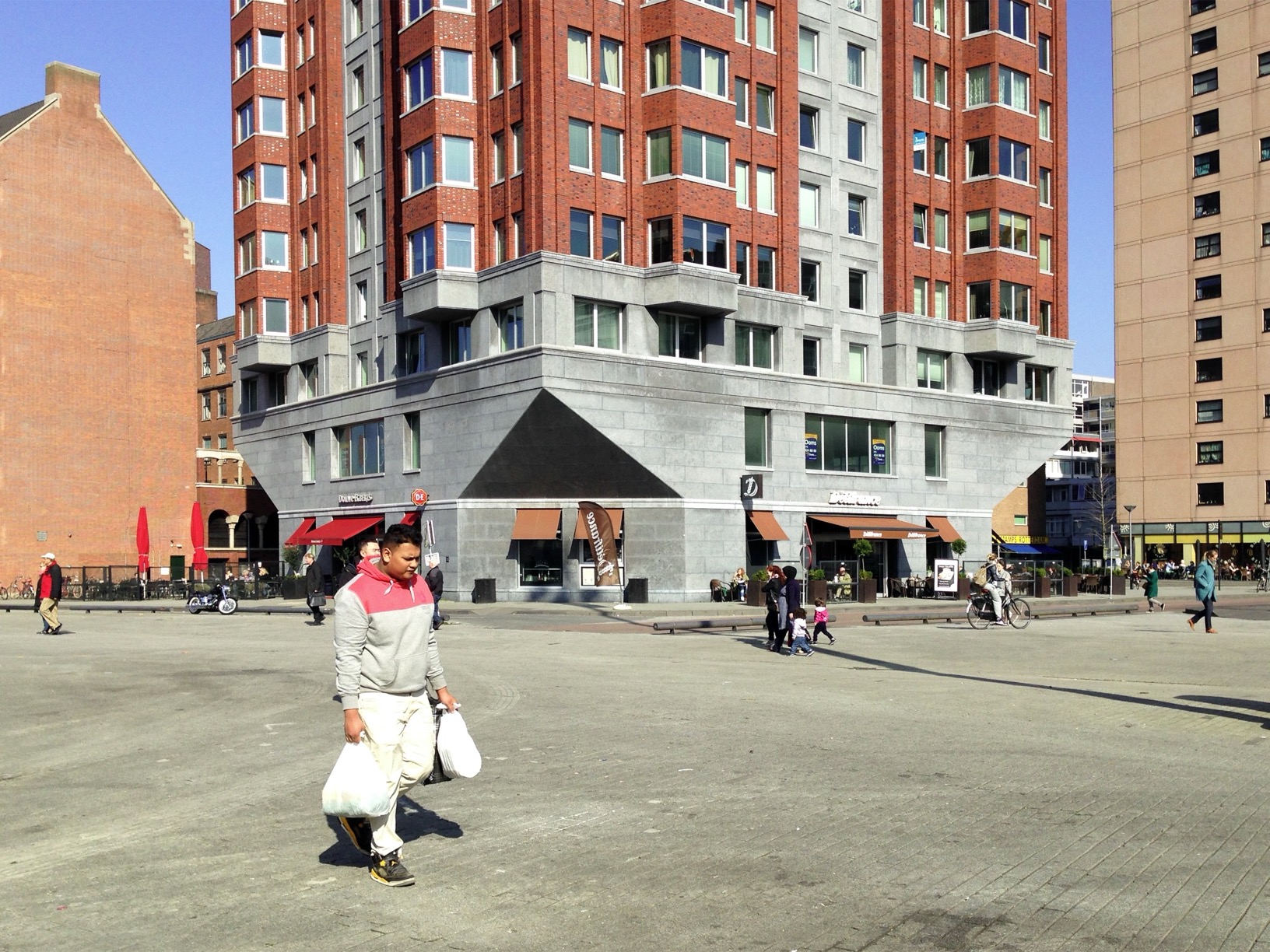
The former PTT telephone exchange – where my mother once worked – is partly converted into flats, starting a new lease of life. A group of tourists on red bicycles photograph the architect Kollhoff’s retro tower.
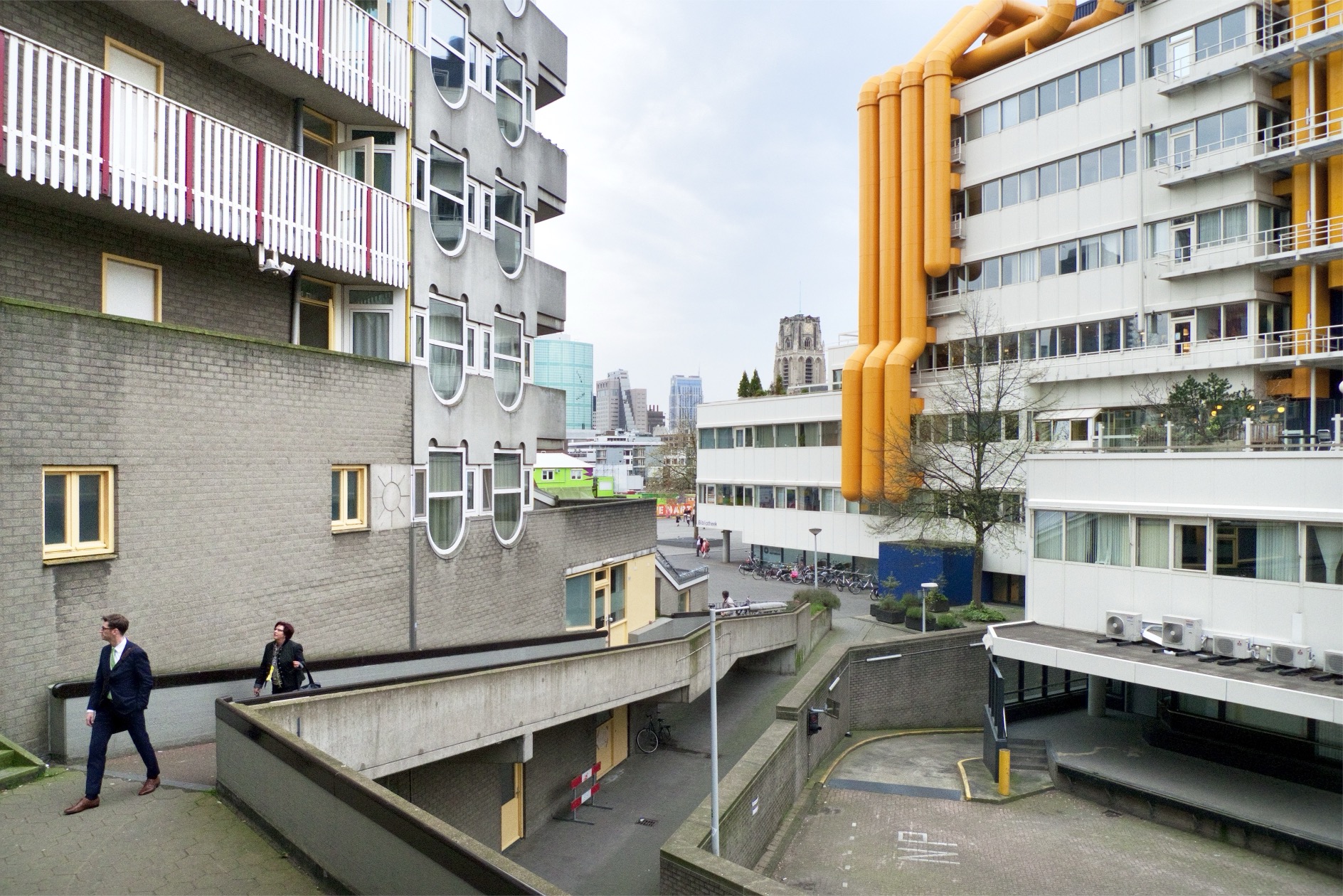
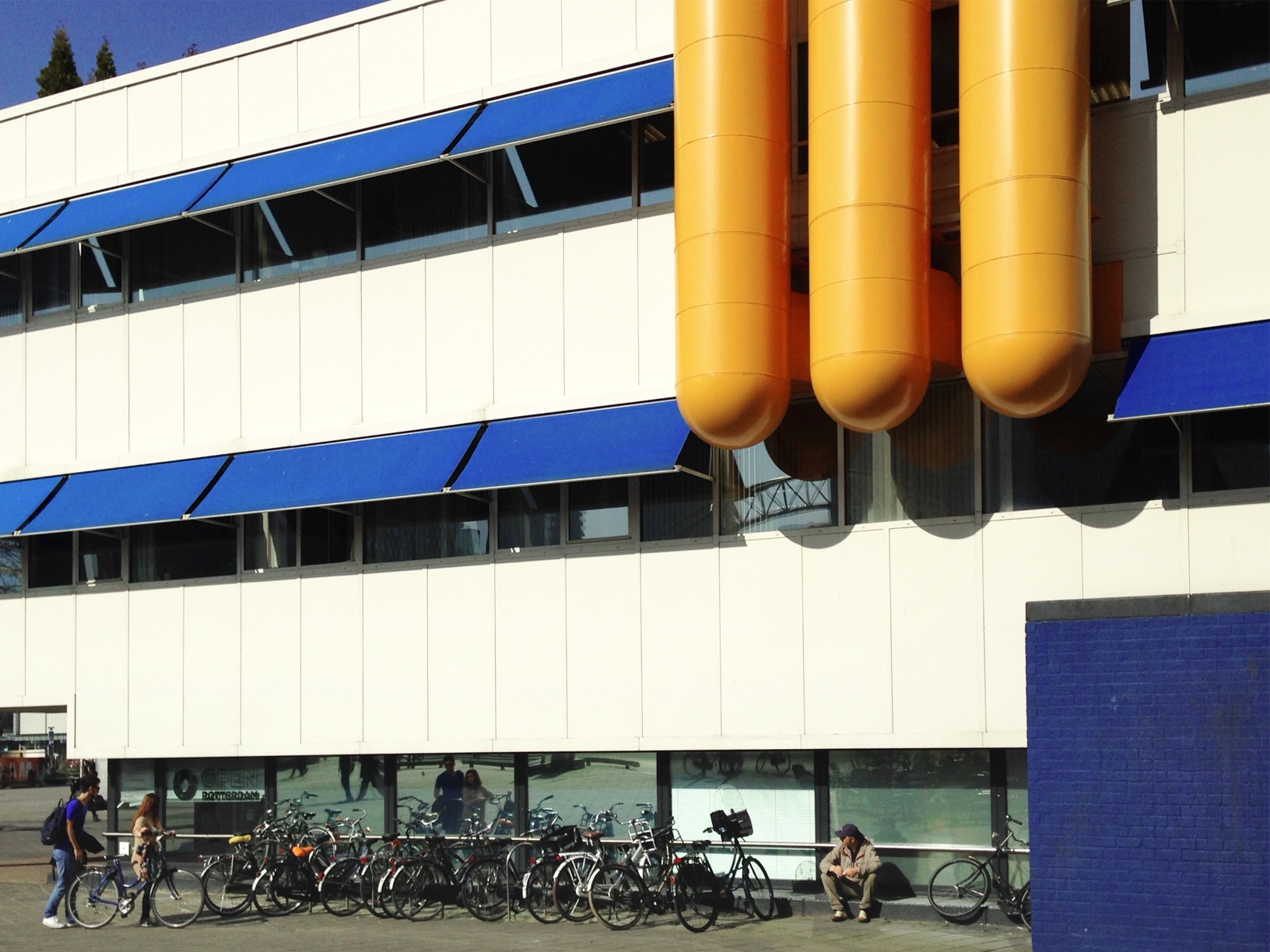
In the library hall people play chess with life-sized pieces – with whispered bets being placed all around. The floors are filled with young Rotterdammers doing their homework, and from the terrace I look out over the Binnenrotte. Suddenly, I very much want to live here ‘in the city’.
Back to map
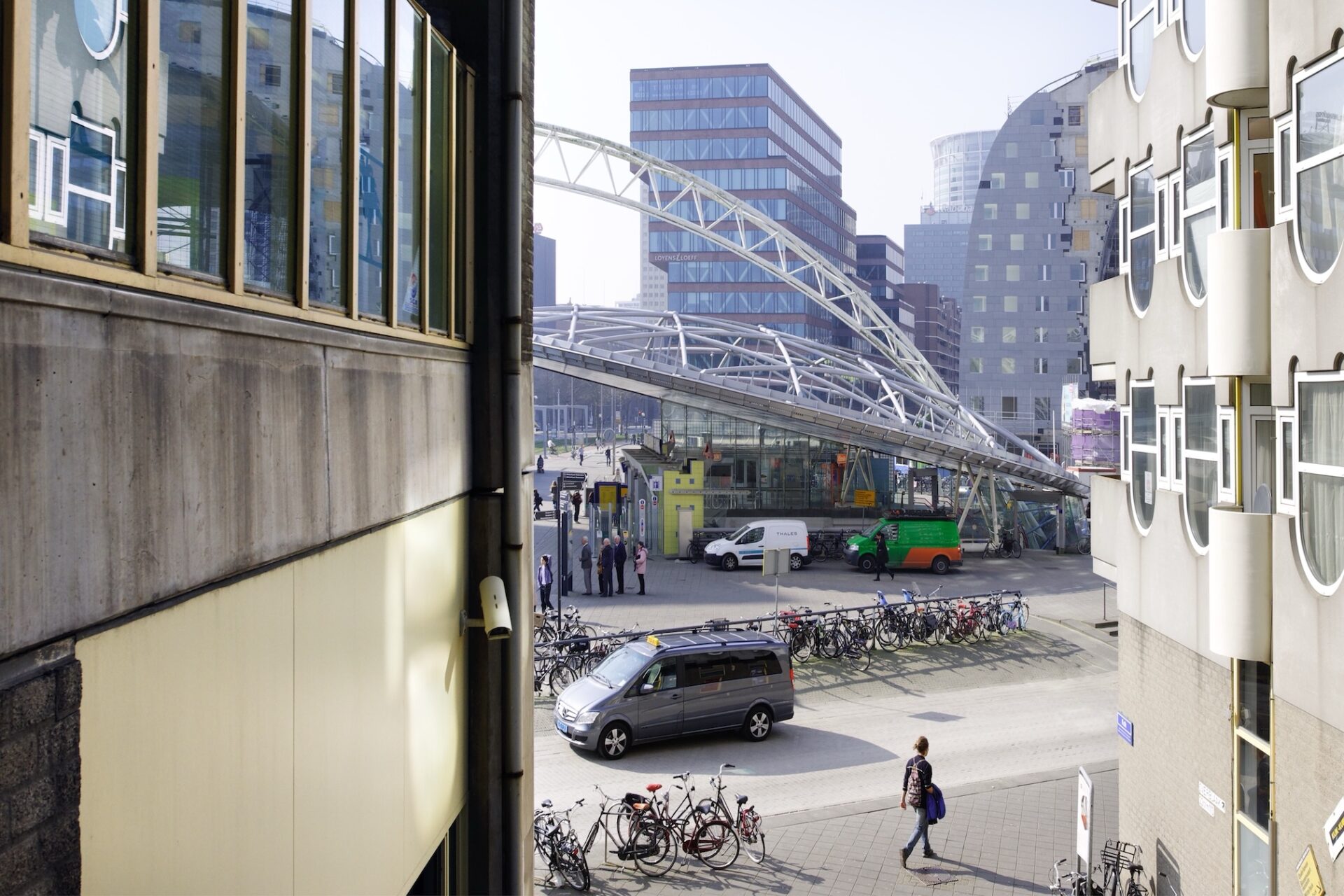
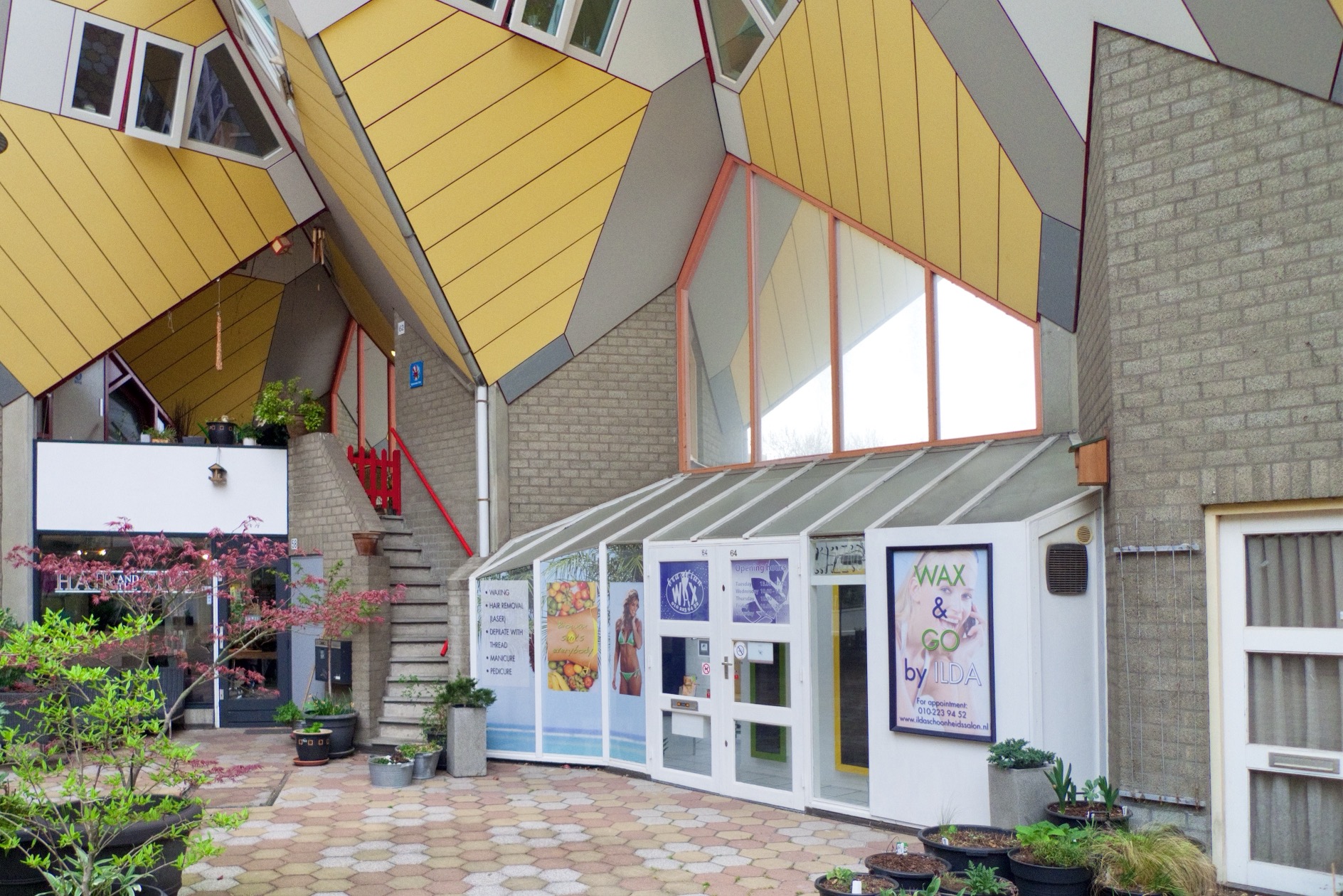
In the sixteen shop units in the Blaakse Bos, no fashion designers remain, and a few solitary nail salons try to hang on. Meanwhile, the cafés and restaurants at the Oude Haven, completed in 1984, are thriving. I’ve had many adventures along this Spanish quay, for example at the café Plan C, which closed from noise complaints.
Back to map
Rob ‘t Hart
The routes “Through the eyes of …” were created in 2014 for the architecture festival ZigZagCity.